

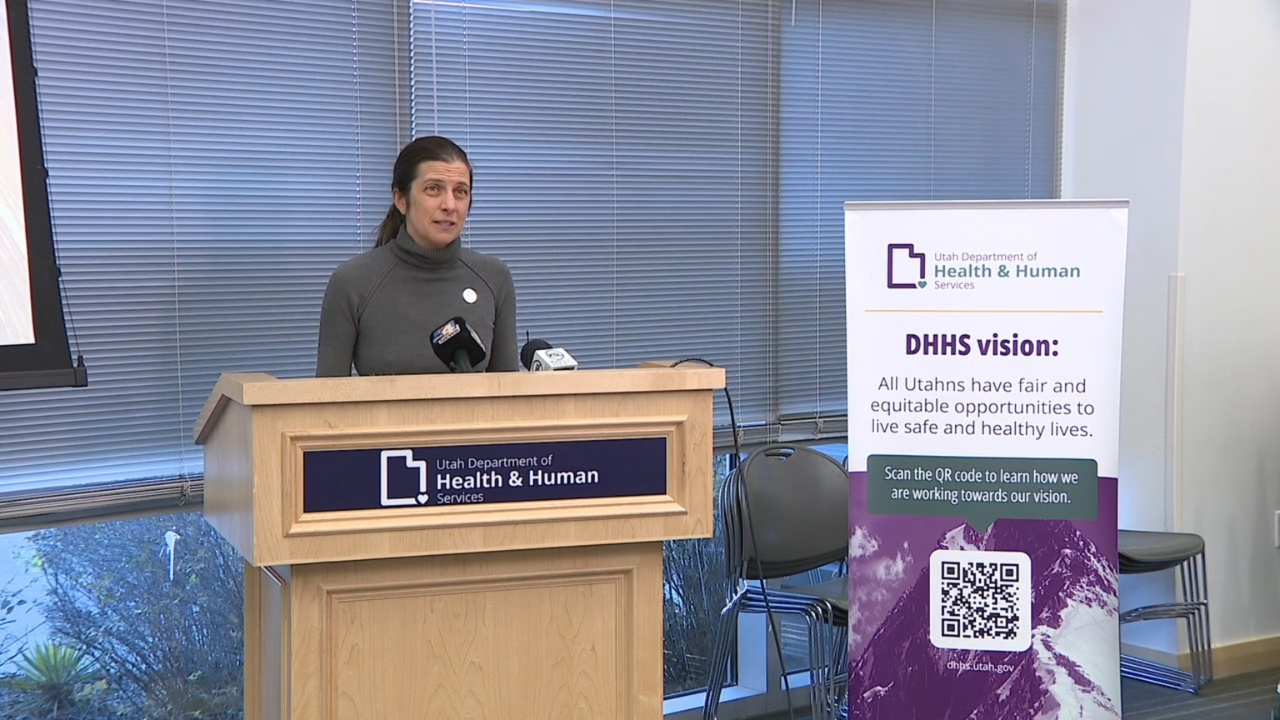


SALT LAKE CITY — So far this year, 115 people have been diagnosed with measles, and 26 of them were diagnosed in the past 3 weeks. Officials at the Utah Department of Health and Human Services said they are concerned about the spread of measles across the state.
Even though state health officials said over 90 percent of Utahns are vaccinated and protected, Utah State Epidemiologist Dr. Leisha Nolen said some people are not vaccinated who are vulnerable, including babies who are not vaccinated till they turn one year old.
"This number on its own is concerning, we haven’t had that many measles cases in Utah for over 30 years,” said Dr. Nolen.
"I was hoping that we would be able to contain the measles outbreak down to Southern Utah, and to see it expand into the Wasatch Front, and other parts of Utah is concerning,” she said. “We might quite a few people getting sick in the coming months."
For resident Grace Byington, she made sure her son, Leo, was protected and encouraged others to do the same.
“I think it’s really important to keep your child up to date with vaccinations, ask the doctor if you have any questions,” she said. “So I just took action and put my son first and I think whether you disagree or agree, doing your part in the community can really help."
Health officials wanted to remind people that the vaccine is safe and effective, with minimal side effects. Dr. Nolen also said that measles is the most contagious infection known, so it’s important to try to prevent the spread, especially because the virus can linger in the air, even after the exposed individual leaves the room.
Dorothy Adams, on behalf of local health districts, said once they find out someone has been infected with measles, they work on contact tracing.
"We can prevent further infection if we are making people who’ve been in contact with aware of possible exposure, things to look for, as referenced by Dr Nolen, places not to go, because they may have had that exposure,” she explained.
Dr. Nolen said that if someone is diagnosed within 72 hours of getting the virus, they can get a dose of the vaccine to try to prevent getting sick, but it’s not as effective as getting the vaccine beforehand.
For babies under 1 who might have been exposed, there is an antibody treatment that can be given within 6 days to help prevent them from falling sick. Especially with exposure at clinics and public places, Dr. Nolen added that a majority of families have been using that option to protect their children.
Dr. Nolen said more people have been vaccinated since this outbreak started. Compared to this time last year, vaccines administered are up 30 percent. Officials hope more people get the vaccine to protect themselves and the people around them.
