

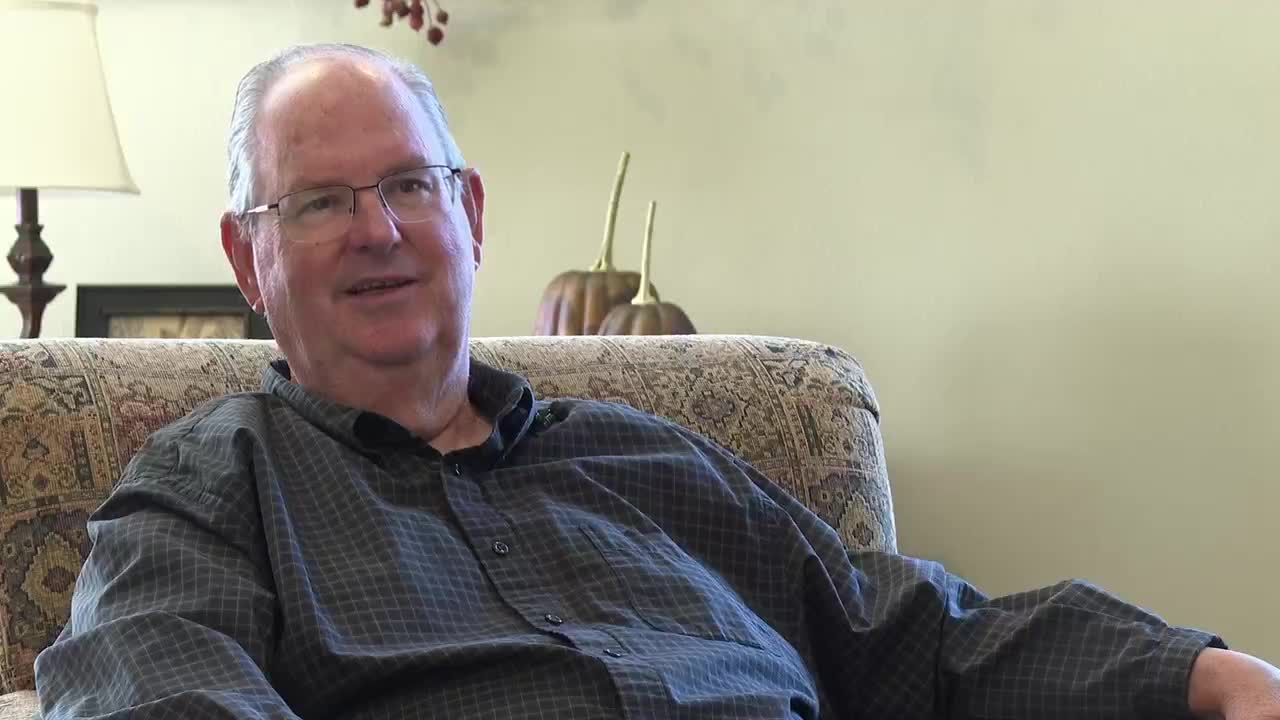


AMERICAN FORK, Utah — Jerry Hatfield used to play pickleball five days a week, work in his garden and travel with his wife, Debbie.
Then in 2024, he caught a cough that wouldn't go away.
Over the next nine months, Hatfield’s breathing worsened as he and his family searched for an answer. Debbie began accompanying him to appointments, listening closely and asking more questions.
“It was frustrating in that we were not getting answers,” she said. “It was hopeful when we finally found someone who had some ideas.”
A lung biopsy eventually found AL amyloidosis, a rare cancer that produces harmful proteins. In Hatfield’s case, those proteins had built up in both lungs, damaging his ability to breathe.
Hatfield said doctors told him that without treatment, he might have 12 to 16 months to live.
He first tried chemotherapy. Then his team at Huntsman Cancer Institute offered him a place in a clinical trial for NXC-201, an investigational CAR-T immunotherapy.
The treatment uses a patient’s own immune cells. Doctors collect the cells, re-engineer them in a laboratory to recognize the cancer cells driving the disease, then put them back into the patient’s body.
Dr. Amandeep Godara, a hematologist at Huntsman Cancer Institute and Hatfield's doctor, said the approach represents a new direction in cancer care.
“We are now entering an era of personalized cancer treatments where patients’ own immune cells are going to be turned into a weapon against their disease,” Godara said.
Within a short time, Hatfield’s abnormal protein levels dropped back to normal, according to his doctor.
Godara said the goal is to stop the source producing the amyloid proteins, allowing the body the potential to recover from some of the damage.
Hatfield said doctors have now told him he may have three to five years, potentially more than triple the time he was first given.
The treatment has not repaired the damage already done to his lungs. He still gets short of breath and has not yet returned to pickleball.
“What it did is it arrested the spread,” Hatfield said. “But they haven’t figured out how to go and get rid of what already existed.”
NXC-201 is not FDA-approved. Researchers will continue to monitor Hatfield and other trial participants to determine how long the response lasts and whether the treatment could eventually become a broader option for patients with AL amyloidosis.
For now, Hatfield is back in his garden, working toward more time with the people he loves.
“I’m still there, and I’m alive,” he said.