

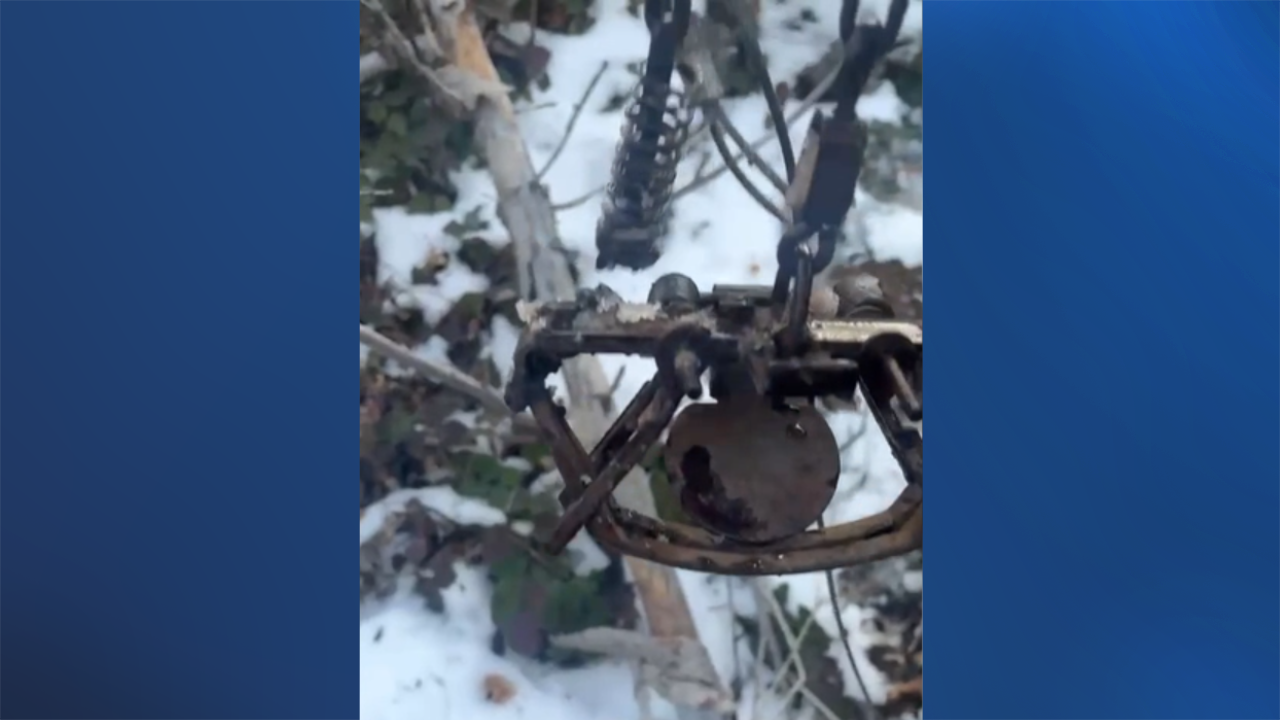


UTAH COUNTY, Utah — For the second time this month, a pet dog was injured after getting caught in an animal trap placed near a popular trail that winds through the Wasatch.
Sarah Krout from Utah County reached out to FOX 13 News this week to voice her concerns.
Mount Timpanogos Park is the perfect gateway to activity for many, and Krout and her dog, Huck, stretch their legs here often. She says they were there on Sunday afternoon.
“I run here at least a couple days a week with my dog,” said Krout, who’s a student at Rocky Mountain University. “Probably five to ten miles and he goes off-leash. It seems like one of the only places around here where I can have him off leash.”
But that ability to let loose got Huck caught in a serious bind while Krout was on her latest trail run.
“He was doing his thing…and started screaming,” Krout recalled. “I thought he was getting attacked by a bobcat or something like that.”
Krout ran towards the noise and found Huck stuck in an animal trap. Fortunately, he wasn’t badly hurt, but she was left frustrated by the experience and went back to measure the area with her boyfriend.
They say the trap was less than 50 feet off-trail.
“45 feet on a heavy-use trail like that is pretty dang close,” said Kelly Laier, president of the Utah Trappers Association. “Personally, I’d probably avoid the trail myself - entirely.”
Laier is a lifelong trapper and says the season runs from fall to late winter, with trappers helping to manage predators and to do so when pelts are thickest.
“It’s in our best interest to utilize the resource as best we can and that’s why we do trap them when the fur is prime,” Laier said.
He explained that while it’s a highly regulated activity, there’s no exact rule for where you can and can’t place traps on public lands.
That can sometimes lead to these encounters. Two weeks ago, another pet was trapped off the Bonneville Shoreline Trail in Kaysville.
Krout says she comes from Montana, where there are mandated 500-foot buffers between trails and traps.
So she hopes spreading awareness about these recent incidents happening on our local trails can enact state-level change. She wants to see those ‘no-trapping zones’ brought to the Beehive State, and she also wants to see signage posted in areas where traps are actively being set.
“I think most dog owners - if they know there’s a threat, they’re going to do what they can to avoid it,” said Krout.
Laier says they hate to see these situations just as much as pet owners. So he’d be open to those changes, within reason.
But he also notes scents are coming off those lures, so going out with a leash is best practice during the season.
“I don’t necessarily feel like they should have to be on a leash all their life,” said Laier, who added he, too, is a dog owner. “But dogs on a leash aren’t going to get in a trap.”
Both Krout and Laier said it’s a touchy situation. But they’re asking trappers to use their best judgment and all trail users to be mindful of these unwanted possibilities.
“As a hunter myself, I’m not against trapping,” Krout said. “What scares me a lot more is the unknown.”
“There’s a lot of us that share that public ground, and we all need to do the best we can to share it with our fellow Utahns,” Laier said.
Laier says the season ends March 1, so the worries won’t linger much longer, at least until next fall. But he’s considering putting together some educational courses for trail users to familiarize them with the world of trapping and how they can avoid an unwanted situation like this.