


BOX ELDER COUNTY, Utah — It’s a proposal that’s seemingly unparalleled in scale and size - and according to celebrity backer Kevin O’Leary, the Stratos project was pushed through by Utah leaders at an unprecedented pace.
"What's extraordinary about Utah is I heard about this opportunity just 5 months ago - that's it,” O’Leary said while addressing the MIDA board on April 24th. “Here we are on the cusp of doing something absolutely phenomenal together.”
O’Leary talked to the MIDA board on the day that the state agency approved the project.
"I must say, and why we've been rushing it so fast, it's a competition,” he continued. “There's other campuses, but we've got the tenants knocking on our door.”
Fast forward two weeks, and although the county commission had felt it was ‘drinking from a fire hose,’ they were on board too.
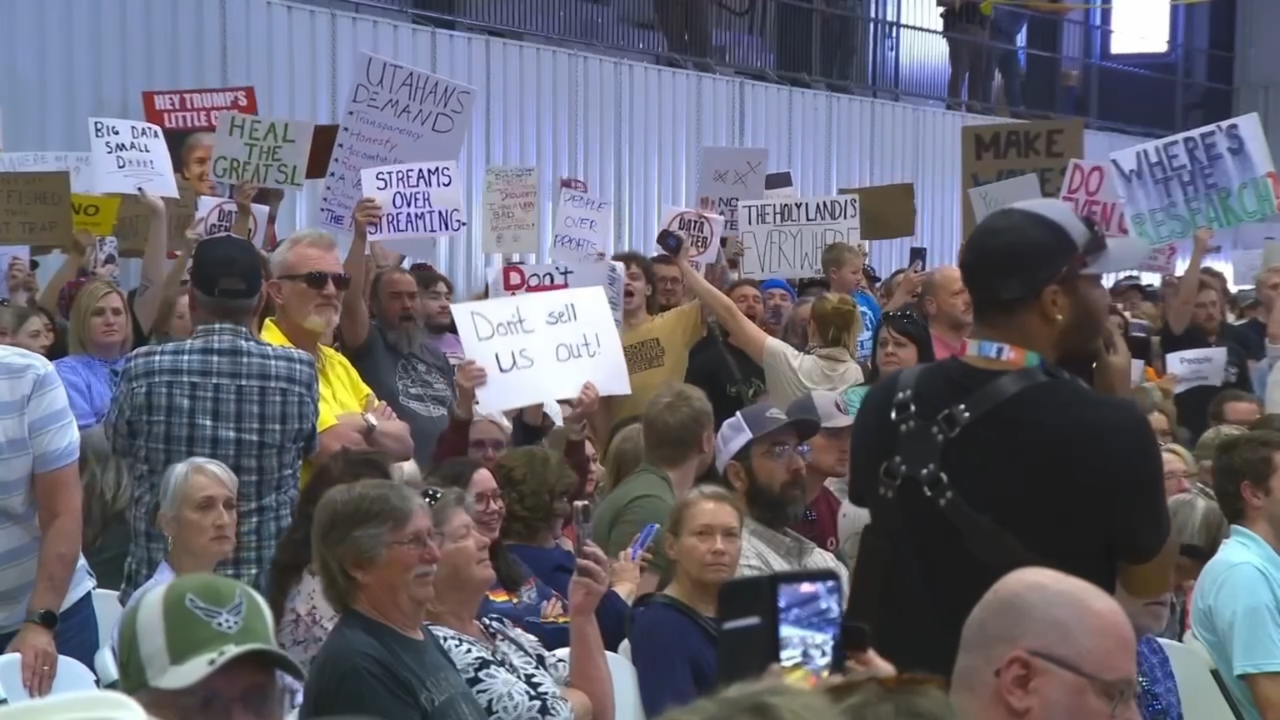
But plenty of locals were not.
“We didn’t get a vote,” said Brenna Williams, who lives in Brigham City. “We didn’t get any say in this. It just kind of dropped in our lap.”
Those same locals are now seeking all avenues to have that voice heard.
“I knew I was going to [apply for a referendum] on it before it even came to a vote,” Williams said.
Williams is now a lead sponsor with the ‘Box Elder Accountability Referendum’ group, which applied for referendums Friday on both of the two resolutions that were passed on Monday by the commission.
They originally filed earlier this week with a minimum of five sponsors, but withdrew and have since come back with about two dozen sponsors on each filing. Whether or not they can move ahead is now in the hands of the county attorney.
Their filings also come as the governor laid out a new set of standards for the project.
I’ve heard from a lot of Utahns over the past week about the proposed data center project in Box Elder County. Many are asking questions about water, air quality, energy, land use, and the long-term impact on rural Utah. Those are real concerns, and all Utahns should expect clear… pic.twitter.com/UIpZRParUs
— Governor Cox (@GovCox) May 8, 2026
The standards include a phased approach to project requests for the development, with the first phase not exceeding 1.5 gigawatts and taking less than 2,000 acres of land.
The governor also says he’s asked the developers to publish a water study that shows there will be no degradation of the Great Salt Lake.
In an interview with CNN, O’Leary addressed some of the environmental worries.
“No, we’re not going to drain the Great Salt Lake, that’s ridiculous,” O’Leary said. “We want it to be the shining example of how you do this, and I want the Chinese to see this. I want them to see that we’re not going to stop, we’re going to catch up in terms of incremental growth of power.”
But what Williams and the local group want to see is more weight given to their voices as Utahns, as this massive proposal encroaches on their local way of life.
“Even if they come back and say no, people aren’t going to stop caring about this,” said Tameron Williams, another referendum sponsor.
The county attorney’s office will have 20 days from now to decide whether or not the local group can start to gather signatures.
If approved, the county clerk says they will need to gather 16 percent of all active voters from each of the county’s four voting districts, needing a total of roughly 5,400 signatures.