

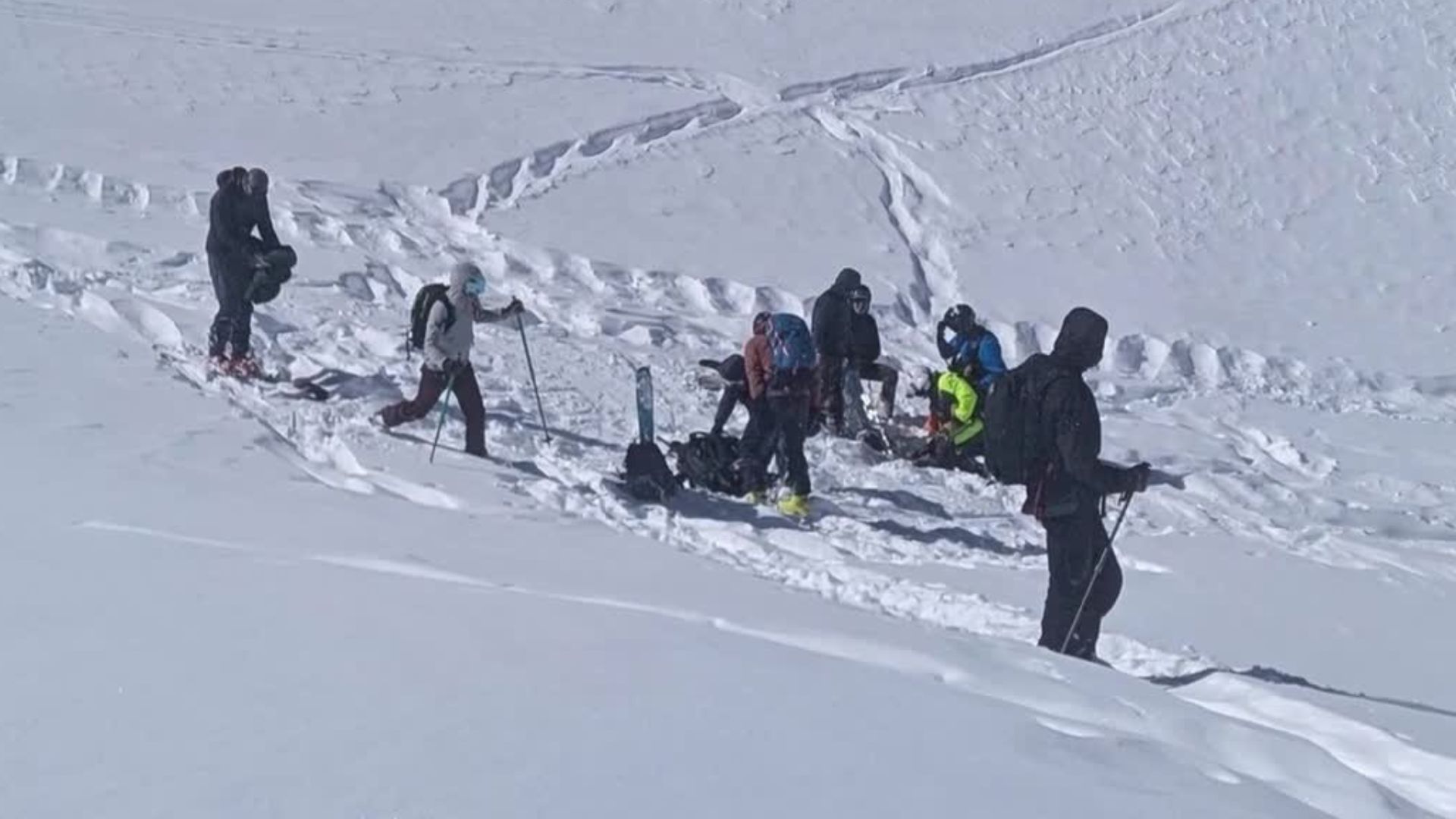


BIG COTTONWOOD CANYON, Utah — We’ve seen several dangerous avalanches recently in our mountains. In one of Saturday’s slides, authorities say it was the quick actions of bystanders that may have made the difference between life and death.
One of those bystanders was Dr. David Hughes, an emergency room physician at Mercy Medical Center in Durango, Colorado, who was back home in Utah this weekend doing what he loves most: backcountry skiing.
“I was skiing with a friend up Big Cottonwood Canyon, Butler Fork,” Hughes said.
The slopes in Big Cottonwood Canyon were busy Saturday morning, with multiple groups enjoying fresh snow. But Hughes says he and others noticed a section of terrain that looked unstable.
“We looked in an area that looked pretty dangerous and we saw some people heading up there and we thought, 'Oh, no. This is not going to be good.'”
Around 10 a.m., an avalanche broke loose, sending snow and debris down the slope and burying two men, ages 57 and 48.
WATCH: 2 men injured after triggering avalanche in Big Cottonwood
“So everybody rushed over there as fast as we could,” Hughes said.
Hughes said he first called 911, and then he joined in to begin rescue efforts immediately.
“You need to get to them right away because they need their airway cleared," he explained.
Hughes says that’s why anyone heading into the backcountry should know CPR and basic lifesaving skills.
“Two of the individuals were caught up in the avalanche and two others skiing nearby witnessed it, and they were able to dig them out,” said Salt Lake County Sheriff Rosie Rivera.
Investigators say those immediate efforts likely made the difference between life and death. The men are currently listed in critical and serious condition.
The man in critical condition was identified in a GoFundMe campaign, set up by a close friend, as Riverton resident Kevin Williams.
Hughes says he wasn’t the only medical professional on scene.
“There was myself, my friend is an emergency physician as well, even more experienced than I am," Hughes said. "And then there was an ICU nurse there as well. And then his friends and the other people that came to rescue were very knowledgeable about avalanche rescue and finding, using probes and everything like that. So that was helpful. We still don’t know what the final outcome is going to be, but we’re hopeful.”
This isn’t the first time Hughes has stepped in during an avalanche emergency. Years ago, while skiing in Michigan, he helped rescue another man buried in a slide.
“The message is have a partner and have the right equipment and everything like that," he advised. "But at the same time, it’s very likely that you’re going to be in a position where you’re going to be rendering aid. You want to know first of all how to find the person, but then once you find them, know how to do the rest to continue rendering aid until medical rescue arrives.”
In remote mountain terrain, that help can take hours.
“Just hoping and praying for the victims and their families,” Hughes said.
The Salt Lake County Sheriff's Office said Sunday that there are no new updates on the men’s conditions.
