

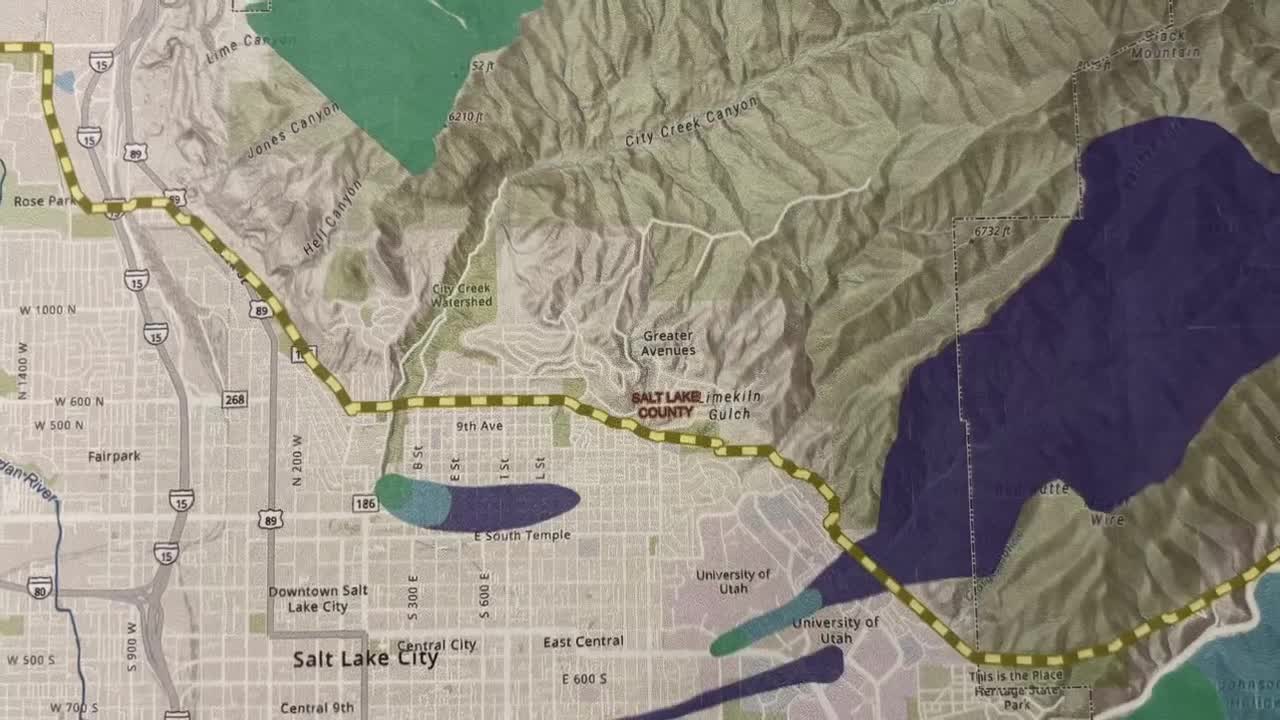


SALT LAKE CITY, Utah — A proposed refined-fuel pipeline that HF Sinclair says would strengthen Utah’s fuel supply system is already raising concerns among homeowners along a draft route through the Wasatch Mountains and Salt Lake City.
At a Salt Lake City Council work session Tuesday, company representatives outlined Westline Connect, a proposed expansion intended to increase fuel transportation capacity and provide another way to move product during refinery maintenance, outages or supply disruptions.
At the same time, property owners along the proposed corridor are receiving notices from attorneys for Westline Connect LLC saying the company intends to survey their land.
WATCH | HF Sinclair pipeline proposal draws scrutiny as survey notices reach homeowners
For Robert Macfarlane, who has lived in Emigration Canyon for seven years, the proposed line is no longer an abstract infrastructure plan.
A draft map shows the route could pass within a few hundred yards of his home.
“The current alignment would go very close to my house here in the middle part of the canyon,” Macfarlane said while pointing to the route on a map.
Macfarlane said the canyon is the best place he has ever lived. He said the prospect of a refined-fuel pipeline through the same narrow corridor where road-widening work is planned has unsettled neighbors.

“It almost feels like you’re under siege, you know,” he said. “First road widening and then they’re talking about a pipeline in the same corridor.”
The draft route
The route presented to Salt Lake City shows a proposed pipeline branching from HF Sinclair’s existing Pioneer Pipeline near the Weber River in Summit County.
The line would head southwest near Interstate 80, cross the Parleys Canyon watershed, come over Little Mountain and run through Emigration Canyon. It would then turn northwest along Salt Lake City’s foothills, past the University of Utah and through the Avenues before continuing through Rose Park to a terminal in North Salt Lake.
The company’s maps describe the project as a connection between the existing Pioneer Pipeline and the Pioneer terminal. HF Sinclair says the route is not final.
At Tuesday’s meeting, the company said Westline Connect is intended to expand the region’s fuel transportation system as the existing Pioneer line reaches capacity.
“The Westline Connect project will provide resiliency to Salt Lake’s transportation fuel system and reduce price volatility that occurs when demand exceeds supply,” a company representative told the council.
HF Sinclair said the project could reduce the need to move fuel by truck and rail when refinery maintenance or other disruptions limit supply.
In a statement to FOX 13, the company said Utah’s energy demand is growing and Westline Connect would create “a more reliable and efficient fuel supply network across the region.” It said the project could provide flexibility during tight supply or disruptions, reduce market volatility and improve road safety by reducing fuel deliveries by truck.
The company said it is committed to constructing infrastructure safely and responsibly while respecting communities and natural environments.
Survey notices raise new questions
FOX 13 obtained a “Notice of Intention to Survey” sent by attorneys representing Westline Connect LLC to a property owner.
The notice says the company intends to access the property for the limited purpose of surveying a potential pipeline route. It cites a Utah law that addresses when a company seeking to build an oil or gas pipeline may enter private property to survey, examine and locate a potential route.
The letter says the property owner had declined access. It also says Westline informed the Summit County Sheriff that it planned to access the property and hoped law enforcement would not need to be involved.
The notice says the company would use walk-in access and hand-carried survey equipment.
The letter reflects the company’s position that it has a legal basis to conduct the survey. The notice itself does not establish that the proposed pipeline has been approved.
Emigration Canyon officials say the company has not filed an application with the city, does not have a franchise to use public rights-of-way and does not have a conditional-use permit or other city approval for the project.
In a public notice, the city told homeowners they may decline consent for survey access and request the company’s legal basis for entry in writing. It said the presence of law enforcement would not, by itself, establish a company’s authority to enter private land.
The dispute over survey access is separate from whether the pipeline will ultimately be approved or where it would be built.
Water, fire, and one road out
The potential route raises particular concerns in Emigration Canyon because of its narrow road, homes, private wells, groundwater recharge areas and wildfire risk.
Macfarlane said he worries about a leak entering Emigration Creek or the fractured limestone aquifer that supplies water for canyon residents.
“The fear is that you get a leak into the stream, then it hits an ignition source, and then you get a big fire and contamination to the watershed,” Macfarlane said.
Emigration Canyon has one main road in and out. Macfarlane said construction, an accident or a fire could complicate emergency access and evacuations.
The proposed route also crosses Parleys Canyon, a major drinking-water watershed for Salt Lake City. City staff told council members the alignment could affect the city’s primary drinking-water source-protection zone and aquifer-recharge area, including areas near the Little Dell and Mountain Dell reservoirs and the Parleys water-treatment plant.
Salt Lake City’s maps also show the proposed line crossing the east bench’s primary groundwater-recharge area and passing near drinking-water protection zones.
Those locations raise questions about how the project would protect water resources during construction and operation. The proposed route alone does not establish that contamination would occur.
Council members question the path through the city
Salt Lake City Council member Chris Wharton said the draft map appears to place the pipeline near or through some of the most consequential places in his district.
Wharton said the route could cross nearly every neighborhood in his district, pass through five parks, go near Primary Children’s Hospital, cross watershed areas and sacred Native American sites, and run beneath City Creek.
“I’m having a hard time thinking of a route that would hit more consequential sites than that,” Wharton said.
Council members also asked HF Sinclair about alternatives to the proposed corridor and the company’s existing Pioneer Pipeline route, which runs through Summit, Morgan and Davis counties.
HF Sinclair representatives said the existing route presents challenges, including steep terrain, limited workspace, utilities and other construction constraints. They said the company is still gathering data and will continue evaluating the project.
The company told the council that no final route has been selected.
The discussion also raised questions about what authority local governments would have over the proposed route and what approvals would be required before construction could begin.
Emigration Canyon officials say the company does not currently have the city approvals they identified as necessary for the project.
Questions about who benefits
HF Sinclair has told investors that the broader project is designed to move more fuel west as refinery closures in California tighten fuel supplies in Nevada and California.
The company has said the first phase would add capacity from Wyoming to the Salt Lake City area, with later phases potentially connecting Salt Lake City to Reno and Las Vegas.
Save Our Canyons Executive Director Jack Stauss said his organization understands the continued need for fuel infrastructure but questions why a new line should be routed through vulnerable watersheds and communities.
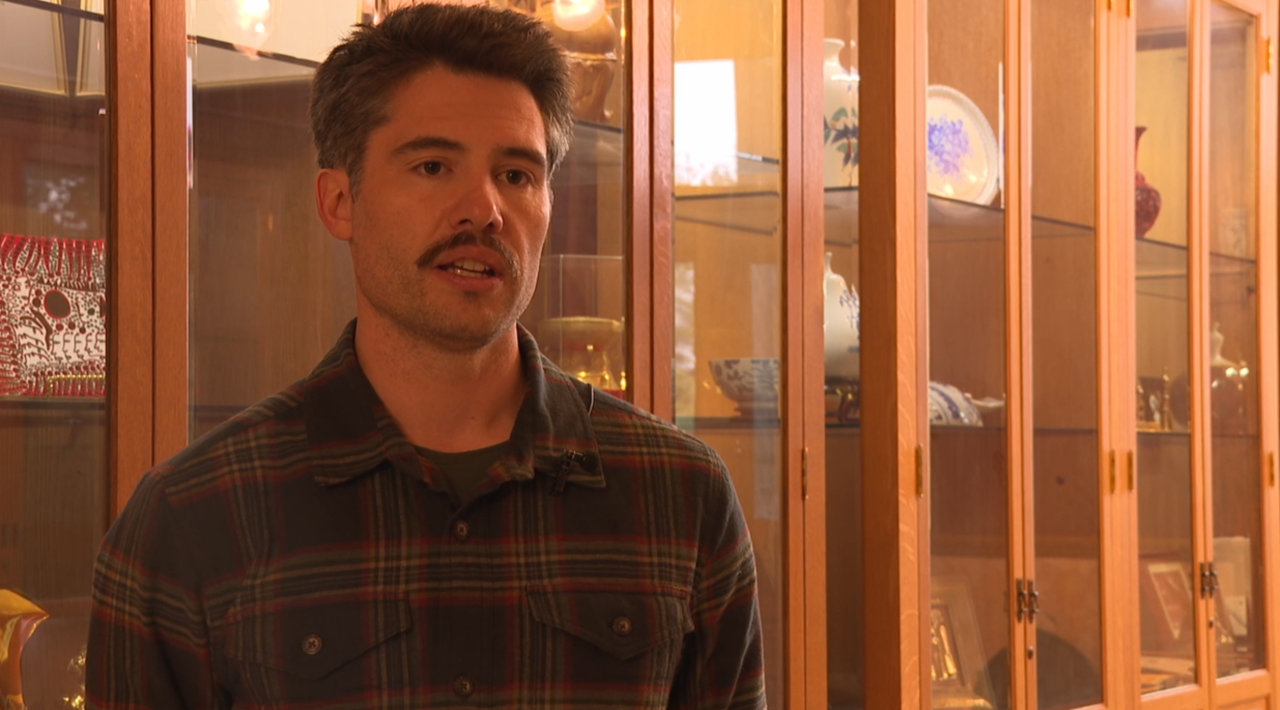
“It sounds to me like this gasoline, or refined fuel product, doesn’t actually benefit Utahns,” Stauss said. “It goes from Wyoming to Nevada and then onward to California.”
Stauss said the organization wants HF Sinclair to explain whether it has seriously evaluated other alignments or ways to increase capacity along existing pipeline corridors.
The company's stated rationale is that additional pipeline capacity would strengthen the regional fuel supply system. Stauss questions whether those broader benefits justify the potential local impacts along the proposed route.
HF Sinclair says it is still early in the process and wants to continue engaging with communities and local governments.
What comes next
Construction is not anticipated until 2028, with completion projected in 2029, according to the company’s presentation. HF Sinclair said it is still gathering route data and has not yet identified every permit the project would require.
The City of Emigration Canyon and Salt Lake City Council both have formal meetings scheduled for Oct. 20. Save Our Canyons and other opponents are urging people to attend. Neither council is scheduled to vote on approval of Westline Connect at those meetings, according to the information available for the project.
For Macfarlane, the question is how far local governments can go to protect the canyon before the pipeline route is finalized.
“What I want to see is cities standing their ground where they have law to protect them,” he said.