

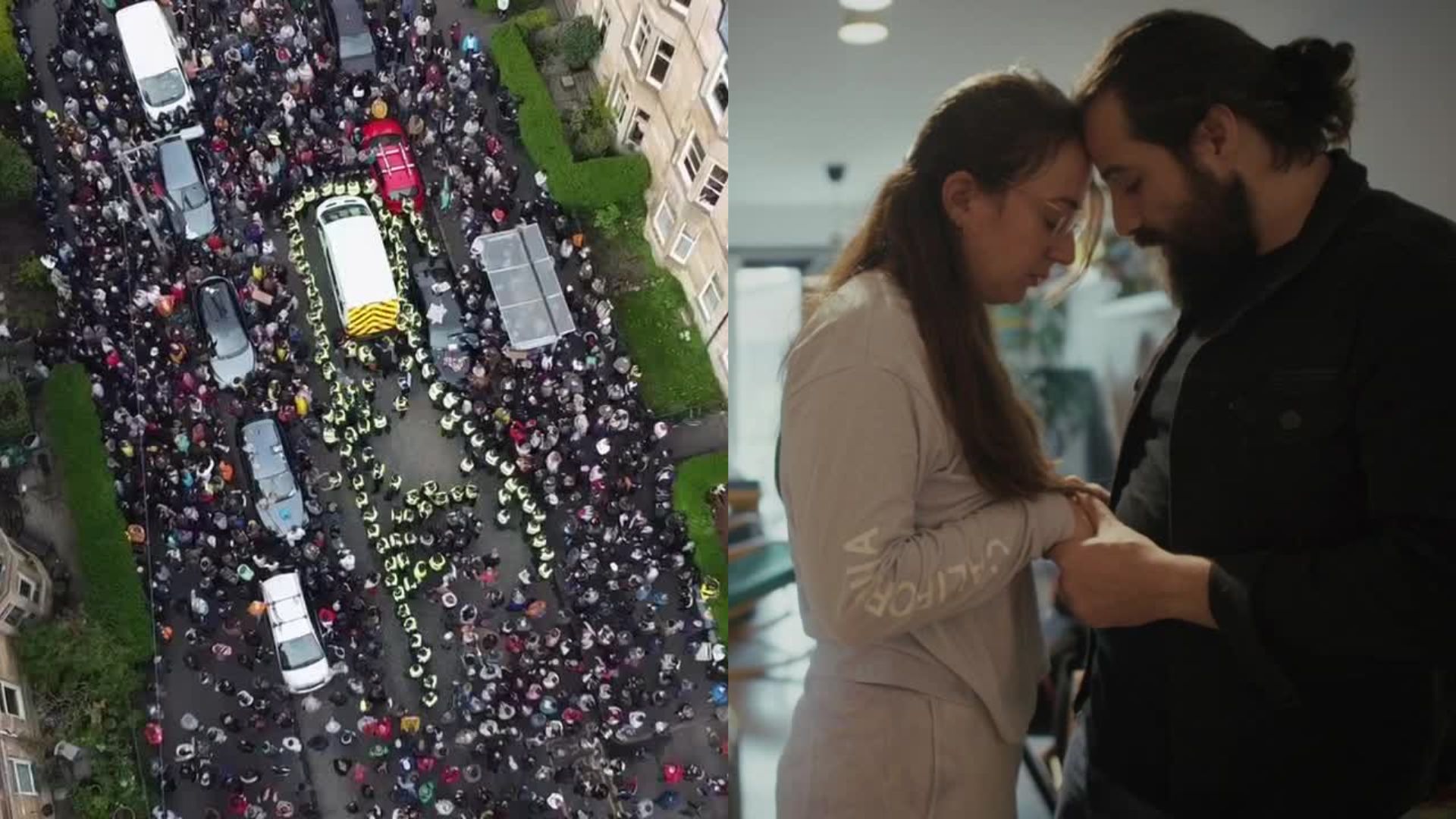


PARK CITY, Utah — From Syria to Scotland, a pair of documentaries that won awards at Sundance Film Festival are resonating with Utah audiences.
“Birds of War”
“Birds of War” is set during the revolution in Syria and Lebanon, where we meet Janay Boulos and Abd Alkader Habak.
Janay, a London-based Lebanese journalist who works for BBC, partners with Habak, a Syrian activist who documents what’s happening in the streets around him.
During their partnership, they fall in love.
“It was special, but at the same time, it was like, embarrassing. When we made the film, it was like, really embarrassing,” Habak joked. "We survived this by talking with each other, and that was the most important thing.”
The film utilizes 13 years of personal archives and footage and shows how they navigated telling stories about the war in a heated political climate.
“What this film shows is there are two sides to every story, and that's going to continue to be that way, because we do live in a polarized world, but it's through talking to each other,” Boulos said. "We can come together as people and really fight back what the politics is trying to divide by coming together through love.”
What surprised them the most was how much the Utah audience resonated with the story.
“People are relating our film to what's happening in the U.S. with the ICE and Minneapolis and how much people don't know what to do, and what's the responsibility. And I think they resonated with this film, because it shows a way you can do something,” Boulos said.
“Everybody to Kenmure Street”
Over in Scotland, it’s 2021 in the town of “Pollokshields.” Immigration authorities detained two men who had ongoing cases.
At the start of the film, only a couple of people are seen protesting, but by the end, thousands are in the streets, leading to the men’s release.
Felipe Bustos Sierra, the director, lived 10 minutes away at the time.
“I saw the picture, and I didn't feel the hope. I thought this is gonna go really badly, and I don't want to feel this today, and so I reshared it. But I didn't go,” he said. "I never got to feel what those people felt, that sort of collective joy.”
Felipe knew he wanted to make it a documentary, but what he didn’t expect was for it to premiere during the Minnesota ICE shootings.
“It just supercharged those crowd reactions afterwards and all these conversations,” he said. "People on the bus at Park City were recognizing us.”
As much as these stories impacted Utah audiences, they equally impacted those who made them.
“I am who I am now because of what happened and what I've witnessed, actually. Being on the ground, it was the most important thing for me,” Habak said.
WATCH: Residents wonder what’s next for Park City as curtain closes on Sundance