

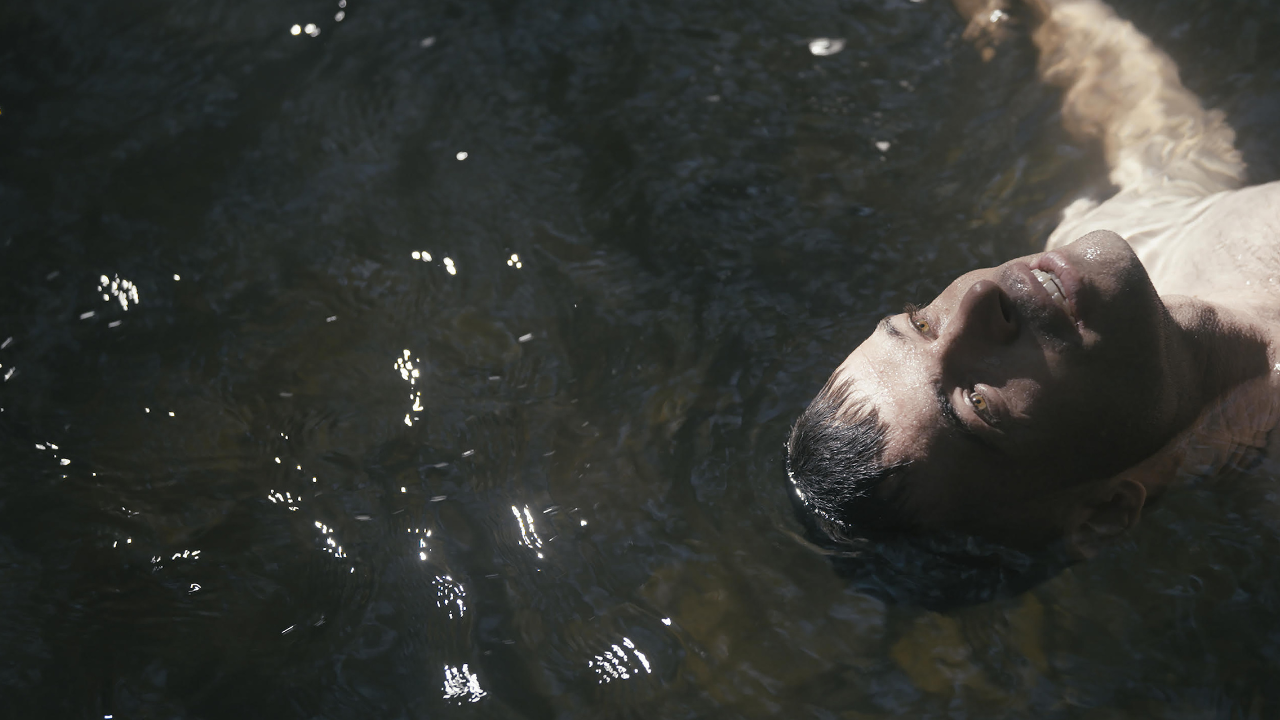


PARK CITY, Utah — It’s long been a focus of local discussion in Utah, but now, the Great Salt Lake and the environmental concerns surrounding it have made the big screen thanks to a documentary titled ‘The Lake,’ which premiered at the Sundance Film Festival and quickly gained global attention.
“I’m a mom. I have a 6-year-old son. We’re raising him here… and I don’t want him breathing in arsenic,” explained the documentary's director, Abby Ellis.
Ellis' concerns over her son's future compelled the local filmmaker to try and tackle one of the most complex issues facing our state.
“You have to be a little delusional to be a filmmaker," she said Friday.
Ellis followed fellow Utahns who have devoted their life’s work to finding solutions for the lake.
The documentary has attracted serious Hollywood heavyweights, with Leonardo DiCaprio recently signing on as an executive producer. Jimmy Chin and Chai Vasarhelyi, the former husband-and-wife team who previously won the Academy Award for best documentary for the film "Free Solo," are also producing the project.
“We’re one summer away from hitting another historic low,” explained Westminster University biologist Bonnie Baxter, who is featured in the documentary.
Bill designed to 'help' the Great Salt Lake faces pushback from some who say it won't:
Baxter says the film aptly describes the lake as a looming "environmental nuclear bomb," with more warning signs evident in this year’s lacking snowpack.
“That scares us, because the equation is already out of balance," she explained. "We need to get more water into the lake than we lose.”
Locals have been trying to raise awareness around the Great Salt Lake for years, so many are excited to see "The Lake" take the global stage.
“We can publish scientific papers, we can go to science conferences. But somebody has to bridge the gap between science and the public,' said Baxter.
Experts say the film carries the lake's story forward while remaining digestible for viewers, and they believe the issue demands a worldwide audience.
“The decline of saline lakes is a global ecological crisis. They’re 120 of these lakes all around the world. All of them are in decline… and there’s not a single example of one of these lakes that’s been restored," shared BYU ecology professor Ben Abbott, who is also featured in the film.
Abbott explained how the lake's decline coincides with serious hazards.
“Cancers, reproductive dysfunction, neurodegenerative disease,” he said. “How Utah figures out, I hope, how to fix it could be a blueprint for other places around the world.”
As the documentary's director, Ellis hopes the concerns she captured activate her audience, while also keeping them optimistic about the lake’s future and our future as a whole.
“The world is watching what we do," she said. "The story that we want to be able to tell in 2034 is that Utah pulled off something that no one else has ever done.”
All in-person screenings of "The Lake" have sold out, but anyone wanting to see the film can purchase tickets to online screenings for viewing between Jan. 29 and Feb. 1.