

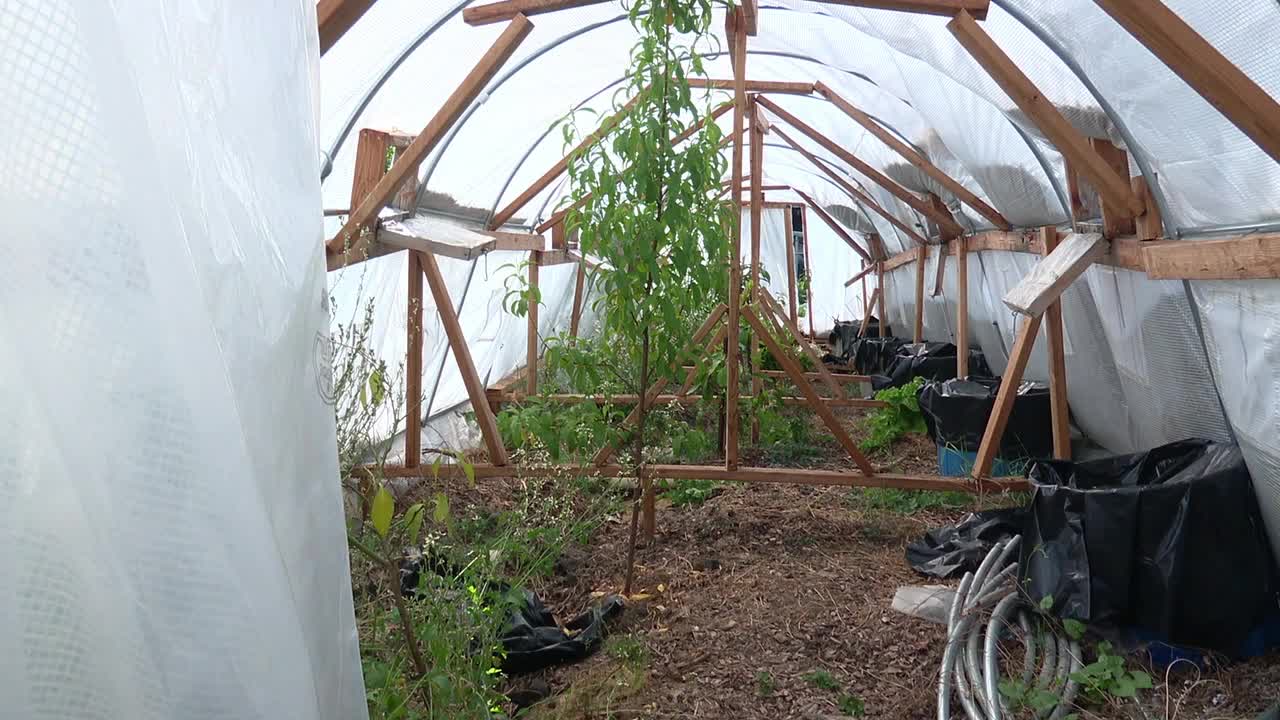


OGDEN, Utah — Last week's freezing temperatures hit Utah’s fruit farms hard, with experts saying most lost their entire crop. But one farmer in Ogden credits the produce he thinks he can harvest to his homemade contraption.
On Monday, Chad Midgley visited his farm for the first time since the freeze.
“It makes me want to cry, it’s really hard to be here,” he said looking at the plants that didn’t make it, like peaches, peas and pomegranates. "It started out as a jackpot, everything was real warm, blooming early, all kinds of fruit, thought we were going to have the biggest year we’ve ever had, and then in the last two weeks, it’s all crumbled."
He has been farming for 30 years and has multiple farms, mainly in Davis County. But a common denominator on all his farms are his "Hobbit Hole Greenhouses."
"There are compost piles mixed in between plastic layers like a hamburger, and water mass inside, and they actually throw enough heat out that it kept everything alive, even citrus trees alive,” Midgley explained.
The tomato, lemon, grapefruit, peach, blood orange and other plants inside the greenhouses were thriving.
“We have peaches that are good, and look here, look at this grapefruit, it’s like a Christmas ornament,” Midgley pointed out in the greenhouse.
But most fruit farms across the Wasatch front didn’t do so well.
“They've experienced almost 100 percent loss on all fruit crops, and so that includes peaches, cherries, pears, apples, all of it,” said Taun Beddes, a horticulturist with Utah State University Extension. "I’ve been in the green industry for 25 years, and have never seen this."
Beddes said farmers have been dealing with one blow after another.
"Not only were they dealing with drought conditions, but now, you know, we don't have much of a fruit harvest,” Beddes added.
Midgley called his greenhouses “a miracle.” He said the doors and windows of the greenhouse were open during the freezing temperatures, but the heat from inside protected the plants.
Midgley said he hopes people support local farmers this year, more than ever.
"There's not going to be as many farmers selling things and supply is going to be a lot lower. We need your guys' support to get through this year,” he said.
Beddes added that it’s important to support farms in any way possible, such as visiting for events and participating in various ways.