




SALT LAKE CITY — Those gray skies that became familiar in October actually provided a bright ray of sunshine for Utah's water concerns.
A new report from the U.S. Department of Agriculture used the words "off the charts" to describe the precipitation that fell in Utah valleys last month. By the time October ended, Soil Climate Analysis Network sites received 488 percent, or five times, the normal amount of precipitation.
Gov. Cox declares state of emergency for San Juan and Washington County flooding:
The current 54% saturation value in the valleys is at levels usually seen in April, and never in any fall or winter month.
Utah mountains prospered just as much with 5.4 inches of rain, 233 percent above the median. According to the department, 11 monitoring sites received a record-high amount of precipitation in October, and 21 sites hit their second-highest readings.
Saturation levels in the mountains were just as spectacular in the mountains, with a record-high soil moisture level at 72 percent.
Recent rockfalls across Utah highlight weather-related hazards:
The October rainfall has increased Utah's water availability, especially in the south, where Lake Powell rose 19 feet.
"While we recognize that there have been devastating flood impacts to multiple communities in Utah from the massive amounts of rain that we have received since October 1, we should also attempt to characterize how much new water these unusual storm events have produced," the department wrote.
Utah's reservoir storage is currently at 48 percent of capacity, up 3 percent since Oct.1, but still down 11% from a year ago. All but two major reservoirs are down compared to last year.
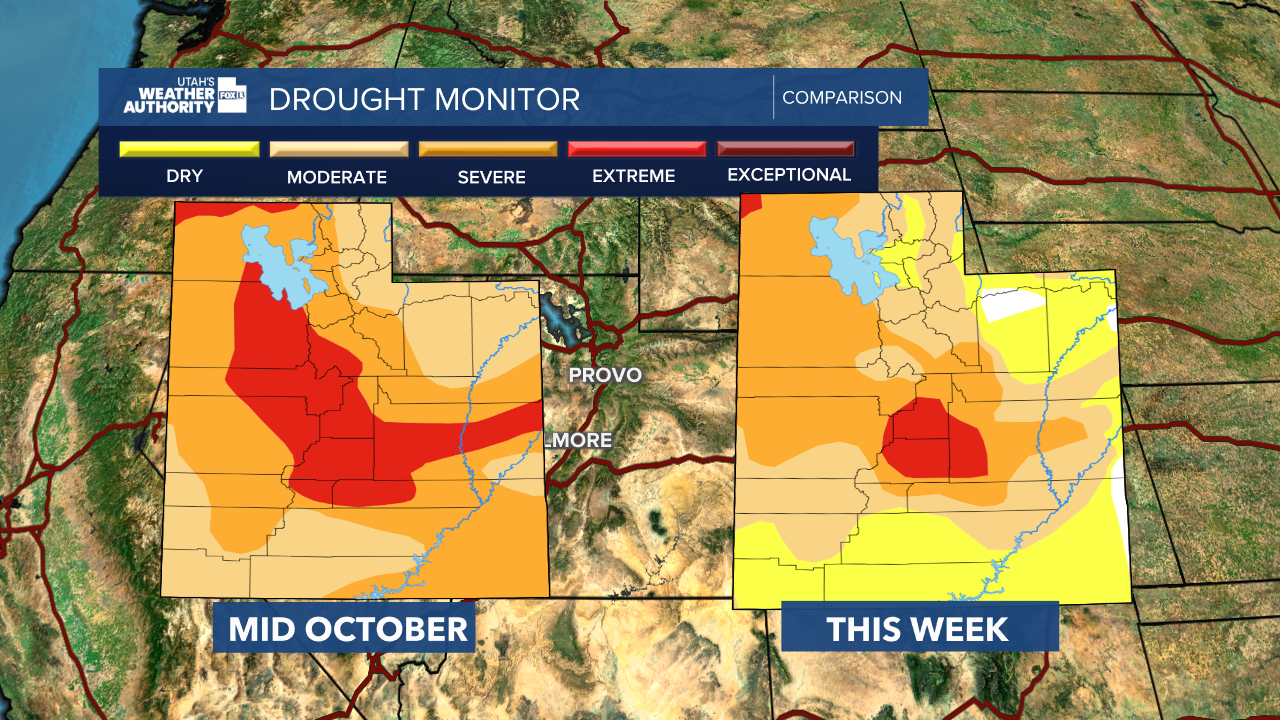
The heavy precipitation has lifted most of the state out of Extreme Drought conditions, with small parts of the state no longer under any drought status.