

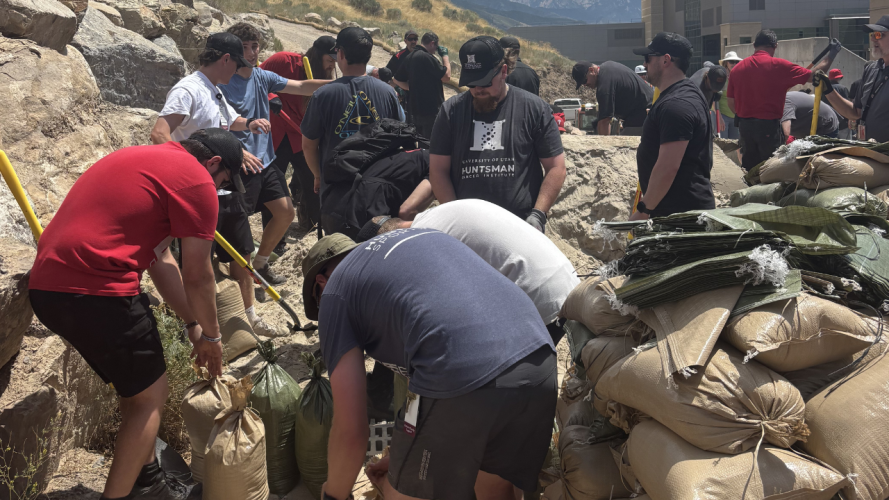


SALT LAKE CITY — A flurry of activity is underway on the University of Utah campus as hundreds are at work prepping multiple locations for possible flooding ahead of monsoonal rain forecast through the weekend.
Following last month's Bonneville Fire, University of Utah Health buildings remain susceptible to flooding after hundreds of acres burned in the foothills above the school. As of Thursday, there was a 40-60 percent chance of heavy rain.
"It's not like this is a 100-year flood, or at least we hope it's not," said Phil Chaffee, Assoc. Executive Director of Emergency Management at the school.
Block walls and cement barriers were put in place alongside 2,000 sandbags, which were being filled Thursday, and will be used to redirect the water flow toward storm drains.
"I think we're positioning ourselves in the best of a position as we could be in if these monsoonal flows were to play out," Chaffee said.
Officials hold briefing below on flooding preps on University of Utah campus:
Flooding concerns stem from the dangers of the burn scars left behind after the wildfire was contained. Water running downhill can pick up ash and burned vegetation, carrying it towards populated areas. Officials, however, believe the risks for flooding in the Bonneville Fire area are somewhat minimal this weekend.
"The risk level on this burn scar is lower than many fires that we've encountered," said Tom Simons, Salt Lake City Fire Department Deputy Emergency Manager. "Approximately 71% of the burn scar area is a low risk. Only about 7% is a moderate risk, and the rest is no risk."
Even though the risks remain low, Chaffee said the key is being ready for the worst to keep those who work on campus safe.
"The more we plan ahead of time, the less the impact and the more favorable the outcome for our patients, our facilities, and our community," said Chaffee. "We want to stay open for the community, and that's not done with a hope, that's done with very intentional planning."