

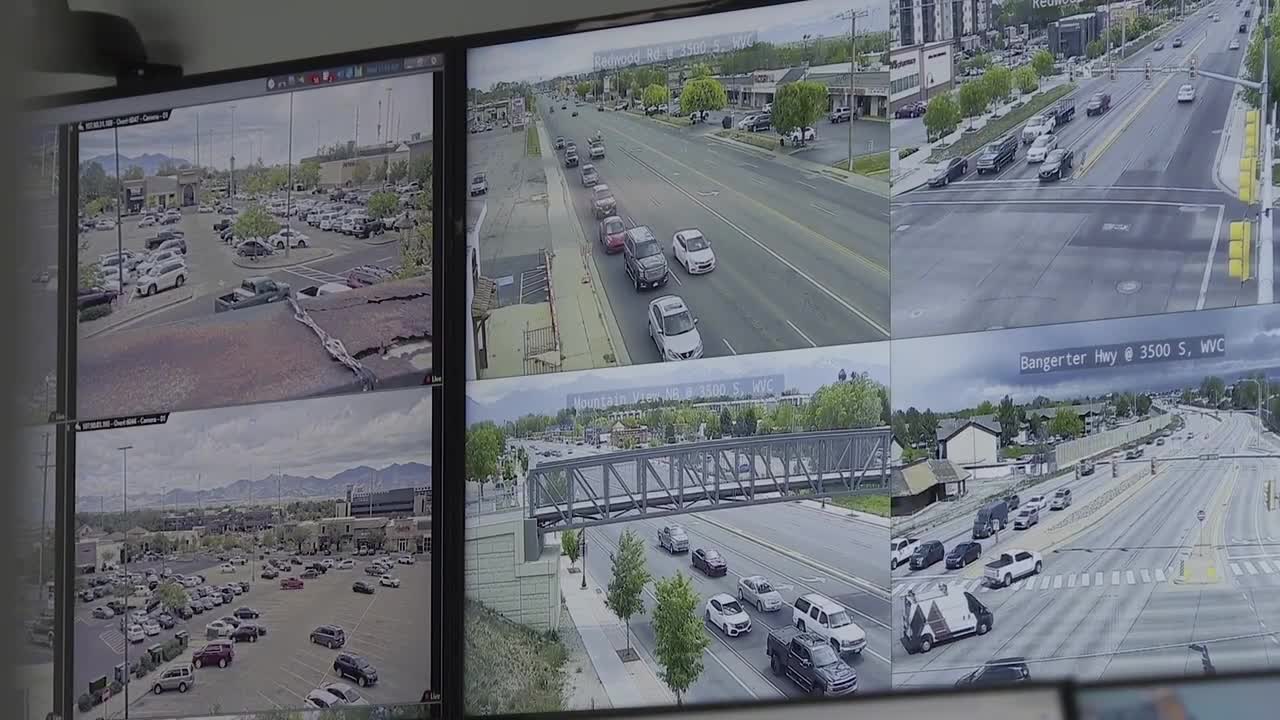


SALT LAKE CITY — Even with surveillance cameras already part of daily life in Salt Lake City, officials are now considering a major increase in police spending — raising questions about safety, privacy, and oversight.
Frustration over the perceived constant surveillance surfaced during the public comment portion of Tuesday’s city council meeting.
“You want to have a camera on everybody’s dog? When does it stop?” asked one resident.
The Salt Lake City Police Department is asking for an increase of $15 million to its budget, with about $1.6 million of that going toward expanding technology, including drones and license plate readers that feed into the city’s real-time crime center.
Chances are, anyone walking around downtown Salt Lake City these days is already on camera. Police say the difference is how and when they use that technology.
“These are calls for service where somebody has called in and said something is going on — and we’re going to investigate that,” explained Sgt. Greg Wilking.
Police shared that the real-time crime center gives officers access to camera feeds and other information during active calls, which helps them better prepare before they arrive on a scene.
"We’re not responding to something that really isn’t happening. We’re freeing up our officers, and we’re making it safer for the public," Wilking added.
Video shows unaware thief nabbed by Salt Lake City Police Drone Team:
Police claim the technology, which does not use facial recognition, is already helping solve crimes more quickly, pointing to a recent robbery involving a stolen phone, when a drone helped identify and track the suspect.
Critics want clear rules about how the data is used.
“Can we make sure that we are using the data correctly, that there is no misuse, and what happens if it is misused?” asked Council chair Alejandro Puy at Tuesday's meeting.
Puy said the city is working on ordinances tied to drones, license plate readers, and data privacy, but admits the challenge is balancing safety with public trust.
“It seems like this city is turning toward a police state," said one Salt Lake City resident on Wednesday.
While police claim the technology response is targeted and limited, opponents believe any guardrails should be public and enforceable.