

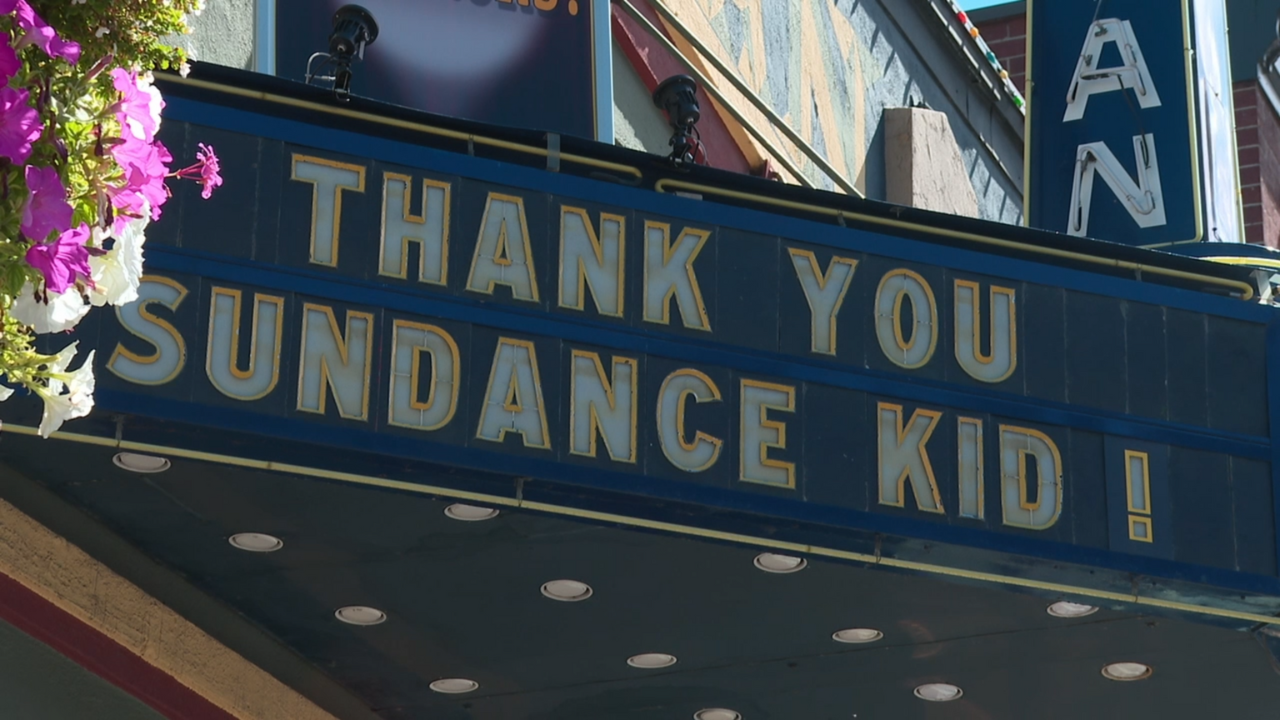


PARK CITY, Utah — It was an idea that began in the early 1980s with the late actor Robert Redford at the helm for what would become one of the most iconic film festivals in the world.
Redford’s vision was to make a place for filmmakers to grow and thrive. Between 1980 and 1984, the Sundance Institute was founded and held labs that support filmmakers in the creative process.
Sundance Film Festival officially opened in 1985, taking over the U.S. Film Festival and expanding to a 10-day showcase of independent films.
Park City celebrates final Sundance Film Festival, preps for what comes after
“So it means a lot to our film industry to have this in our backyard and be able to make the connections,” Mariah Mellus, the executive director of the Utah Film Center, said. “It means a lot to our community to watch independent film.”
She said that throughout the 40 years of the festival, it has planted seeds and fostered a strong film community in Utah.
“Because of Sundance, our entire film community has grown,” she said. “They have planted seeds, the Utah Film Center being one of them.”
The Utah Film Center hosts its own independent film programming and collaborates with the Sundance Film Festival each year.
“We’ve partnered with Sundance from the very inception of the Utah Film Center as a component of year ‘round independent film programming,” she said.
The festival expanded its reach in the 1990s. During that decade, small films became big. The entire world saw the debuts some iconic films like Quentin Tarantino’s Reservoir Dogs, which premiered at the 1992 festival.
By the mid-1990's, the Institute expanded its reach to Latin American, Europe and China. In 1995, the Sundance Film Festival in Beijing was the first-ever American independent film festival in China.
“The heart of the festival and the labs is giving independent film voices an opportunity to connect with audiences,” Mellus said. “We grow so much as a community when we share stories.”
In the 2000s, the festival expanded its digital reach and in 2014, the lab offered an opportunity for filmmakers to learn how to develop episodic content. And then in 2018, episodic storytelling became a category in the festival, which opened a spot for talent in television to make their mark.
In response to the COVID-19 pandemic in 2020, Sundance created an online platform for people to stream the movies and join chats.
And while the festival is set to move to Boulder, Colorado, for 10 years starting in 2027, the Institute will still be in Utah.
“I hope you’ll keep the love and support of independent film alive,” Mellus said.
It will continue the mission of the festivals’s purpose to help indie filmmakers grow and showcasing all types of voices just like Robert Redford intended.
