

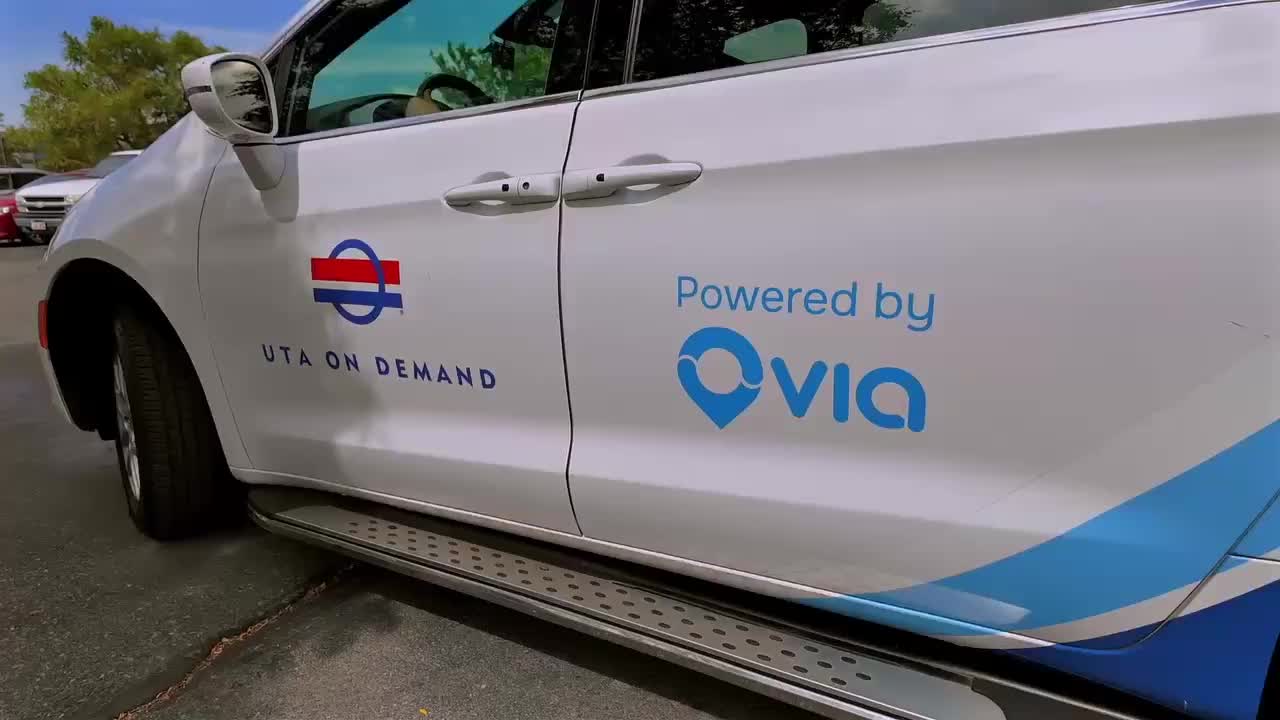


UTAH COUNTY, Utah — Northwestern Utah County has long been plagued by headache-inducing traffic issues. But county leaders are hoping a pilot program that’s introduced a rideshare app to four cities in the area can start alleviating those pain points - with the push of a button.
For many commuters like AJ Averett, finding a ride is the first step.
“I happen to be a case where my wife has a car, [and when] she works in-person - I’m left without a car,” said Averett.
He says it can make navigating Saratoga Springs difficult and costly.
“I definitely just feel stuck,” he added. “If I want to go to the FrontRunner right now on Uber - this is $16.”
But starting this week, he is finding those same rides for $2.50.
“I met with UTA last year, and I said this area is completely under-serviced,” said Utah County Commissioner Skyler Beltran.
Commissioner Beltran says they worked together to bring in UTA On Demand, which launched Monday.
The new zone for northern Utah County covers parts of Eagle Mountain, Saratoga Springs, Lehi and American Fork. It offers shared rides to anywhere in a six-mile radius from your pickup spot, but it can take you further so you can connect with other UTA locations.
All you have to do is download the UTA On Demand app on your phone.
He adds it’s not meant to be a competitor to Uber or Lyft. But it does offer affordable ‘network integration’.
“You can pick up your ride from your door and then take the Lehi Frontrunner to downtown Salt Lake, to Provo, all in one trip - for one price,” Commissioner Beltran said.
Averett’s already used that exact route - and he’s on board.
“It was actually really seamless, really fast,” said Averett. “After I’ve been using it for the past few days, it is exactly like my experience on Uber.”
With just 16 vans in use for now, it won’t break up the gridlock yet.
“If I can take one or two cars off the road, it’s somewhat of an improvement,” said Commissioner Beltran. “Is it going to make a difference? No. But it’s a piece of the puzzle.”
Commissioner Beltran hopes it can give them the data necessary to open more doors to public transit in this area.
“It can give us a lot of good data on where people are starting their trips, where they’re finishing their trips - where our core areas are,” Commissioner Beltran said. “There’s a lot of promise to this approach.”