

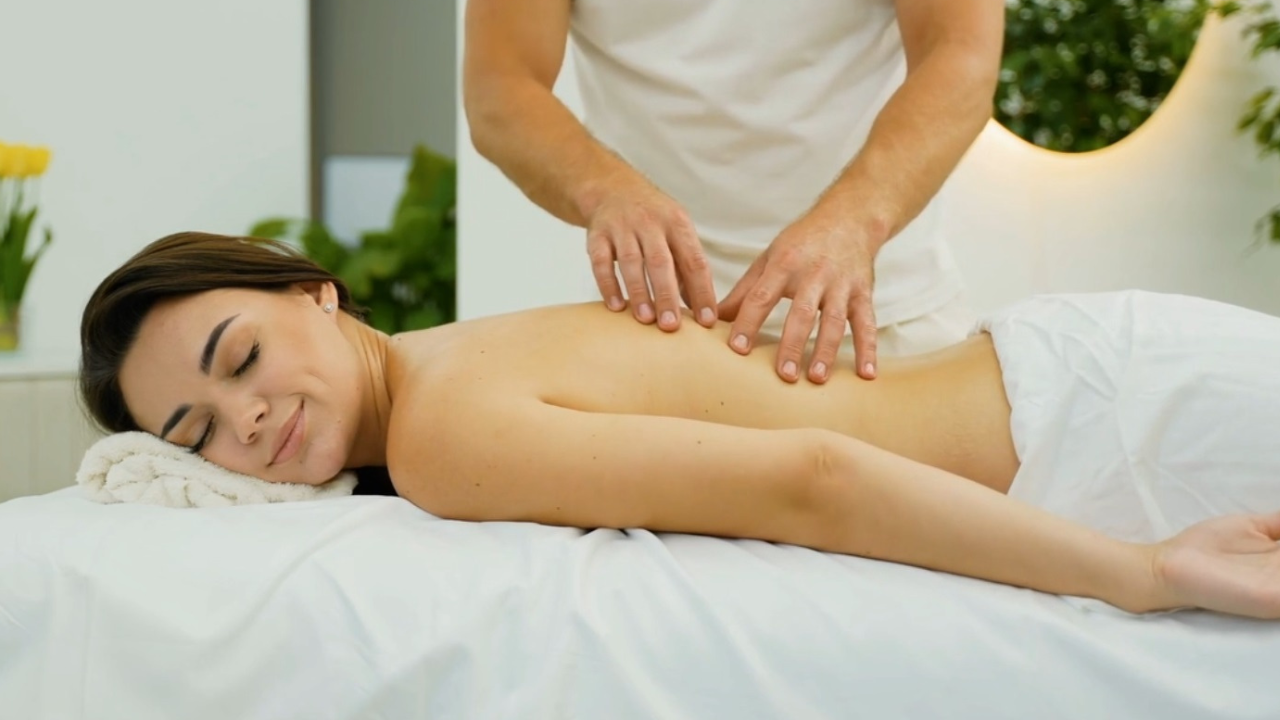


SALT LAKE CITY — Roger Olbrot has been a sports orthopedic massage specialist for nearly three decades. Since the inception of his business, R&R Bodyworks, Olbrot has been no stranger to the stereotypes correlated with the massage industry.
“Out of the starting gate, we get elicited for sexual favors, and that’s something that we all fight with, that we continuously struggle with. That stigma that massage is sexual,” said Olbrot.
However, Olbrot is hopeful about HB278, which passed during last year's legislative session, and was legislation he helped author.
The Department of Commerce has described the laws surrounding the massage profession as traditionally being a “patchwork mess”. Bad actors use local business permits as a front to hide, and if one county is lax on cracking down on illicit behavior, it’s easy for them to move from one county or area to another.
“[The bill will] give the state a lot of teeth to be able to go after people who are making us look bad,” Olbrot explained.
“For years, our Division of Professional Licensing has heard complaints from licensed massage therapists trying to do a good job, who are being actively, and actually sometimes aggressively, solicited for illicit services,” said Margaret Busse, the executive director for the Utah Department of Commerce.
Anonymous tip leads to massage parlor busts in Cottonwood Heights:
Law enforcement, along with the Department of Commerce's Division of Professional Licensing, has teamed up to crack down on illicit massage businesses, also called “IMBs”, many of which are hot spots for human trafficking.
As of Wednesday, there are a reported 195 IMBs in the state.
Before the bill’s passage, IMBs could operate under an administrative loophole, meaning the Division of Professional Licensing (DOPL) could only penalize individual workers, leaving owners of these businesses untouched. The law eliminates that loophole, shifting accountability from the exploited to the exploiters.
“Less than a third of establishments even show a registered key individual or less than a fourth of an owner on a business document,” said DOPL Director Mark Steinagel. “It’s been very difficult in Utah and nationally even, to figure out who these individuals are.”
Of all of DOPL’s regulated professions, massage has the highest volume of sexual misconduct complaints.
Here’s what’s now required of all massage establishments:
- All massage establishments must register with DOPL starting early spring 2026.
- Criminal background checks are required for officers, directors, managers and owners with at least 10% stake in the business.
- DOPL registration signage must be prominently displayed.
- Massage establishments must allow DOPL the authority to inspect the premises at any time.
“Often in the past, probably even more in the future, we’ll be undertaking those inspections with the partnership of law enforcement because of the shared responsibility. We have to address illicit massage businesses,” said Steinagel.
“Consumers will be able to have a much better sense of safety," added Olbrot. "If nothing else than ‘Hey, this person is a good person, trying to do a real job’."
Those seeking massage services, here are some things to keep in mind:
- Before you make an appointment or walk in, verify that the business’s license is on the Division of Professional Licensing’s website.
- As a client, you must be given the first name and last initial of the licensed individual performing your service, along with their license type.
- In addition, a licensed individual is prohibited from touching certain private parts of your body.