

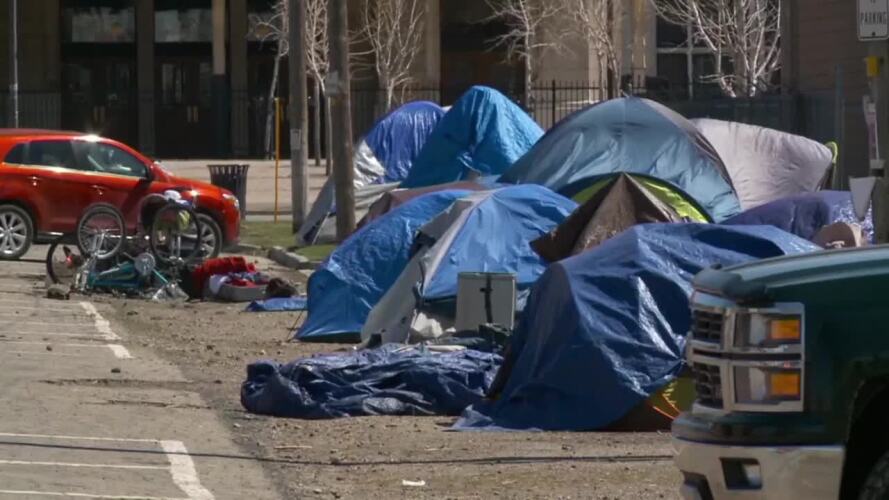


SALT LAKE CITY — Moe Egan wasn't exactly surprised to see the results of a new state study on people experiencing homelessness.
"It just confirmed what I already know as a person that’s lived on the streets and gone through that system," he told FOX 13 News on Tuesday.
Egan, who now works for The Other Side Village and serves on the state's Homeless Services Board as the only member who has been unsheltered, said he could relate to the study on people who are being labeled "high utilizers." Egan said he used to be one.
"In and out of jail, arrested over 15 times, right? I was out there," he said. "In a way, I was a drain on the system. Taxpayers were paying for me to be jailed, housed, legal fees, you name it."
Utahns experiencing homelessness weigh in on city ordinance meant to crack down on public camping
At Tuesday's meeting of the Homeless Services Board, we got a look at the new high utilizer study that showed a small group of people are disproportionately impacting social services, criminal justice and health care systems.
"I discovered that in Salt Lake City in the last year, there are 1,021 individuals that were arrested four or more times in a year. They represented 43% of the city’s arrests. But they represented 12% of the total arrest population," said Nathan Meinzer, who conducted the study for the Utah Office of Homeless Services.
Of those 1,021 "high utilizers," 783 were currently unsheltered and had been for more than five years. In contrast, the Utah Office of Homeless Services said roughly 75% of those who are homeless are out of shelters and in some form of housing after about a year or so. But high utilizers eat up roughly $51 million in taxpayer dollars in medical costs, social services and criminal justice costs.
The Utah Office of Homeless Services' annual Point in Time count for 2025 documented 4,584 Utahns experiencing homelessness on a single night, an 18% increase from the previous year.
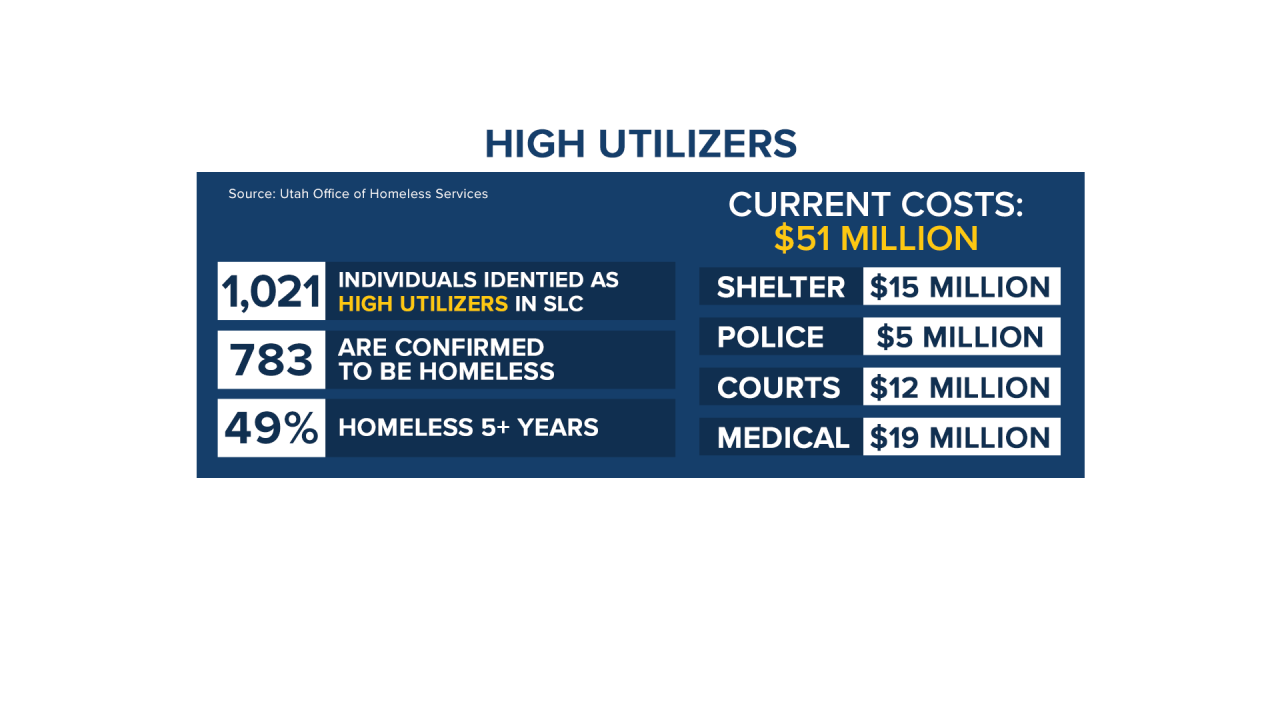
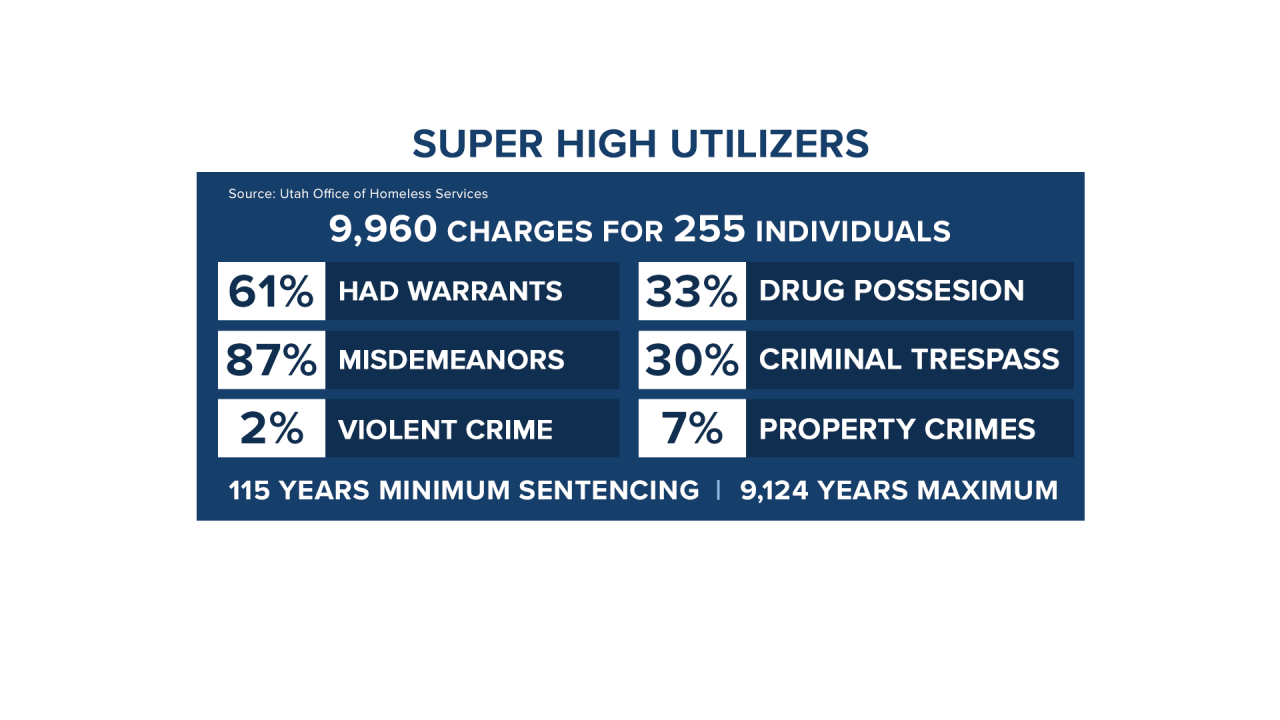
"I noticed something that was more important: there’s a super-high utilizer group," Meinzer said. "The top 25% of those high utilizers? They’re 50% of all those arrests."
The "super high utilizer" group eats $16 million of the total costs. Meinzer, who used to be a Salt Lake City police officer assigned to a shelter, said he has seen it firsthand.

"Those are folks that are kind of trapped in a cycle. There’s a gentleman I worked with as a police officer, we arrested him for distribution of drugs, using, fights, DV," he said. "In and out of jail repeatedly, hospital, big time utilizer. When we started working with case management and the totality of the situation? Started getting him into treatment."
Members of the board appeared fascinated by the data and what it could mean. The Utah State Legislature opted not to fund a controversial homeless campus that critics branded a "mega-shelter" and instead shift money toward the high utilizer population. The money lawmakers did allocate could now target this population.
"I appreciate this fantastic snapshot and I'd like to see it converted into not necessarily real-time — but ongoing results for us," said Salt Lake City Mayor Erin Mendenhall, who serves on the board.
But Egan said it won't be enough to throw money at the problem. He said just giving someone housing isn't enough if they don't have other supports from substance abuse treatment and accountability.
How Volunteers of America Utah supports homeless teens beyond shelter
"You’ve got this housing voucher and you’re thinking, problem solved, right? No," he said. "I have no skills. I have no idea how to keep and maintain this right? I need that accountability structure. I need someone who’s going to show me how to work through that."
But Egan said he believed this could help the state address homelessness by targeting their approach.
"This high utilizer group? Needs a little bit more help, a little more hands on," he said. "Somebody that can walk with them everyday, who has gone through this process and help them as well. That’s the missing piece."