

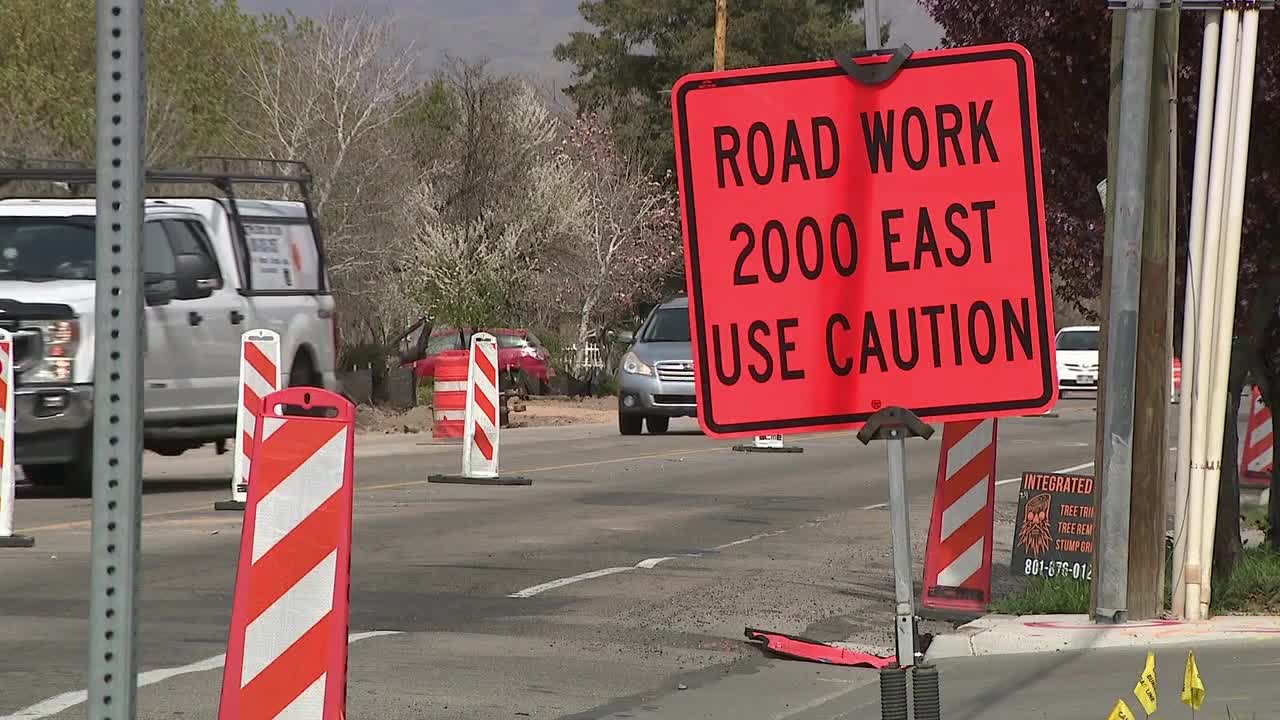


MILLCREEK, Utah — The roads in Terri Musgrove's neighborhood have seen better days.
There are potholes and cracks in the pavement. Some streets have been patched up and there are seals, while others are just crumbling.
"Around the neighborhood, they can be pretty rough," she said Monday. "There’s a lot of potholes they patch, then the next Spring they’re back."
Millcreek City estimates it has 179 miles worth of roads that need repairs. Most are small, neighborhood streets. Normally, road repairs are paid for by gas taxes. But lately, that's been seeing less money coming in.
"We’re seeing more electric vehicles, which is great for our air quality. But that means less in the amount of gas tax we receive," said Mayor Cheri Jackson.
So cities are exploring other ways to make up for road repairs. Millcreek is contemplating either a general obligation bond to go before voters in November or imposing what's known as a "transportation utility fee."
"It’s a monthly fee assessed to each property based on the property type," Mayor Jackson said. "That goes to a dedicated road fund which then goes completely to road repair."
UDOT proposal for Tooele intersection will ease safety concerns, but not everyone is happy:
This year, the Utah State Legislature passed House Bill 425, which allows cities across Utah to impose transportation utility fees more easily. When a bill on these fees was introduced in the 2025 Utah legislature, it faced pushback from a powerful entity — The Church of Jesus Christ of Latter-day Saints.
The Church, which owns a lot of property across the state, is a nonprofit institution and therefore doesn't pay property taxes. But it would be subject to fees. During the 2025 Utah legislative session, much was made about the impact of such fees for Provo, where The Church owns Brigham Young University, the Missionary Training Center, two temples and numerous chapels.
But this year? FOX 13 News is told that the Church's concerns with the bill were addressed, and it passed the House and Senate unanimously. The bill is now awaiting Governor Spencer Cox's signature.
Millcreek may be one of the first cities in Utah to take advantage of the new law.
"Millcreek does have nonprofit organizations, schools, churches, things that aren’t currently paying property taxes. So they aren’t contributing to that fund for our city roads. But they do have people coming to their business or place of worship," said Mayor Jackson. "They’re using the roads to utilize those properties, so a transportation utility fee is fair in that it captures all those businesses and property. It’s not solely on the backs of residents."
The Utah Taxpayers Association said it still has concerns that the fees are just a way for cities to get around Utah's "truth-in-taxation" laws that demand public hearings before taxes can be increased by a government entity.
"You often have residents that have no clue that you’re taking money from them and that you’re spending more money without having accountability to your taxpayers," said the association's president, Billy Hesterman.
The new law does require a more public process, and Mayor Jackson said Millcreek is holding numerous open houses for residents to weigh in on what the city should do to fix its roads. The next one is planned for April 2 from 5 to 7 p.m. at Millcreek City Hall.
"This is not a done deal. This is something we are considering," Mayor Jackson said. "We’re gathering information and we want to hear from residents. We hear a lot that they don’t like our roads."