



SALT LAKE CITY — A lawsuit challenging Utah's law on "sensitive materials" on school library shelves got its first hearing in federal court, with a judge setting ground rules around the identities of student plaintiffs.
"I want to make sure I’m protecting these students but also don’t want to make it more difficult or cumbersome than it needs to be," U.S. Magistrate Judge Cecilia Romero said, granting a protective order to keep the names of the students involved in the lawsuit from being publicly disclosed.
The Utah Attorney General's Office and the plaintiffs attorneys made arguments over the lengths they can go to protect the identities of students, so they aren't subjected to harassment as the litigation goes forward.
"Today’s hearing was preliminary, but important. The Court took the student plaintiffs’ privacy seriously, and the State agreed these children need protection. Now we’re eager to move this case forward because Utah is unconstitutionally stripping books from public school library shelves at an alarming and accelerating rate," said Ian McLaughlin, an attorney for the plaintiffs.
The lawsuit, filed by a group of students as well as the estates of acclaimed authors Kurt Vonnegut and Maya Angelou, and living authors Elana K. Arnold and Ellen Hopkins, challenges the law as unconstitutional and a violation of the First Amendment. The law, which centers around what are termed "sensitive materials," allows a book to be yanked from school shelves over complaints. If three public school districts — or two districts and five charter schools — deem content objectionable in a book? It's pulled from school library shelves statewide.
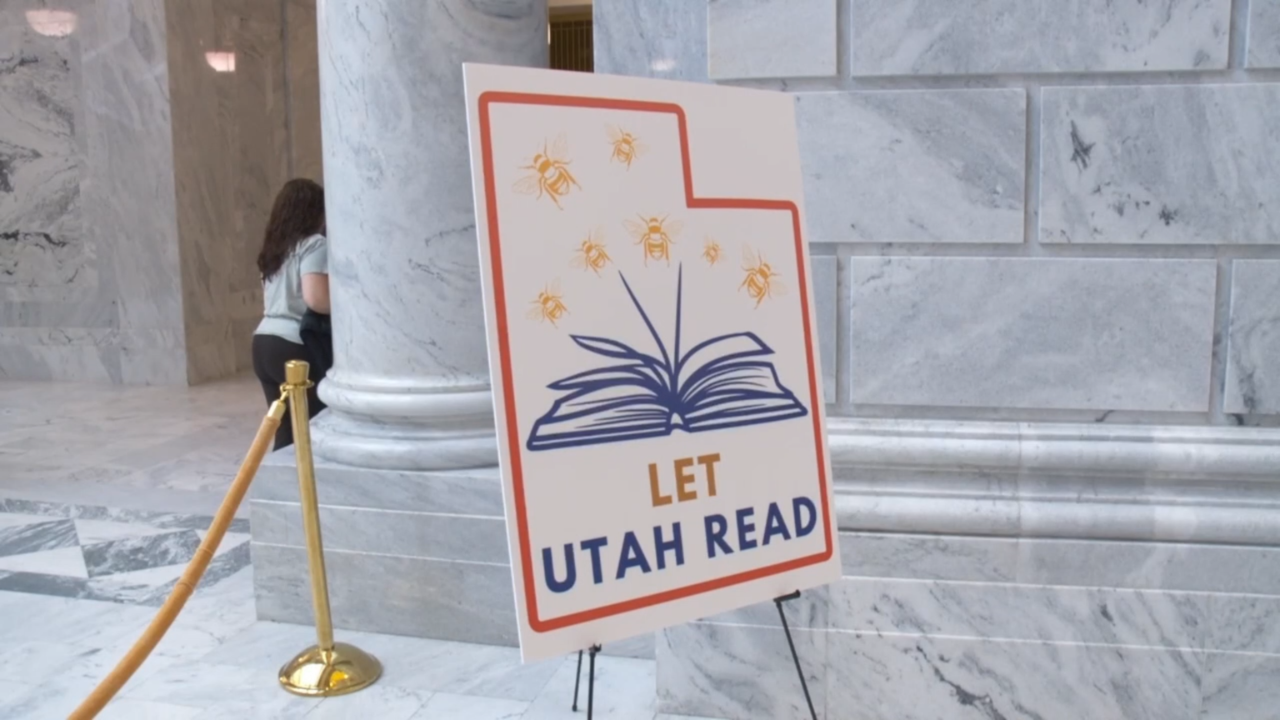
To date, 34 books have been removed statewide and hundreds more titles in individual schools, said Rebekah Cummings, the co-founder of Let Utah Read, which supports the litigation.
"We’ve been feeling like these book banning laws were unconstitutional since 2022," Cummings told FOX 13 News. "So I’m excited to have a judge finally weigh in on that."
Rep. Ken Ivory, R-West Jordan, who sponsored the law, said some books absolutely do not belong on public school library shelves.
"They use the word ban," he told FOX 13 News on Wednesday. "That’s just such a misnomer. This is a minimum standard on how we protect children. Materials are still available on Amazon, they’re available in bookstores, they’re available in public libraries."
Rep. Ivory defended the law as protecting children from pornographic materials.
"I think with the limited shelf space that we have? There are so many good and clean and pure and powerful and positive materials we can choose to teach even difficult subjects," he said.
Cummings said parents should be monitoring what their children read, but called the law "government overreach." Many of the titles targeted for banning do talk about sex and some are dictating for all what should be read. Titles restricted statewide include the source material for "Wicked;" "Forever" by Judy Blume; the "Court of Thorns and Roses" series by Sarah J. Maas; "The Perks of Being a Wallflower" by Stephen Chbosky; and "The Bluest Eye" by Toni Morrison.
"I’m a mother as well. I have three kids. I absolutely know that some books are appropriate for them and some books are not. I do feel, however, it’s my job to determine what books are appropriate for my kids, not a handful of the most extreme people in Utah," Cummings said.
The law has faced protests for and against it. In 2023, the Bible was famously removed from Davis School District shelves after a challenge over its violent and sexual content under the law. Every year, opponents of the law stage "read-ins" of banned books on Utah's Capitol Hill during the legislative session.
The Utah State Board of Education, which is a defendant in the lawsuit, declined to comment on the litigation on Wednesday. State school board members are currently debating a new library policy, something Let Utah Read has been watching closely.
"One of the policies being debated was whether we need a 30-day waiting period to order any book for any student," Cummings said. "A 30-day waiting period to buy a pop-up dinosaur book or the next book in the series a kid might be dying to read."
But Rep. Ivory said more standards — like a ratings system for books — might be good for the state.
"We have ratings systems for video games and movies and the rest. We should put onto publishers they have a ratings system and put some responsibility on the distributors and publishers," he said.
The Utah Attorney General's Office, representing the Utah State School Board and local school districts, has filed a motion to dismiss the lawsuit.
"In short, the Author Plaintiffs seek to compel governmental entities in Utah to provide minors with the Author Plaintiffs’ books even though Utah’s elected officials have determined, based on objective criteria, that they do not want to use government resources to do so," they wrote in the motion to the judge.