

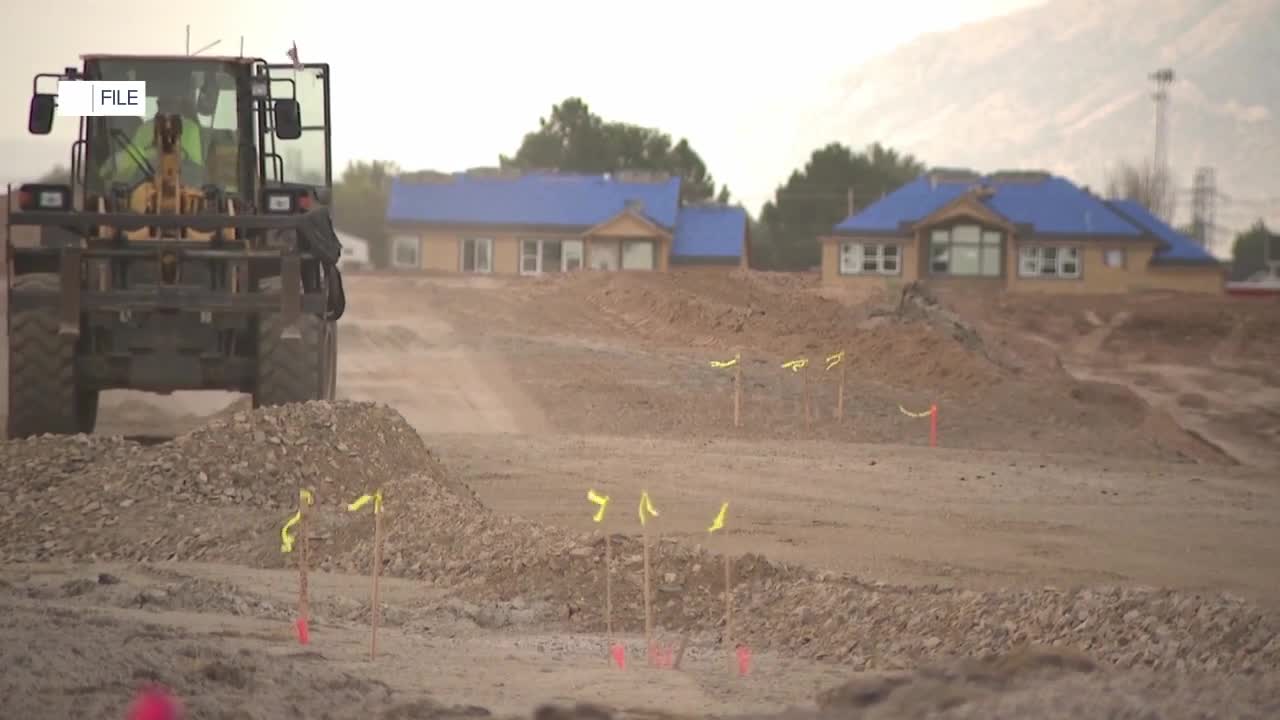


SALT LAKE CITY — In 2023, Governor Spencer Cox issued a challenge to build 35,000 new starter homes in five years. It was in response to the lack of affordable starter homes, which is keeping many young people from being homeowners and prompting others to leave the state.
“We have scarcity, and so the value of the homes that we do have and that are available has gone up, and it's outstripped our ability to provide adequate housing at a reasonable cost for our kids and our grandkids,” said Steve Waldrip, the governor’s Senior Advisor for Housing Strategy & Innovation, in a media conference on Tuesday.
Waldrip said over the last two years, developers have built more than 6,000 starter homes, but that’s not enough.
“We need to double our pace, and the best way to do that is to enact smart policies, provide resources for infrastructure, utilize our existing state land that is sitting and not producing any value for anybody,” Waldrip said.
Lawmakers are bringing ideas to the table, with the first goal to tackle infrastructure.
When homes need to be built, they require water, sewer, curb, and gutter systems.
“Cities are strapped with their budgets. They don't have the property tax base or the sales tax base to build that infrastructure. And so, what ends up happening is just those homes don't get built,” said State Rep. Calvin Roberts.
Normally, the developer would pay for property improvements, but Roberts is working on a bill to have the state help pay for it.
“It's basically reusing some existing money from other programs, but it would be a pool of money, of capital that cities can come to the state, make an application for important regional infrastructure with the nexus to housing,” Roberts said.
Another goal is to utilize state land left over from large UDOT projects.
“Create a process of partnership where the state, who has the ultimate land use authority on that land, is working closely with the local government to facilitate using this land … to hopefully put more affordable housing on the market,” Roberts said.
Another major goal is avoiding delays.
If a new development requires zoning changes, or another city adjusts, it can take months or even years to work through those issues.
Rep. Raymond Ward has a measure that would speed up the city process.
“They choose to not take action, then after 30 days, that thing would become a permitted use, and you'd be permitted to build. You still have to follow all the other ordinances there, but you'd be allowed to build that thing,” Ward said.
Ward said the Utah League of Cities and Towns, which represents Utah’s municipalities, doesn’t like the idea. FOX 13 News reached out to that organization on Tuesday but did not hear back.
Housing Day on the Hill will be Feb. 19 in the Capitol Rotunda from 11 a.m. to 2 p.m. It will give people an opportunity to learn more about Utah’s housing challenges.