

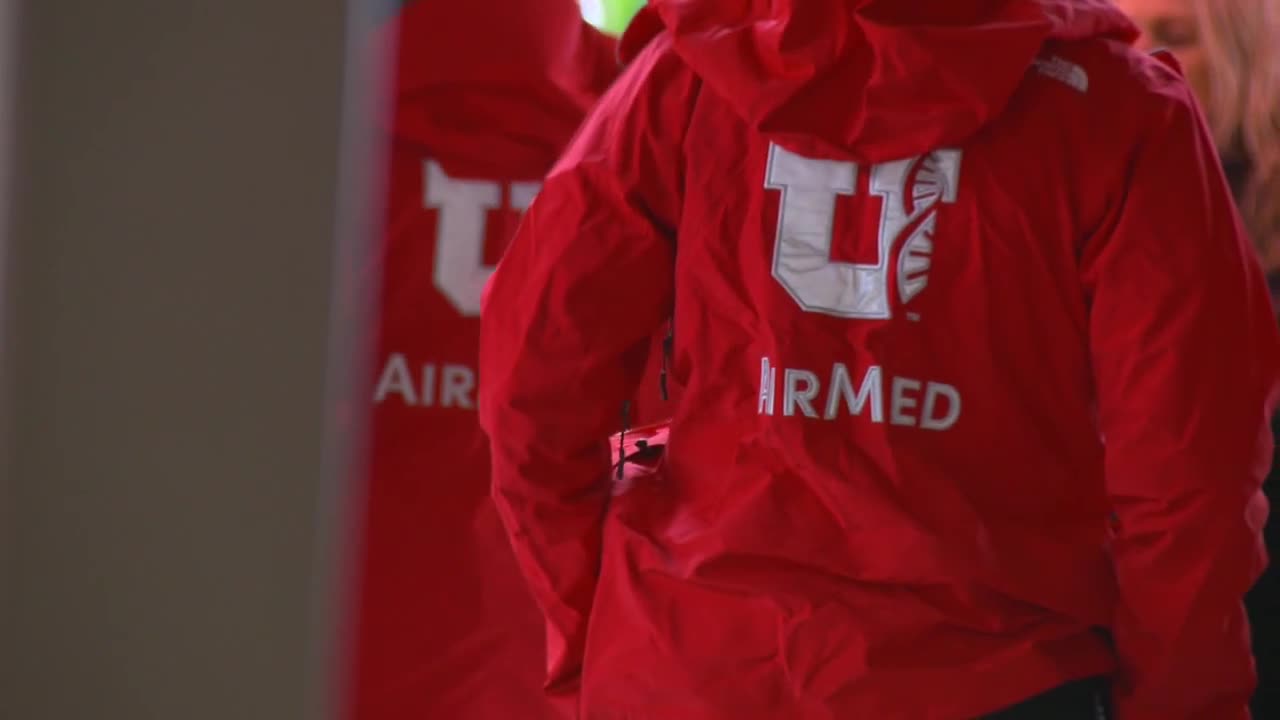


SALT LAKE CITY — University of Utah Health honored local first responders Monday as part of the 52nd annual National EMS Week, recognizing the emergency medical professionals who provide lifesaving care across Utah.
The event brought together EMS professionals, hospital staff and community partners to thank those who are often the first call in a crisis and the first hands providing care.
“Just to honor the people that are taking care of patients on the street and in people’s houses and then putting themselves in those chaotic situations that we all appreciate,” said Jamie Troyer, trauma injury prevention and outreach coordinator with University of Utah Health. “We love to just celebrate what they do and help them know how much we appreciate them.”
Troyer started her career as an EMT before going to nursing school and working in the emergency room at the University of Utah. She has now spent 27 years serving others.
“I’ve known I wanted to be a nurse, or at least in the medical field, my entire life," she said.
She said EMS and emergency care can be difficult work, and events like Monday’s recognition help remind first responders that their work matters.
“It’s a hard field. It’s a hard field to work in, for everybody,” Troyer said. “Showing we appreciate you, because sometimes it can be a thankless job. Letting them know what they do matters.”
This year’s EMS Week theme is “Improving Outcomes, Together,” highlighting the connection between first responders in the field and emergency teams inside the hospital.
Maren Anderson, marketing director for University of Utah Health, said that coordination is critical to patient care.
“We want to make sure that in each step the patient receives on the ground and then at the hospital is as continuous as possible,” Anderson said. “We work hand in hand with each other to make sure that patients get the best possible outcome in their treatment and recovery.”
The event also focused on the toll emergency response work can take on first responders.
“They work long hours in really traumatic situations,” Anderson said. “Rain or shine, they’re out there on the ground making sure that they’re in the right place, trying to be there at the right time to save lives and to support us.”
University of Utah Health also highlighted mental health resources available to first responders and their families, including SafeUT Frontline, which offers free, confidential support 24 hours a day, seven days a week.
“You don’t usually call the ambulance or EMS unless it’s a really bad day, and those folks end up seeing a lot of trauma in our community, and we want to support them,” Troyer said.
She also suggested the public take the time to say thanks when they see an emergency responder this week or any time.
