



SALT LAKE CITY — Governor Spencer Cox said he would not rule out seeking a drought declaration if Utah's already-bleak water situation intensified.
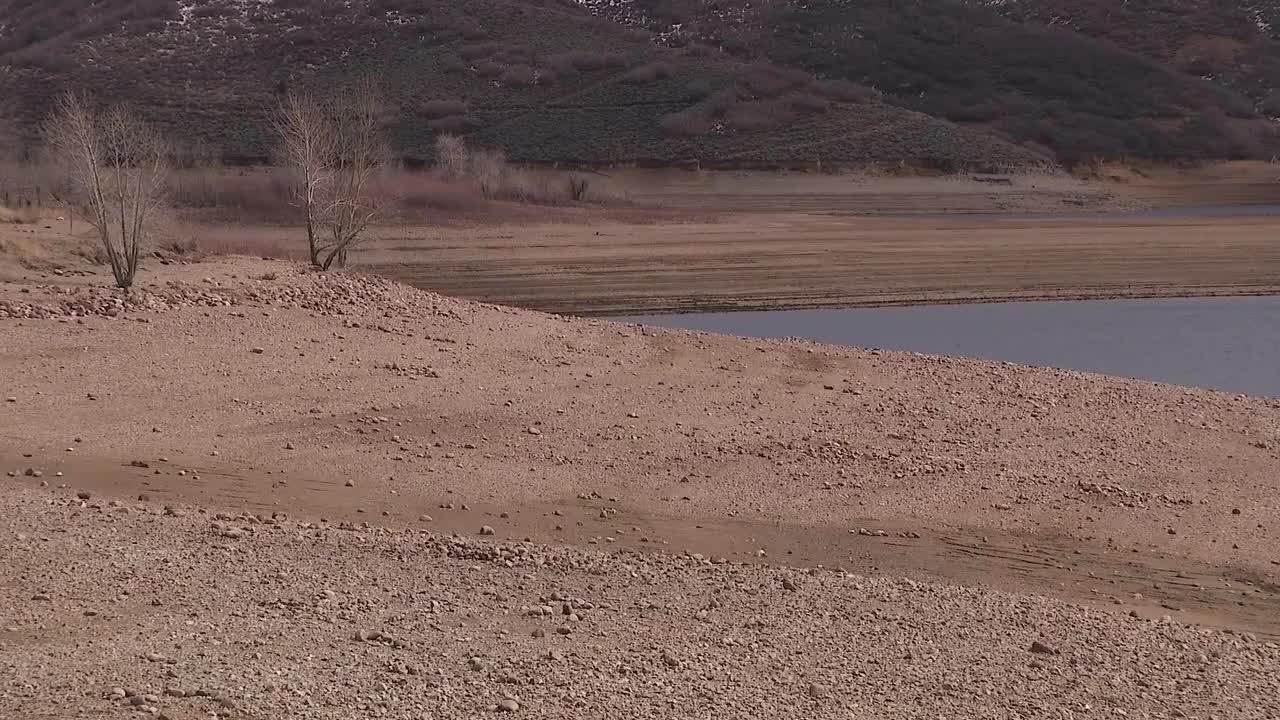
While the good news is that water supplies are good because reservoirs are full, FOX 13 News first reported on Wednesday that new government reports showed snowpack levels are among the worst ever; Utah's snow water equivalent (the water we get out of snow) is at a record low; and this winter was the warmest on record. The Great Salt Lake could hit a new record low this year and Lake Powell, which helps prop up the Colorado River system, could drop to such a low it ceases to generate electricity for millions of people across the West.
"We're hoping for a very wet spring and an early monsoon this year, " Gov. Cox said at his monthly news conference on PBS Utah. "But we have already had conversations about what drought declarations would look like, if we get to that point. And I would remind people that all of the decisions around cutbacks happen at the local level."
A drought declaration could bring some federal support, but it is only good for 30 days unless the Utah State Legislature meets and votes to extend it. Gov. Cox said he would wait until it is needed — signaling it could happen this summer.
'The new normal? Is not normal.' Utah's water situation is looking bleak:
Local water districts that FOX 13 News spoke with were already planning cuts and restrictions. Depending on where you live in Utah, they could be to agriculture or residential sectors. Most were urging people to conserve water. On Thursday, Salt Lake City Mayor Erin Mendenhall announced she would move the city into a "Stage 2" drought response and called for water savings of 10 million gallons a day (which can be achieved through voluntary conservation measures).
Community groups are trying to rally people to save water this year.
"The awareness that we have a very serious water issue in Utah is growing. I think there’s a growing awareness of the existential nature of the problem of the Great Salt Lake," said Mike Maxwell with the group Latter-day Saint Earth Stewardship. "Folks, whether they’re skiers or looking at the mountains, recognize there’s not enough up there."
At Weber State University in Ogden on Thursday, a sustainability summit included discussions and presentations on water conservation. Maxwell said people need to think seriously about how they use water and where they can make sacrifices regardless of where they are.
"And the choices, if they don’t hurt a little bit, then you’re probably not leaning in enough. We need everybody in our communities, our urban communities, our rural communities, people need to step up and make changes. I think this year is really going to bring that to a head," he said.
Gov. Cox touted efforts to get agriculture (historically the state's top water user) to grow crops with less water and new efforts to purchase water from them to send downstream to the Great Salt Lake or Lake Powell. Local water managers have been concerned about an increase in residential outdoor watering, while indoor use has remained steady despite a growing population.
Asked about climate patterns impacting the state's economy, the governor said be believed Utah can adapt and innovate.
"It's one of the incredible things about the human race and what we've been able to accomplish for generations, for centuries, and that is we can figure out ways to adapt to a changing climate and ways to improve the climate," he said.