

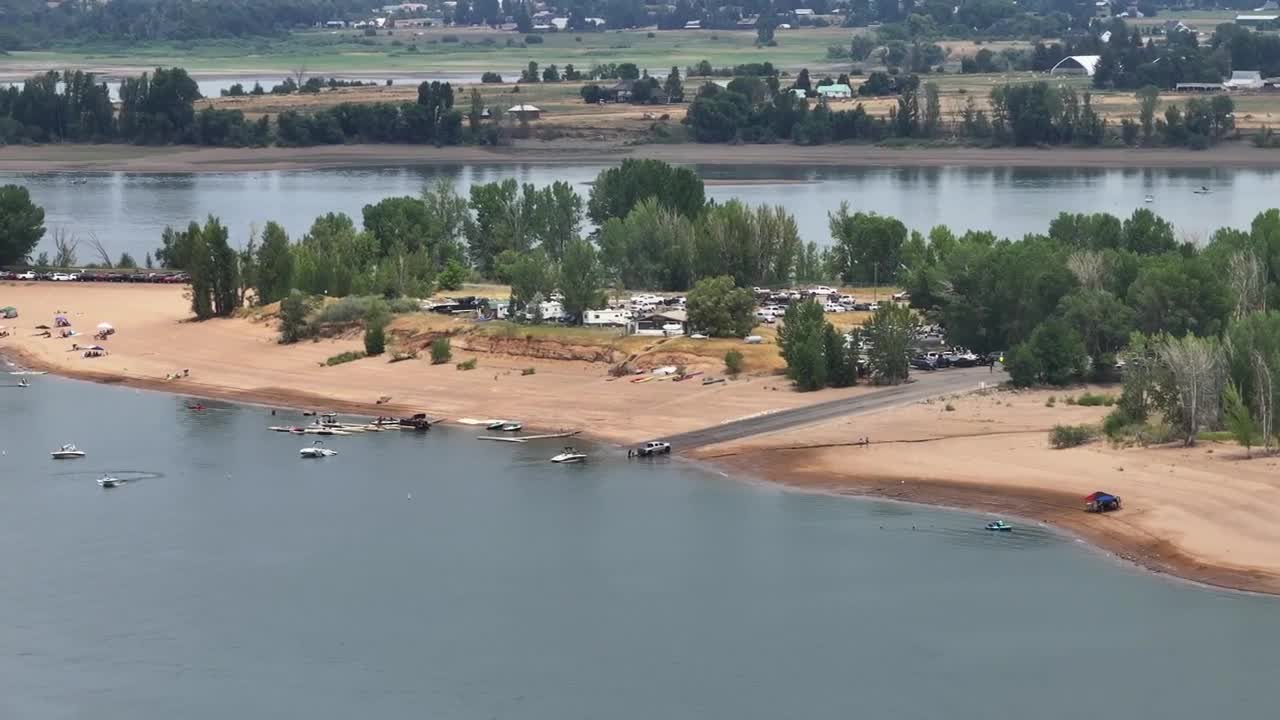


SALT LAKE CITY — Despite recent monsoonal rains, the drought situation across Utah continues to be dire, with a new report showing how bad it has actually been this year.
According to Thursday's drought update from the Utah Division of Water Resources, median water level drops seen at state reservoirs between May and July typically measure 1 percent. However, this year, that drop is a whopping 13 percent.
Utah reservoirs usually continue rising until late June or July, the report said. But after the worst winter season in state history, water levels in the reservoirs began to drop in May.
“While the rains have arrived, our reservoirs have seen a significant decline,” said Laura Haskell, drought coordinator for the Utah Division of Water Resources.
The reservoirs are currently averaging at 57 percent full, which the agency said is 17 percent lower than normal for the end of July, and 22 percent lower than last year.

In addition to low reservoir levels, streamflows are declining in most state rivers, although by how much varies by area, as some systems have benefited from "stronger snowpack, reservoir releases, and recent summer storms," the agency wrote.
Bear River has remained strong due to summer thunderstorms and reservoir releases that have helped maintain flows. But the Upper Provo, Upper Duchesne, and Upper Sevier rivers are struggling, even though recent monsoon activity has provided short-lived river flows.
