

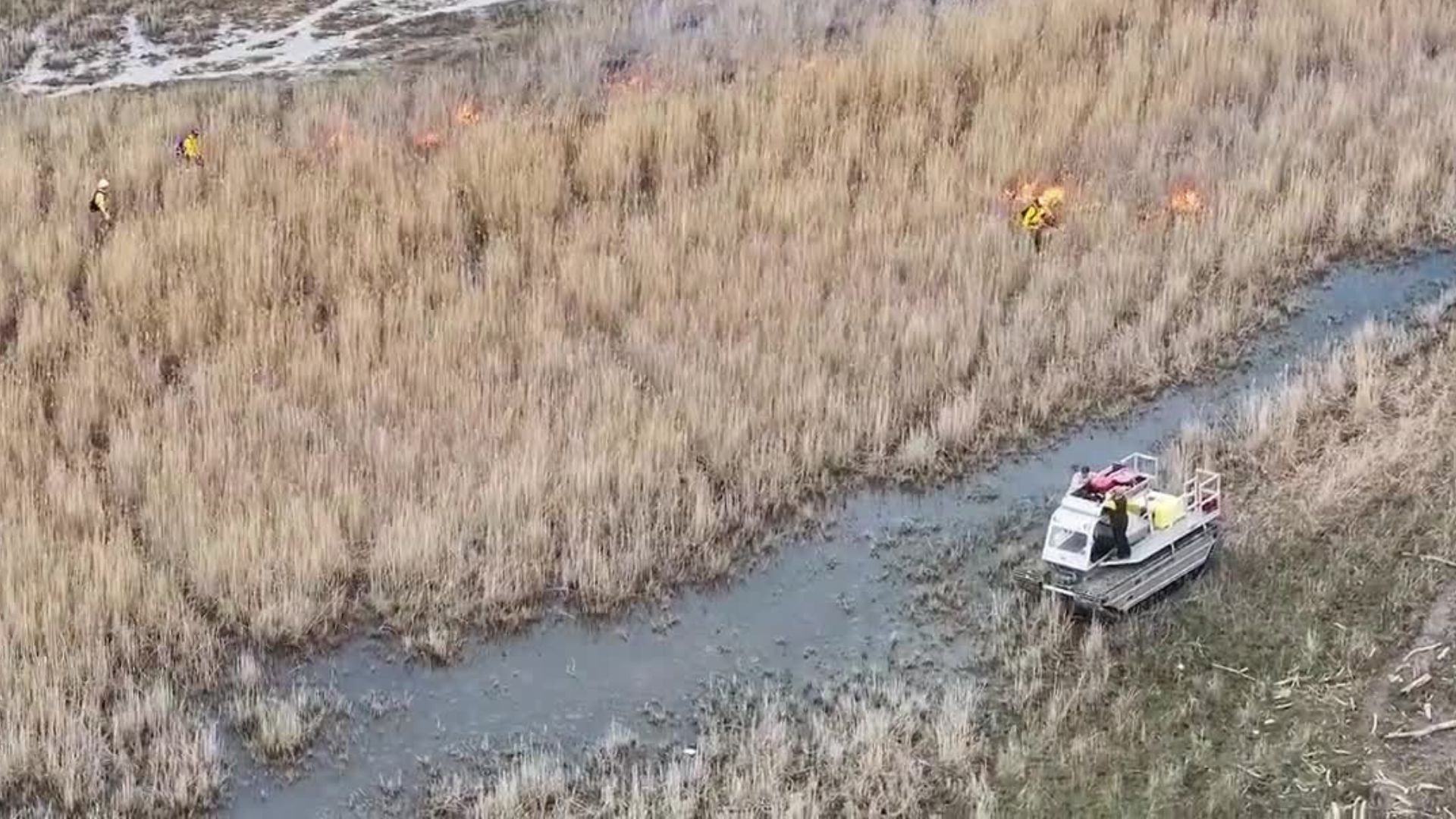


SALT LAKE CITY — Phragmites are a tall wetland grass that can grow up to 15 feet, but it's actually an invasive species that uses up a lot of water.
In 2011, Becka Downard, a wetland ecologist with the Utah Geological Survey, said phragmites were basically everywhere there was water.
In order to get established, the invasive species needs to have a source of seeds, disturbance, and sunlight.
While the Utah Geological Survey is mostly a supportive role that helps provide data on restoration and mapping, treatment is done by the Division of Forestry, Fire and State Lands and the Utah Division of Wildlife Resources. Downard said it tends to be a three-year treatment.
WATCH: Utah says it's making progress in the war on phragmites (April 2024)
She said they'll have to spray phragmites with herbicide, mow and trample it, and then do follow-up treatments. The grass holds soil in place and stores carbon, but it pushes out native wetland plants.
Downard added that it doesn't help with the drought problem that the state is facing.
“We have a study going on right now monitoring how much water phragmites uses, and as far as we can see, it uses as much water as available,” Downard said. "It’s using a lot of water that could maybe go to the Great Salt Lake or other downstream wetlands."
She does worry that the drought conditions could cause more fires in the phragmites. She said when they’re drought-stressed, they can catch fire more easily, and the three-year treatment won’t work.
The Utah Geological Survey website has public information about the phragmites and some treatment options. There is also a Utah Wetland Mapper that shows the wetlands in your area.