

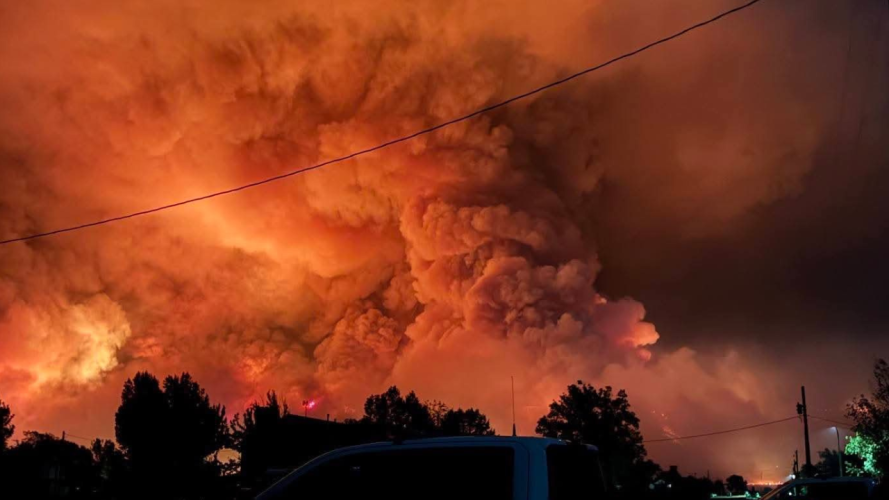


KAYSVILLE, Utah — More than 1,200 wildland fires burned across Utah during a severe 2026 fire season that strained firefighting resources, impacted communities, and cost hundreds of millions of dollars to fight.
During a Utah Senate committee meeting Wednesday, Brianne Emery, the State Forester and Acting Director for the Utah Division of Forestry, Fire and State Lands, said the 2026 season was one of the most severe in state history.
“Multiple megafires, which are defined of being 100,000 acres or more,” Emery said. “Unfortunately, there was loss of life this season, not just in Utah but throughout the West.”
Natural-caused wildfires outpace human-caused in unusual Utah fire year:
In Utah alone, more than 560,000 acres burned. The state’s first ignition of the year was reported on Jan. 4.
Emery pointed to several fires, including the Iron Fire, Cottonwood Fire and Cherry Fire, that came in quick succession.
“The fire conditions were extreme, communities and economics were impacted and nationwide at the time, resources were being stretched thin,” Emery said.
The intense fire season also put pressure on first responders, with hundreds of Utah firefighters working on fires across the West in a variety of roles.
Among them was Colton Bascom, a firefighter paramedic with the Kaysville Fire Department.
“As of last year, we implemented this wildland program, where we can also go help those who are fighting fires out there,” Bascom said.
Bascom was part of a crew that traveled to Nevada to help firefighters with injuries and recovery.
“We all work together as a family,” Bascom said. “A lot of times at the end of the day it was just helping from, ‘I need a bag of fluid, I’m a little dehydrated,’ to ‘I’m getting blisters and I have moleskin.’ Other times, we were having to engage in other interventions that were a little more serious.”
The financial cost of the 2026 wildfire season was also significant.
Emery explained the costs to lawmakers.
“Looking at all agencies, including our federal agencies, statewide, we’re looking at $253 million this year to fight fires,” Emery said.
As fire officials look toward the new year, they are hopeful a strong snowpack could help with fire prevention and conditions.
However, they cautioned that fire behavior can remain unpredictable, making preparation and firefighting resources critical heading into another season.