

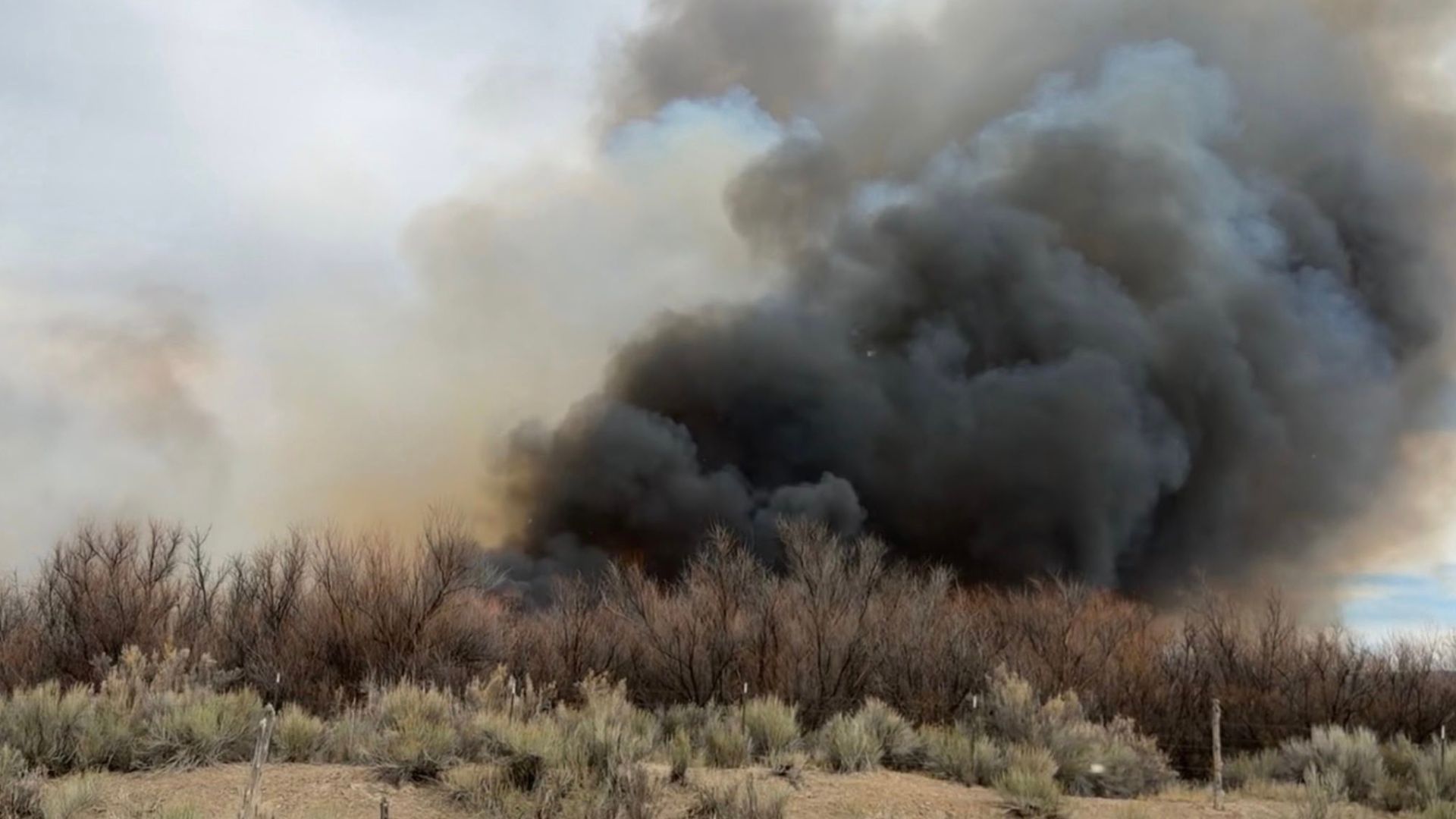


SEVIER COUNTY, Utah — A controlled burn that reignited in gusty winds sparked a 100-acre wildfire over the weekend in central Utah, raising concerns about an early start to wildfire season.
Fire crews from Sevier and Sanpete counties responded Saturday to the fire burning along the Sevier River just north of Redmond, sending thick plumes of black smoke visible across the area.

Utah Wildfires
Human-caused wildfire burning in Sevier County
According to the Sevier County Sheriff’s Office, the fire began as an agricultural burn.
“One of our local farmers was out taking care of some weeds in the ditches… and thought he had it taken care of,” Sevier County Sheriff Nathan Curtis said. “Then thought, 'I’d better go see.'”
While controlled burns are common this time of year, conditions weren’t typical.
“This is way too early to be dealing with this right now,” Curtis said. “The whole state’s dry… It’s something all of us across the state are paying attention to.”
Curtis said he reached out to other sheriffs across Utah and got the same response: concern about how early fires are starting this season.
Officials say most controlled burns are handled safely, but wind and dry conditions helped this one quickly spread.
“It doesn’t take much,” Curtis said. “The wind, dry conditions, and it really took off.”
Multiple agencies, including local fire departments and volunteers from both Sevier and Sanpete counties, worked together to contain the fire.
“It was right on the county line… and we had agencies from both sides working together,” Curtis said. “They’re just amazing.”
The fire comes as Utah State University’s Fire Potential Outlook shows an “above normal” risk for significant wildland fire in parts of southern Utah heading into summer.
Experts say a lack of typical winter snowpack is a key factor.
“We didn’t have that snowpack… to push down cheatgrass and lighter fuels,” said Ashley Snipes with the Bureau of Land Management. “That’s causing a problem right now for an easy start and quick spread.”
