

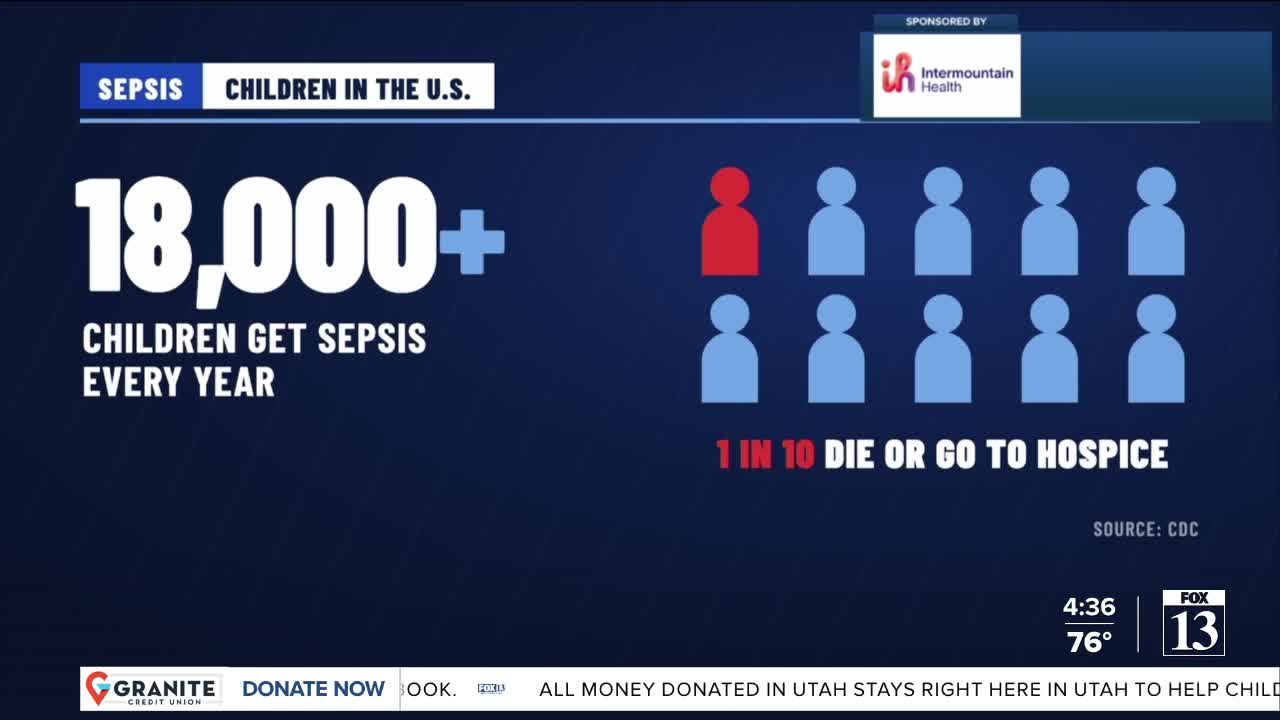


An infection can become dangerous when the body’s response to it begins to harm its own tissues and organs. That condition is called sepsis, and recognizing it quickly can save a life.
Dr. Jennifer Workman, chief medical officer at Intermountain Primary Children’s Hospital, explained what happens when an infection overwhelms the body and why parents should take warning signs seriously.
“Sepsis is the body’s response to an infection that gets completely overwhelmed,” Workman said.
“Sometimes that infection becomes out of control, so you wind up with massive amounts of inflammation throughout the body that can lead to tissue damage, organ failure and, as you mentioned, sometimes even death,” she said.
Children can become seriously ill quickly
Workman said children’s ability to keep fighting an illness can make it difficult to recognize how sick they are before their condition suddenly worsens.
“Children hold on and their bodies can keep fighting really far until all of a sudden they can’t anymore, and then they seem to sort of fall off a cliff,” she said.
As a physician and a parent, Workman understands how frightening those moments can be for families.
“My job is a million times harder since having kids than before having kids because you can easily picture yourself in any single family’s situation,” she said.
Know the warning signs
According to the Centers for Disease Control and Prevention, someone with sepsis may have one or more of these symptoms:
- Clammy or sweaty skin.
- Confusion or disorientation.
- Extreme pain or discomfort.
- Fever, shivering or feeling very cold.
- A high heart rate or weak pulse.
- Shortness of breath.
Sepsis is a life-threatening medical emergency. Without prompt treatment, it can lead to tissue damage, organ failure and death.
Recovery offers hope
Workman recalled a child with septic shock who spent weeks in intensive care and remained hospitalized afterward.
Years later, that patient was “thriving, completely healthy, um, off to college, just doing amazingly.”
The experience illustrates the possibility of recovery after a serious illness and the importance of getting treatment quickly.
If an infection is not improving or is getting worse, the CDC recommends seeking medical care immediately and asking whether it could be leading to sepsis. A health care provider should promptly evaluate and treat anyone who may have sepsis.
This story was reported on-air by a journalist and has been converted to this platform with the assistance of AI. Our editorial team verifies all reporting on all platforms for fairness and accuracy.