



SALT LAKE CITY — Three Utah roads have been ranked among the most passive-aggressive in the country, according to a new study that surveyed more than 3,000 motorists about driving behavior across the United States.
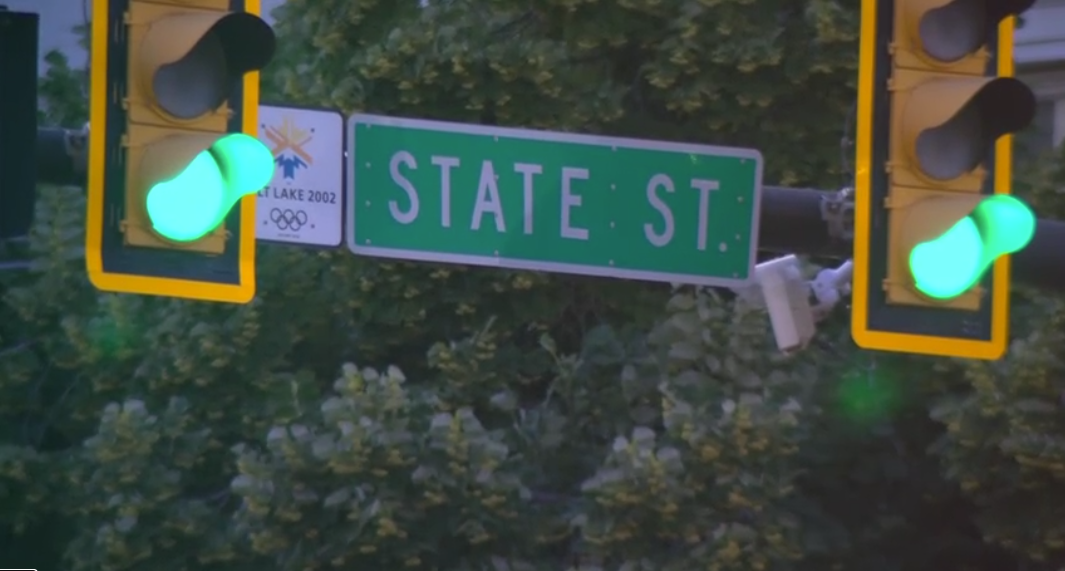
State Street in Salt Lake City, 400 South in Salt Lake City, and University Parkway in Orem ranked 32nd, 59th, and 74th, respectively, on the national list compiled by American River Wellness, an organization that helps truck drivers return to duty by offering support and recovery resources.
The study surveyed 3,011 motorists to identify the routes most associated with passive-aggressive behavior behind the wheel — places where small acts of discourtesy stack up and where drivers are left feeling more tense, irritated, and worn down long before they reach their destination.
The most commonly reported behavior was drivers cutting across lanes at the last second, cited by 23% of respondents. Motorists refusing to let cars pull out from side roads or parking lots came in second at 16%, followed by tailgating without overtaking at 11%.
Other commonly reported behaviors included:
- Drivers refusing to let others merge — 12%
- Drivers deliberately slowing down after being passed — 9%
- Drivers speeding up when someone signals — 8%
- Drivers sitting stubbornly in the passing lane — 8%
- Drivers pretending not to see another waiting driver — 6%
- Drivers blocking intersections or entrances — 5%
State Street, Salt Lake City — Ranked #32
According to the study, State Street has the long, practical rhythm of a road where everyone seems to be trying to get across the valley without giving up their place. Between shopping centers, restaurants, commuters, side streets, buses, and drivers making late decisions before the next light, it creates repeated small tests of road manners. A turn signal flashes, and the gap disappears almost politely.
400 South, Salt Lake City — Ranked #59
400 South carries city traffic, university traffic, buses, cyclists, pedestrians, train crossings, side streets, and downtown movement, making every block feel slightly over-negotiated. The passive-aggressive behavior is usually subtle: edging into intersections, hovering beside a car that needs to merge, refusing to let someone out from a side street, or closing the gap just as a driver realizes they need to turn.
University Parkway, Orem — Ranked #74
University Parkway has the student-town, shopping-corridor, commuter-road mix that can make patience feel conditional. Drivers move between campuses, malls, restaurants, apartments, offices, and side streets. Passive-aggressive behavior shows up in familiar ways: blocking plaza exits, speeding up when someone signals, refusing to leave space for a turn, or making a hesitant driver wait.
Where and when it happens most
When asked where passive-aggressive driving happens most often, merge lanes and lane-drop areas dominated the results, with 26% of respondents identifying those spots as bringing out the worst behavior in motorists. Busy downtown streets, suburban commuter roads, and shopping corridors each received 13%, while roads near malls and retail parks followed at 12%.
Smaller but notable frustration zones included:
- Parking lots and plaza entrances — 7%
- Construction zones — 5%
- Beach or tourist roads — 4%
- School pickup and drop-off areas — 3%
- College-town roads — 3%
The study also found that young drivers topped the list of those most likely to behave passively-aggressively on the road, according to 32% of respondents, followed by daily commuters at 22%.
The emotional toll
Many drivers said the experience lingered long after the actual interaction ended. While 33% said they were annoyed but got over it quickly, a significant share reported more lasting effects:
- 15% said passive-aggressive driving leaves them anxious or tense behind the wheel
- 15% said it makes them angry, even if they do not outwardly react
- 12% said it makes them drive more defensively
- 9% said it leaves them exhausted by the end of the trip
- 9% admitted it makes them more impatient with themselves
- 7% said the stress stays with them for the rest of the drive
"Passive-aggressive driving tends to fly under the radar because it does not always look dramatic, but over time it can create enormous stress for drivers," Graham Sargent of American River Wellness said. "A lot of these behaviors are small acts of impatience or territorial driving that people almost normalize, yet they contribute to tension, anxiety, and emotional fatigue behind the wheel every single day."
What truckers want drivers to know
Truckers who participated in the survey said one of the biggest misunderstandings motorists have is how dangerous it is to cut in front of large vehicles. Twenty percent said drivers underestimate how risky this behavior can be, while 18% pointed to widespread misunderstanding around truck blind spots.
Truckers also highlighted several other common misconceptions:
- Trucks need far more space to stop safely — 14%
- Trucks are often driving to strict schedules — 12%
- Trucks cannot always move over immediately — 11%
- Trucks need extra room to turn — 9%
- Trucks cannot accelerate quickly after slowing down — 9%
- Trucks are heavily affected by hills, weather, and road conditions — 7%
Law enforcement weighs in
Utah Highway Patrol Lt. Zach Randall said the behaviors identified in the study are not unique to the roads named. "What we see as far as teen driving and distracted driving, those behaviors are typically what we see on any other roads. They're not particular to those roads that were mentioned in the studies," Randall said.
Randall also noted that aggressive driving can carry legal consequences. "If aggressive driving can be identified as a contributing factor to a crash or a roadway incident, then a person can be charged for it. So hopefully that's an incentive enough to people to hopefully check their behaviors, not let things escalate, and be more courteous to others as they're driving on the roadways," Randall said.
The full study, which includes an interactive map showing the most passive-aggressive routes across the country, is available here.
This story was reported on-air by a journalist and has been converted to this platform with the assistance of AI. Our editorial team verifies all reporting on all platforms for fairness and accuracy.

DRIVEN TO CHANGE
