

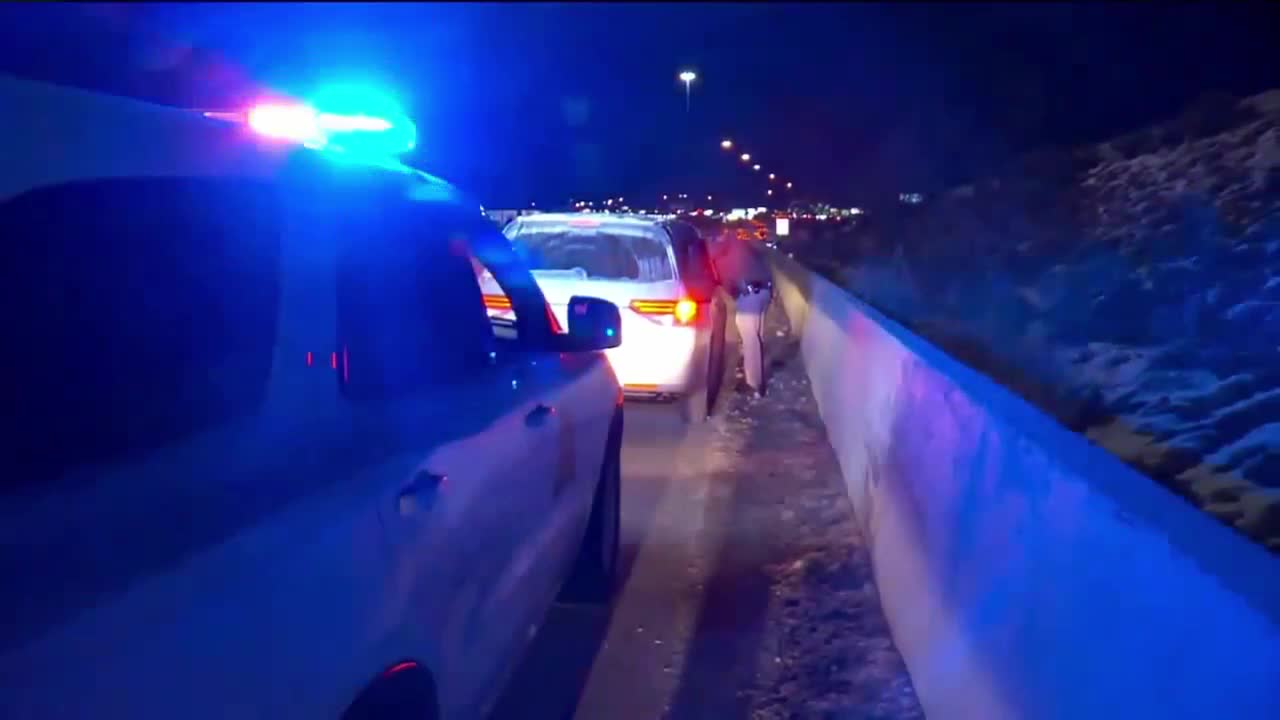


SALT LAKE CITY — When those flashing lights appear in your rearview mirror, the immediate impulse is often to pull over right away. But what's the safest approach when being stopped by law enforcement on busy Utah freeways?
Rocky Baum, who drives 80 miles daily for work, brought this question forward after witnessing countless drivers pull over immediately next to freeway barriers, potentially putting everyone at risk. "I've been driving 80 miles a day, 40 into work, 40 back for 30 years, and just time after time they pull right over next to the barrier," Baum said.
"Is it OK to pull over immediately right next to the barrier, put everybody's life in danger, or should you lead the officer safely to the next exit, pull over?" he asked.
According to Lieutenant Cam Roden with Utah Highway Patrol, there's no one-size-fits-all approach because it depends on the type of road and available safe options. However, safety should always come first. "Whether you're in the HOV lane or you're in one of the general purpose lanes, we want you to pull over on the right-hand shoulder," Roden said.
"We're going to want you to pull over in a relatively short time frame, getting to a spot that is going to be the safest place possible. We want you to be safe. We want our trooper to be safe, but just know that, yeah, the soonest convenient spot," he said.
Roden emphasizes that it is acceptable for drivers to cross a double white line to reach a safe location when being pulled over. He urges drivers to prioritize finding a safe spot for both themselves and the officer, who will be exiting their vehicle and walking along the busy roadway.
Above all, Roden advises staying calm during the process. "When you get pulled over, those nerves automatically kick in and so you want to automatically start to say, OK, I see you, and you want to start automatically pulling over, but you also got to realize that you may have traffic that is next to you coming up on you quickly or whatever, so don't let those nerves get the best of you," Roden said.
For Baum, the goal is simple coordination between drivers and law enforcement. "So we need to get on the same page," Baum said. "And we just want to do what makes them happy."
This story was reported on-air by a journalist and has been converted to this platform with the assistance of AI. Our editorial team verifies all reporting on all platforms for fairness and accuracy.

DRIVEN TO CHANGE
