

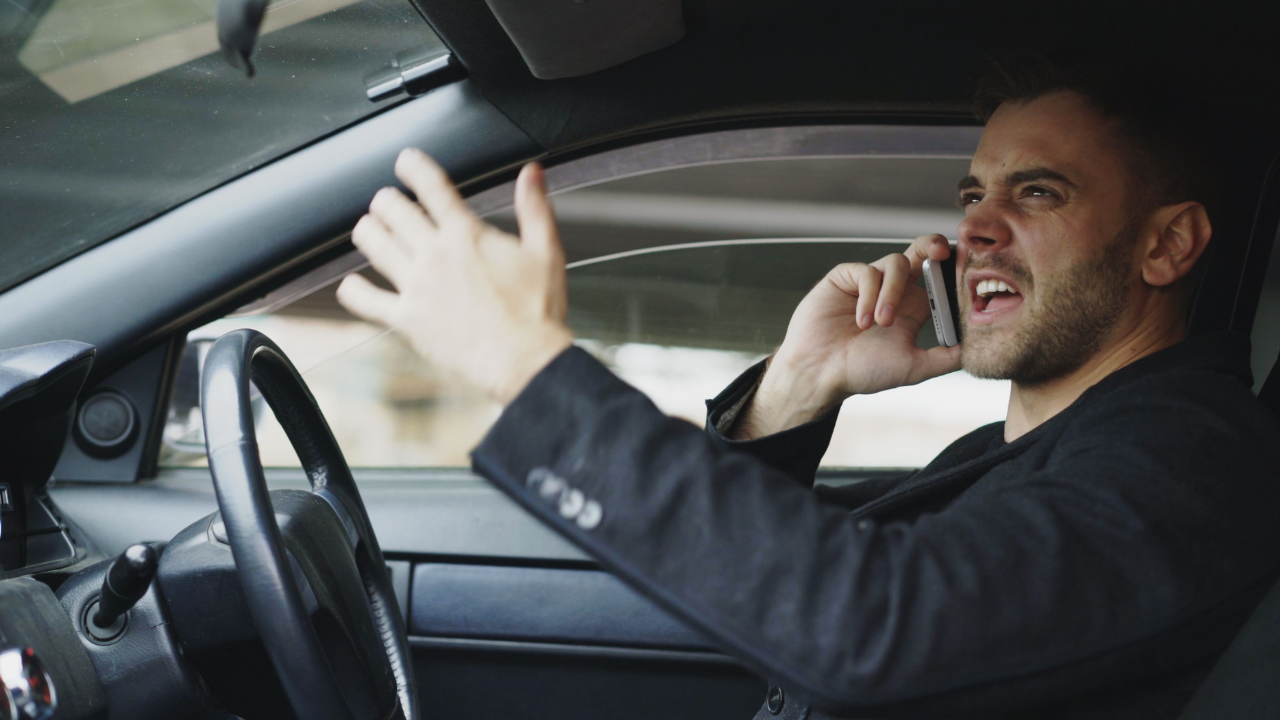


EAGLE MOUNTAIN, Utah — Road rage is an increasing problem in Utah and across the country — and one FOX 13 viewer wanted to know why people treat each other so differently behind the wheel than they do anywhere else.
Jennifer Swenson, an Eagle Mountain resident, put it plainly. "If you're in the grocery store on the street, and you run into someone with your cart, or you bump into them, you're gonna say, oh my gosh, I'm so sorry. You're not gonna flip them off," Swenson said.
According to data from the Utah Department of Public Safety, there were 773 road rage-related crashes in 2023, 717 in 2024, and 729 in 2025. So far in 2026 there have been 237.
Swenson admits she has asked herself the same question she posed to us. "What is it about getting into a car that sort of changes your mindset a little?" Swenson said.
She also acknowledges she is not immune to the behavior. "Your fight or flight Neanderthal brain takes over, and you do things that you wouldn't want to do, you wouldn't normally do. That's kind of what I think, and I don't understand the why behind that," Swenson said.
To find answers, FOX 13 took her question to Dr. Amanda McNab, a licensed clinical social worker at the Huntsman Mental Health Institute. McNab says studies have examined this specific psychology. "When we're face to face with somebody, such as when we bump into them in the grocery store, we have more of a personal connection or interaction versus when we're behind the wheel of a car, it's just another car. Because we perceive other things as threats," McNab said.
"So we react either through becoming more aggressive, that fight response, or by driving maybe in an erratic or a different way because we're trying to get away from the situation that's going on," McNab said.
McNab added that every driver's personal experience also factors into their ability to tolerate obstacles or their sense of control. "Those that feel it internally, I'm in control of the situation, I'm in control of this vehicle, those individuals tend to have decreased road rage. But those that have an external locus of control, or they feel like other people are influencing what's happening to them. That frustration, tolerance, that ability to handle irritability, um, is more common with them," McNab said.
McNab says drivers need to refocus on getting from point A to point B safely — by slowing down, being mindful, and connecting with the moment.
"We've got lots of people, we're running late, everything's going on, and sometimes we just need to say, it is what it is. Take that deep breath and try to find something in that moment, like listening to a podcast, listening to a book, some good music to just allow ourselves a moment of peace while we're getting to where we need to go," McNab said.
Because one quick reaction could end in tragedy.
This story was reported on-air by a journalist and has been converted to this platform with the assistance of AI. Our editorial team verifies all reporting on all platforms for fairness and accuracy.

DRIVEN TO CHANGE
