



A Cedar City woman described as “a great mommy” to her young daughter.
A 31-year-old from the Uinta Basin whose favorite days were spent with his twin brother.
An Ogden truck driver who loved motorcycles, camping and exploring new places with his wife.
These are a few of the hundreds of Utahns who have died from fentanyl overdoses across the state in recent years, leaving thousands of devastated friends and family members in their wake.
"Those are people’s loved ones, their families, their neighbors, their church members,” noted Ashley Yaugher, a health and wellness assistant professor at the Utah State University Extension in Price whose research has focused on the opioid epidemic.
Data from the Utah Medical Examiner's Office shows fatalities from the drug spiked 1,160% in the state between 2014 and 2023.
Deaths have recently plateaued from that peak. But experts like Tricia Bishop, the overdose prevention coordinator with the Utah Department of Health and Human Services, say fentanyl remains "a high concern."
"It's just such a small amount of fentanyl that can potentially put somebody into an overdose,” she noted.
An extremely potent synthetic opioid, fentanyl is up to 50 times stronger than heroin and 100 times stronger than morphine. It’s cheap to manufacture and easy to mix with other drugs, sometimes without users even knowing it’s in whatever they're taking.
Even an amount just the size of a few grains of sand can kill — and the U.S. Drug Enforcement Administration currently estimates that nearly 30% of all counterfeit pills contain a potentially lethal dose of fentanyl.
"That's Russian Roulette that you're playing,” said Miguel Chino, assistant special agent in charge of the DEA’s Rocky Mountain Field Division.
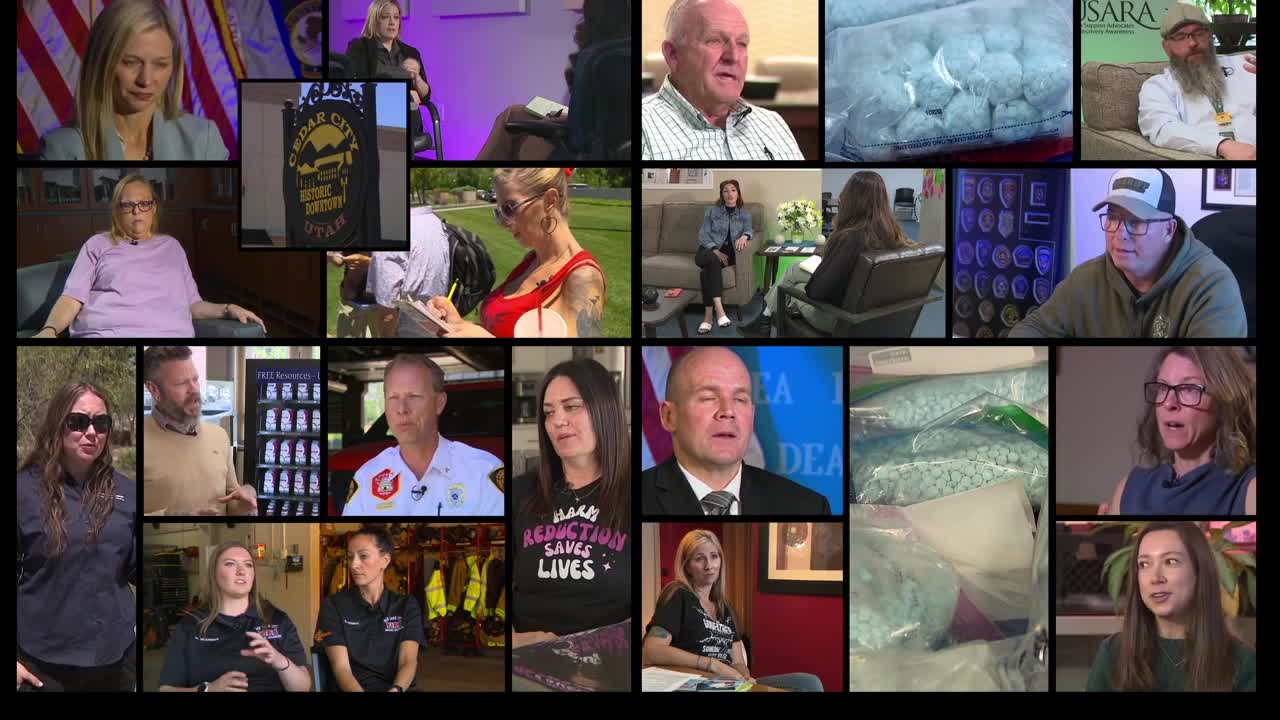
As deaths from the drug have surged in recent years, a team of journalists at FOX 13 News set out to better understand fentanyl’s impact on communities around the state and what’s being done to address it.
Over the last few months, reporters have reviewed dozens of court records involving fentanyl in Utah and interviewed more than 20 people – including active drug users, family members whose loved ones died from overdoses, law enforcement agencies and community groups trying to help people overcome addiction.
Now, we’ll share what we’ve learned.
We’ll explore the impact of fentanyl fatalities on the family members left behind and take you inside the work Utah’s Fentanyl Task Force is doing to target distribution networks and prosecute dealers when their customers die of an overdose.
We’ll look at one fire department’s novel approach after someone overdoses and show you how rural communities are responding to fentanyl.
We’ll also show you efforts to educate kids on this deadly substance and go in-depth on harm reduction efforts, including how changing federal guidance may limit access to fentanyl test strips.
For Stacey Greenfield, who was married to the Ogden truck driver who died from a fentanyl overdose last year, raising awareness about the realities of fentanyl is “really important” – and potentially lifesaving.
“One pill can kill,” she stressed in an interview with FOX 13 News. “It only takes one pill.”
This story is part of “Utah’s Fentanyl Fix,” a FOX 13 News series exploring the impact of fentanyl in Utah and what can be done to keep families safe. The next story in this series will air Tuesday night at 9 p.m.
