



OGDEN, Utah — After Stacey Greenfield found her husband “completely lifeless” from a drug overdose in November 2023, the paramedics arrived just in time to administer naloxone.
The opioid overdose reversal drug gave Sean “Zee” Zobrosky, a truck driver, a second chance at life.
Later, he told Greenfield he thought the illicit oxycontin pill he ingested that day had been a "fake one" laced with fentanyl, a synthetic opioid that can be lethal even in small doses. He promised he wouldn’t take that risk again.
But his wife couldn’t easily forget the overdose.
"Once you’ve found somebody that’s lifeless and dead and, you know, you’ve had to bang on their chest and breathe in their mouth, like once that’s happened, that image is in your mind,” she said in an interview. “And if you know the possibility of that is coming, it’s like living terror.”
From that point on, Greenfield did everything she could think of to “try and keep him safe.”
She called recovery centers. They saw a counselor together. She started locking up her prescription pain pills.
But no one was there to call 911 or administer Narcan on May 3, 2025, when Zobrosky consumed the drugs that brought his second chance at life to an abrupt end.
The Roy Police Department found Zobrosky hours later, his semi-truck still running on the side of the road in a residential neighborhood. The medical examiner attributed his death to the "combined toxic effects of fentanyl and oxycodone,” according to a copy of the death certificate his wife shared with FOX 13 News.
“For a long time after he died,” Greenfield said, she was angry. She’d warned Zobrosky about the dangers of illicit pills and felt he hadn’t listened.
“You know, ‘How could you do this?’ Like, ‘I told you this was going to happen,’” she recalled thinking. “But the more I come to understand fentanyl itself, it’s just a horrible, horrible thing to get away from once you’ve got that taste. And so yeah, he just couldn’t... just couldn’t do it. And I realize now it wasn’t me or anything I could have done to change what happened.”
Zobrosky is one of nearly 40,000 Americans and more than 200 Utahns who died from a fentanyl overdose last year alone, leaving scores of devastated friends and family behind as fatalities from the drug have surged in recent years.
While deaths have declined from their peak in 2023 — when around 72,000 Americans and 300 Utahns died from the drug — experts say the issue remains a prominent public health concern.
“We're continuing to see overdoses,” noted Tricia Bishop, the overdose prevention coordinator for the Utah Department of Health and Human Services. “We're continuing to know that this is a risk. And fentanyl is continuing to be adulterated into our drugs, unbeknownst to us.”
'Big’ money, little pills
Inside a nondescript red brick building in Salt Lake City’s west side, a silver metallic machine whirred rhythmically as it spit out one little blue pill after another.
Officials from the U.S. Drug Enforcement Administration showed reporters the pill press at their office earlier this summer, to demonstrate the ease with which drug dealers are producing what look like ordinary prescription medications but are actually cut with or made entirely from fentanyl.
“We have one here to show,” said Miguel Chino, assistant special agent in charge of the DEA’s Rocky Mountain Field Division. “You might have homes across the border — in the United States or in Mexico — that have 20 to 30 of these machines in there.”
And while Chino said this machine could produce around 4,000 pills an hour, he noted that there are “bigger, better pill presses that actually produce a lot more pills.”
Unlike most other drugs, experts say the proliferation of illicit fentanyl in the United States since around 2011 has largely been driven by supply factors rather than demand.
Many people who use illicit substances report that they prefer not to use fentanyl, according to a 2021 report from the Utah Drug Monitoring Initiative.
“We have a lot of folks who are wanting to avoid fentanyl and wish it wasn’t here,” agreed MacKenzie Bray, the executive director of the Salt Lake Harm Reduction Project.
But dealers push the drug into their supply primarily because it’s so cheap to make. In part because fentanyl is created in a lab and doesn’t rely on a crop cycle like some other drugs, it costs the cartel only about 1 cent to produce each pill, Chino said.
Those pills then typically sell for an “extremely big” markup — anywhere from $1 to $5 each or more, he said. Court documents for one Utah case FOX 13 News reviewed show a drug dealer told prosecutors he was selling fentanyl for over $20 a pill on the Ute Reservation in the Uinta Basin in 2024.
“And so if they lose some people along the way, they just don't care,” Chino said in an interview. “They don't care about any of us. They just care about making money.”
Tricia Bishop with DHHS describes the current state of fentanyl in Utah:
‘The wild, wild West’
Fentanyl is odorless, colorless and easy to mix with other substances to “either mimic another drug or to create a more desirable product,” according to a 2025 report from the Utah Drug Monitoring Initiative.
Sometimes, users aren't aware that fentanyl is in whatever they’re taking.
“The people who are using it don’t really know and sometimes the people who are selling it don’t even know,” Bray said. “So it could be somebody that buys something that they think is meth or cocaine — or maybe they do know it’s fentanyl, but they don’t know how much or how little.”
She characterized the drug supply as “the wild, wild West” and said people who use drugs often now assume there’s fentanyl in everything they use.
What amounts to a lethal dose of fentanyl for any individual can vary based on factors like body size. But it’s typically estimated to be about 2 mg, or the equivalent of just a few grains of salt, according to the Utah Drug Monitoring Initiative.
Fentanyl is particularly deadly for those who are "opioid naive,” or who have no previous exposure to that type of drug, Bray noted.
“If fentanyl ends up in their supply, now there’s a risk of they’re very, very vulnerable to an overdose,” she said.
The DEA announced earlier this month that it had seized nearly 10 kilograms of fentanyl powder and nearly 17,000 fentanyl pills in Utah so far this year. About 30% of those pills contained a potentially lethal dose of the drug, according to DEA estimates.
"That's Russian Roulette that you're playing,” Chino said.
It may seem like a counterintuitive business model to kill off so many potential customers. But Chino said those who create counterfeit pills aren’t sophisticated enough to measure out doses to ensure their pills aren’t deadly.
“They’re not recruiting scientists that know the formula of how much fentanyl goes into each pill,” he said.
“And that’s why we need to have the conversation with family, friends, loved ones, anybody we know,” he added. “You don’t take anything into your mouth medication wise, pill wise, unless it came from a doctor’s prescription and a pharmacy.”
‘Stop it from happening to someone else’
While fentanyl remains a significant concern in Utah, Bishop sees a recent “plateau” in the number of deaths due to the substance as a positive sign.
“I do think that in Utah we’ve done a very good job of educating and providing tools for the community, for those people who are at risk of overdoses,” she said. “And I think this has helped kind of level it off.”
Utah’s Fentanyl Task Force has been focused on ramping up drug seizures, increasing prosecutions and creating educational programs and treatment initiatives since its creation in 2024. The DEA has also concentrated on public awareness and enforcement through its “Fentanyl Free America” initiative, launched last year.
“We're laser focused on eliminating fentanyl from the streets of the United States,” Chino said of that campaign. “Because one death — one overdose death of a human being — is too much."
Stacey Greenfield explains the Godfather Foundation’s mission while conducting street outreach:
In the months after her husband died, Greenfield began doing her own part to help prevent fentanyl overdose deaths in Weber County.
She now works as the executive director of the Godfather Foundation, an Ogden-based nonprofit that focuses on substance abuse recovery and awareness and has a special focus on fentanyl. She goes into the community a few times each week to help educate people about the risks of the drug and pass out naloxone.
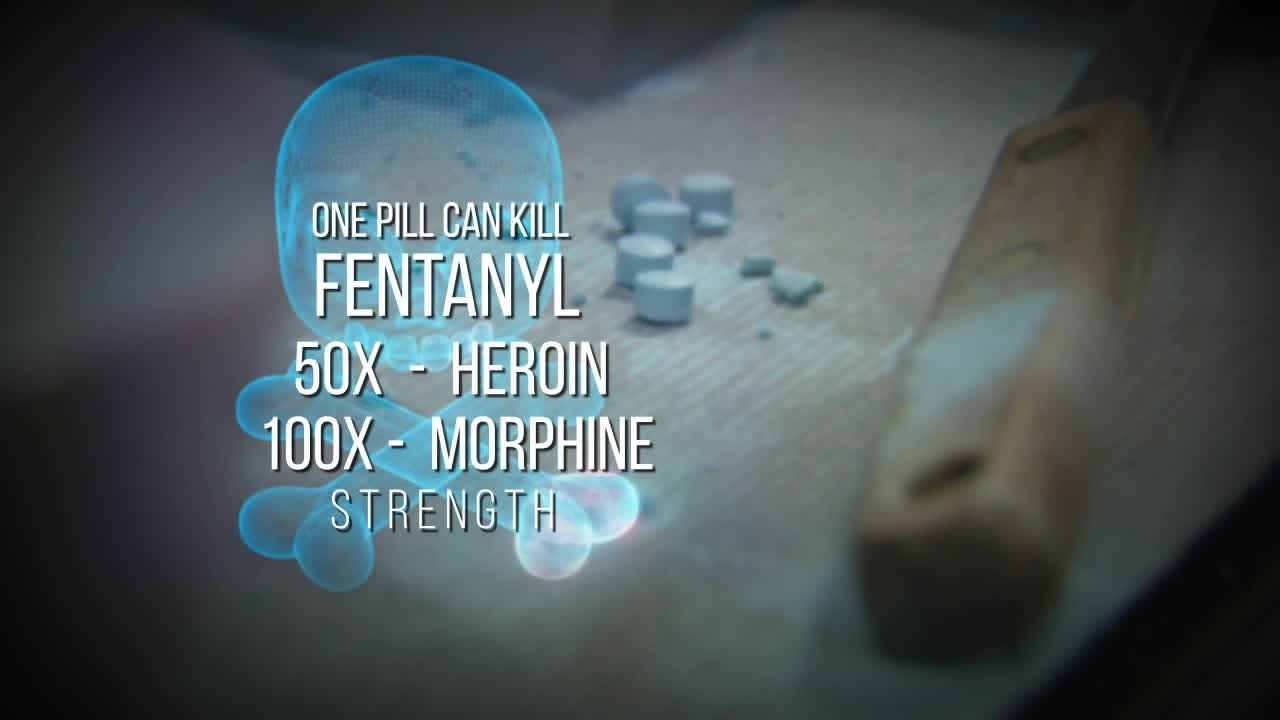
"One pill can kill,” she stresses. “It only takes one pill.”
As she builds a new life without her husband, Greenfield said she struggles with waves of grief. But she also tries to focus on the good times with Zobrosky, remembering him an “old soul” who loved motorcycles, camping and spending time outdoors.
“He deserves and did deserve to be recognized for the person he is,” she said, “not for his addiction.”
If he could talk to her today, Greenfield believes Zobrosky would be upset with himself. But she thinks he’d also be “really proud” of her and the work she's doing to keep others safe from the dangers of fentanyl.
That mission, she said, is what keeps her going.
“All we can do,” Greenfield said through tears, “is stop it from happening to someone else."
This story is part of “Utah’s Fentanyl Fix,” a FOX 13 News series exploring the impact of fentanyl in Utah and what can be done to keep families safe. The next story in this series will air Wednesday night at 9 p.m.