



A cycle of drug addiction can start in places you might not expect. For some, the road to recovery is a long one, often with some setbacks along the way.
It's a road Courtney Howell knows well.
The people she loved the most were both regular drug users during her childhood.
“My parents were also on opiates and I hated opiates. Honestly, it’s surprising to me that that’s my drug of choice," Howell said. "They’d be face down in their plate of food on the couch and then I’d put my finger under their nose to make sure air was coming out.”
She would soon stop going home as a teen.
Married at 18, she began using herself, experimenting with meth and was eventually prescribed Percocets and a form of promethazine after a painful surgery at 19.
Not only did it take away her physical pain, but the emotional pain as well. But some news from her then-husband would be the start of a tragic spiral.
“He’s like, 'Courtney, your dad died.' My dad dying is the first overdose of someone close to me. It was alcohol and opiates," Howell said. "Six months after that, my best friend since we were nine or 10 years old passed away from a heroin overdose.”
After leaving her husband, she reconnected with someone she met years before — Jason.
At the time, she was on methadone and using heroin.
“I got pregnant, and I felt like I thought when I was pregnant that that would make me stop using, that I would want the baby to have that power over me or give me that strength, and when I realized that that wasn’t happening, I was really scared," Howell said. "When I was seven months pregnant, Jason died of an overdose. My baby ended up passing away of an overdose, and it was my fault. I am responsible. I went to prison for eight and a half years for that. It just feels like everybody in my life dies of an overdose.”
Howell served her time, got clean and was living in her own apartment.
But after spending time with her sponsor, she was introduced to something new.
“All her and her girlfriend did was smoke fentanyl. I’d never seen fentanyl before. I’d seen it in a hospital setting when it’s actually not modified," Howell said. "I relapsed on fentanyl and I remember sitting in my room and being like, 'Is this worth giving all this up? Is this really worth it?' And my answer was, 'No.' People that I never would’ve thought would do opioids or get into the drug life, they’re dead now because of fentanyl.”
Lux Saint Cloud is a community care coordinator for Salt Lake’s Harm Reduction Project.
“There’s a lot of negativity around fentanyl because, yes, people can overdose and it’s terrifying, but I think a big conversation with fentanyl and naloxone is that people don’t have to die, people shouldn’t die,” he said.
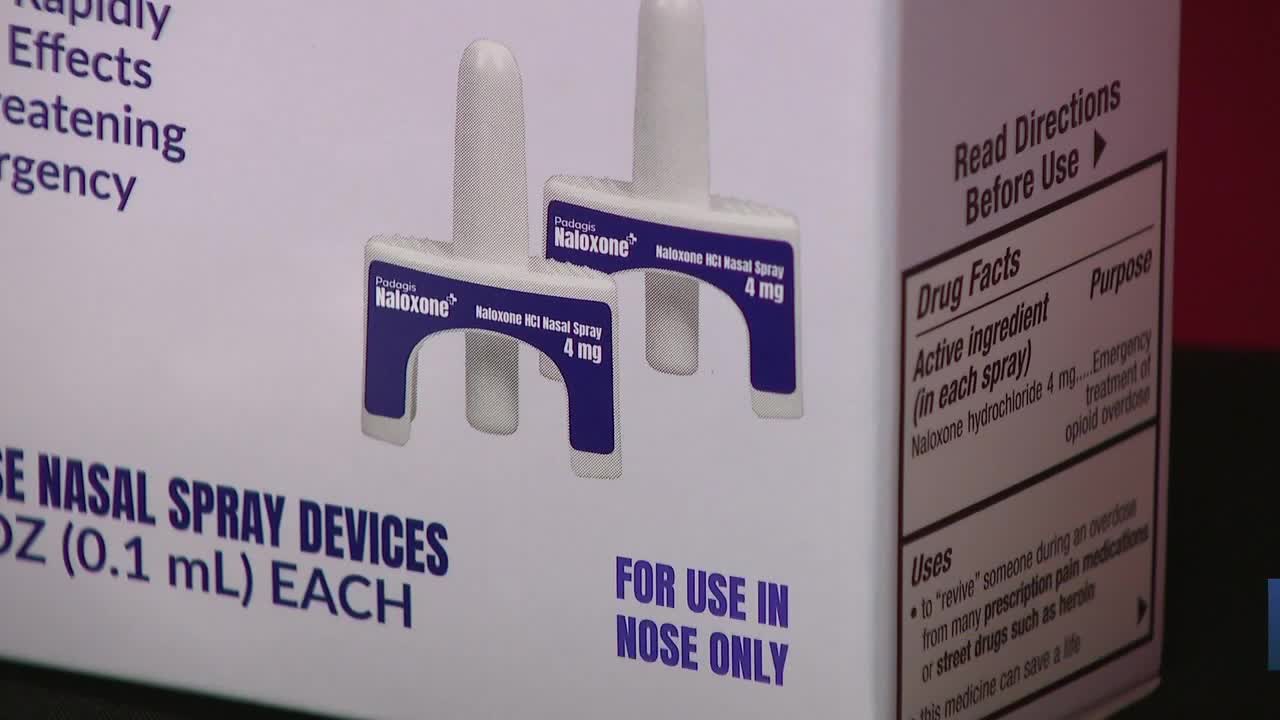
Saint Cloud spends his time immersed in Salt Lake’s nightlife: bars, clubs, raves, places people could have the potential to overdose, which is why he always has naloxone on hand. Also referred to by the brand name Narcan, it's the agent that can rapidly reverse overdoses for opioids like fentanyl, heroin, oxycodone and morphine.
“Seeing how many people have been impacted by overdose, that’s a lot of the conversation ... people coming up saying, 'I have a family member, a friend, a coworker that passed away and I wish I would’ve known about this before that happened,'" Saint Cloud said. "That’s a big reason why we do outreach though, is having these conversations with people of like, 'Hey, this could happen at any time, heaven forbid you’re out of concert and someone is unresponsive.' The great thing about naloxone is that it can’t hurt someone, so if you do think someone is having an overdose, it’s best to give naloxone."
WATCH: Lux Saint Cloud demonstrates how to administer naloxone
The Harm Reduction Project is, in fact, reducing harm.
In 2025, the group distributed 12,000 fentanyl and xylazine test strips and more than 5,000 doses of naloxone, facilitated 2,700 syringe exchanges and held 10 naloxone trainings.
“If we offer them naloxone, they’ll say, 'Oh no, I don’t use drugs.' We’ll say, 'You’re the perfect person actually to have it then, because you can’t naloxone yourself,'" said executive director MacKenzie Bray. "This really is you taking care of your community. This is you taking care of loved ones, friends, strangers."
Bray has administered naloxone twice — once on a friend and once to a stranger.
“You hope that you never have to use it, but at the same time it feels really good in an emergency to be a stranger who’s able to act and save a loved one,” she said.
The goal is to prevent tragedies like those that Howell has seen time and time again.
“There are so many situations where you don’t know you wouldn’t be that person," said Saint Cloud. "We all would like to think that we are all mentally sound and well-rounded, but traumatic events really impact people in ways that you can’t predict.”
As for Howell, she has started over again. She’s living in a facility that’s helped her stay on track. Her goals: a stable place to live, earning her CDL, and working in prison reform — all while reminding herself of what she’s known all along.
“No matter how hard things are and how very bleak they may seem, it’s temporary," she said. "You do the work to get more good days in between those bad days. It’s hard work and it doesn’t come easy.”
