

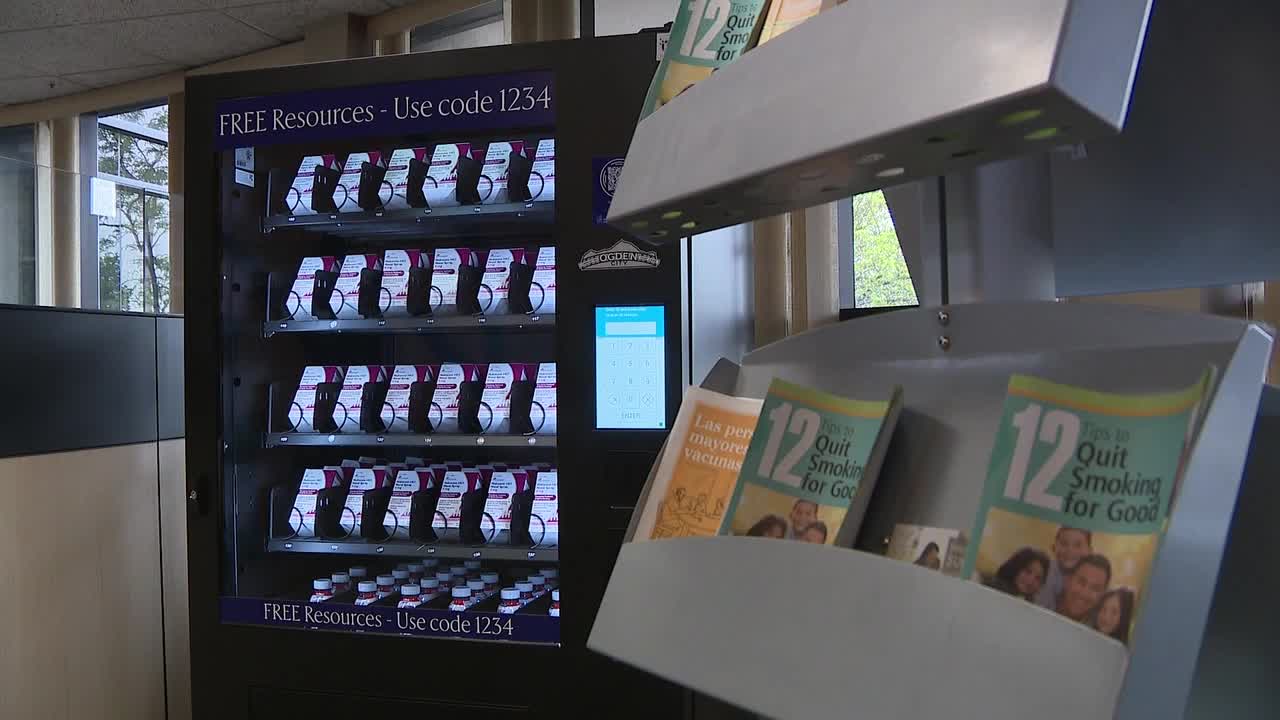


OGDEN, Utah — When David Sekulich, a prevention specialist at Weber Human Services, first floated the idea of using vending machines to distribute items like naloxone and fentanyl test strips to the public, he was initially met with “opposition.”
But over the next four or five years, he watched as attitudes across Weber County changed.
“I think people understanding that this opioid epidemic is a serious thing and wanting to help save people has kind of pushed a shift,” he said in an interview with FOX 13 News.
Now, 10 machines across the county vend these supplies for free, as part of an effort to prevent drug overdose deaths in the area. And Sekulich said he’s been pleased to see a nearly "all positive” response to the concept this time around.
Before, “I think that our community wasn’t just quite ready for it,” he said. “I think harm reduction was a little newer and people weren’t quite on board with it like they are now.”
But as northern Utah has embraced harm reduction, opinions at the federal level have recently soured as opponents of the public health approach, which works to reduce the negative effects of illicit substances, have criticized it as a way of enabling or even promoting drug use.
President Donald Trump signed an executive order last summer that said harm reduction efforts “facilitate illegal drug use and its attendant harm.” And in April, the federal government restricted the use of federal dollars for fentanyl test strips, which allow someone to quickly check whether the synthetic opioid is in their drug supply before using it.
Experts and advocates say that restriction is likely to impact access to test strips here in Utah.
As fentanyl continues to kill thousands of Americans and hundreds of Utahns each year, Tricia Bishop – the overdose prevention coordinator with the Utah Department of Health and Human Services (DHHS) – believes “it can be a little counterproductive” to limit people’s ability to test their drug supply.
“I understand that there are people who do feel like if we provide this, we're promoting drug use,” she said in an interview with FOX 13 News. “And I think we need to take a step back and remember that this is a harm reduction tool. This is an overdose prevention tool. And this might not be any different than putting your seat belt on, or putting a helmet on, or putting sunscreen on.”
Bishop said the strips “have been very, very beneficial” in the fight against fentanyl overdose deaths.
Suppliers often add the deadly drug into other illicit substances, since it’s cheap to manufacture and can yield a high profit margin. But because it’s odorless and colorless, users may not know it’s there if they don’t test for it.
"It's just such a small amount of fentanyl that can potentially put somebody into an overdose,” Bishop noted.
Bishop with DHHS discusses data showing the effectiveness of harm reduction services:
A state pilot project on fentanyl test strips found a positive result led “to changes in drug use behavior” that helped "prevent fentanyl overdoses,” according to a 2021 report from the Utah Drug Monitoring Initiative.
About 44% of users said they made sure to have naloxone available. Thirty-five percent reported ensuring someone else was around. And 21% said they used more slowly.
Michelle Ward, founder of the harm reduction group Hands of Hope in Emery County, said she’s also seen people make more informed choices when they have more information.
"Now they know to take those precautions,” said Ward, who previously worked as an opioid preventionist with the Southeast Utah Health Department. “Now they know what to do and how to respond if it is positive.”
'Keeping people alive’
Bishop’s office relies entirely on federal dollars and has historically used some of those funds to purchase test strips for local health departments and harm reduction groups to distribute.
Now, the department has to rely on a small supply of already-purchased fentanyl test strips, which Bishop in June said could last “for the next six months to a year.”
“After that, though, we do not have the funding – the federal funding – that we will need to continue purchasing these,” she added.
Amid shifting federal guidance, Bishop said the department also temporarily removed a tool to help people find fentanyl test strips from its Opidemic website.
"We paused, we took a step back, we pulled some stuff off of our website,” she said, to ensure “we really understood what that federal guidance meant.”
The department ultimately determined that the locator – which Bishop described as a “very useful tool” for the community – did not run afoul of federal guidelines.
Bishop explains why DHHS removed the fentanyl test strip finder from its website earlier this year:
As the state approaches a future with more limited access to fentanyl test strips, Bishop said her office is looking for "alternate ways" to pay for them.
In the meantime, she said, “we're also encouraging our harm reduction and our overdose prevention programs to look for funding elsewhere and look for other sources of funds, so they can purchase their drug tests on their own.”
The Salt Lake Harm Reduction Project is among the groups that expect to be impacted by the new federal guidance, according to MacKenzie Bray, its executive director. She said her outreach teams will continue providing fentanyl test strips to the community but may be able to afford fewer now.
“We gave out 7,000 last year, so that’s $7,000,” she said. “That’s not nothing. Like that is, for a small nonprofit, that’s a significant amount of money.”
Bray noted that harm reduction services have historically faced initial pushback. But she believes the public has become more comfortable with tools like naloxone in recent years and hopes fentanyl test strips will eventually follow.
"Once we can kind of get a similar definition of what we mean by harm reduction, I’m always blown away by how many times people will say, like, ‘Oh, that makes a lot of sense. Like, I wish something like this had been there when my son passed away from an overdose, or when my sister was dealing with, you know, an addiction,’” Bray said.
As for the vending machines in Weber County, the test kits there are funded through a private grant, meaning they won’t be impacted by changing federal guidance.
“We have ongoing funding for the products in the machines,” Sekulich told FOX 13 News. “So I don’t imagine it ever stopping.”
He believes his community sees the value of these test strips – and harm reduction in general – and understands that the approach is a way to help someone as they work toward a different future.
“I hear all the time: ‘You can’t get treatment or recovery if you’re not here,’” he said. “So keeping people alive long enough to get into treatment when they’re ready, I think that’s a huge testament to fentanyl test strips.”
This story is part of “Utah’s Fentanyl Fix,” a FOX 13 News series exploring the impact of fentanyl in Utah and what can be done to keep families safe. The next story in this series will air Monday night at 9 p.m.
Harm reduction vending machines are available at a variety of locations in Weber County, including the Weber County Sheriff’s Office, the Ogden Police Department, Weber Human Services, Midtown Community Health Clinic, Lantern House, Utah Support Advocates for Recovery Awareness (USARA) and Seager Memorial Clinic. You can access a list of locations that distribute fentanyl test strips across the state at the state’s Opidemic website here.
