

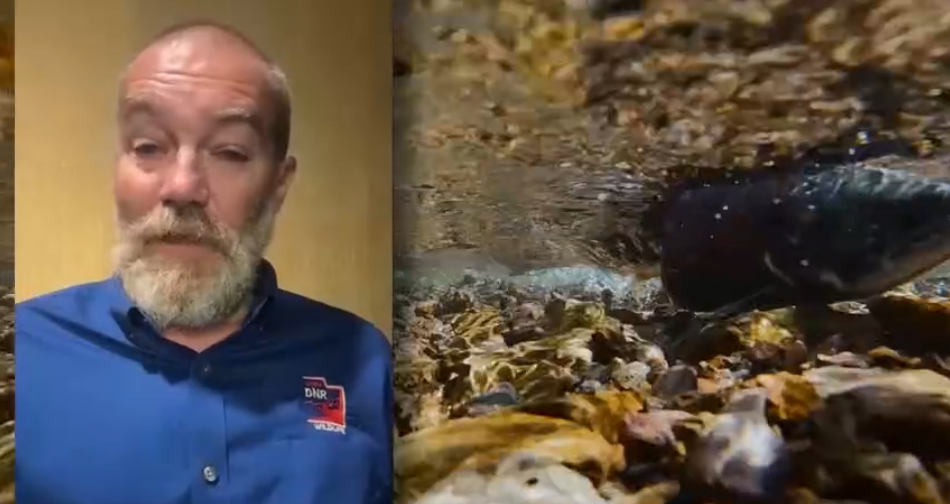


SALT LAKE CITY — Utah's Division of Wildlife Resources stocked 11.6 million fish across 655 water bodies in 2025, a decrease of 1 million from the previous year as drought conditions impact the state's fisheries management strategy.
The reduction reflects a careful balancing act wildlife officials must perform when determining how many fish to stock in drought-affected waters, according to Richard Hepworth, the DWR's fish hatchery coordinator.
"Those fish, they don't have enough to eat. They get stressed, they can get disease, get sick, they die. So you got to keep numbers at a level that those fish are still healthy," Hepworth said. "But they're catchable as well. If you don't have enough in there, those fish are living in a grocery store. They have a lot to eat. They are really hard to catch. So the biologists have a real balancing act of trying to make sure they got the right numbers in a water body."
In his 28 years on the job, Hepworth has observed Utah's water bodies getting warmer, creating challenges for cold-water species like trout. To adapt, the DWR has increased stocking of warm-water species such as bass and catfish.
The agency also stocks grass carp, but not the undesirable species that are outcompeting native fish in Utah Lake. These sterile grass carp serve a specific purpose: enhancing water quality by consuming algae, moss, and weeds. Because they cannot reproduce, their populations can be better managed.
While the DWR stocks millions of fish annually, survival rates vary significantly by species. Hepworth explained that with some species, only 5% to 10% will survive to be caught by anglers. However, it remains more cost-effective to stock younger fish in large numbers and allow natural selection to determine which survive.
The stocking program primarily serves recreational fishing, with most of the fish intended for anglers to catch.
This story was reported on-air by a journalist and has been converted to this platform with the assistance of AI. Our editorial team verifies all reporting on all platforms for fairness and accuracy.