

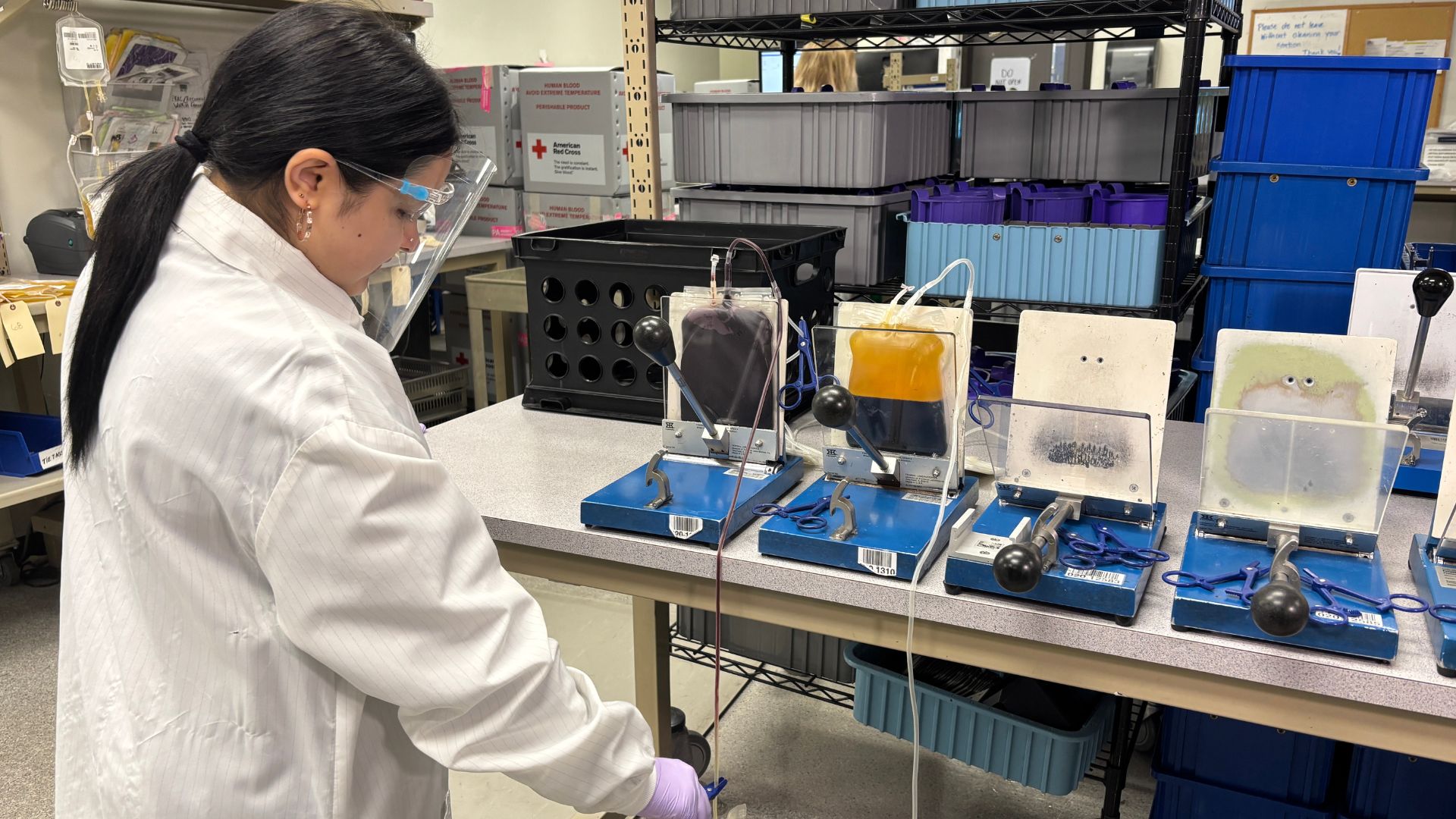


SALT LAKE CITY — Inside the American Red Cross’s BioMedical Laboratory, lab technicians are working around the clock every day. Some of them are sorting blood donations, and others are dealing with plasma, while another group is testing and identifying antigens in the blood samples.
This week is National Medical Lab Professionals Week, which celebrates all the work that they do in the lab.
Aaron Adams, the BioMedical Laboratory Director for the Utah and Nevada Region of the American Red Cross, said that with each blood donation, there are several different products, so it takes a whole team to get those ready for use.
“So what we do with the whole blood products is we actually spin them down and separate them into their individual components,” he said. “So we have red cells and plasma and platelets, and then we filter them so they are safe for transfusions.”
He said each donation has a shelf life, so it’s important to work quickly and get the much-needed products to the hospitals and patients.
Platelet donations have a short shelf life of typically five to seven days, and it’s always needed for cancer, transplant, and trauma victims. Plasma donations have a long shelf life, with it lasting up to a year when frozen and stored, according to the Red Cross.
Red blood cell donations are good for up to 42 days when refrigerated.
“They’re [the lab techs] working with the blood products consistently,” Adams said. “They’re making sure that they get to the hospital. A lot of times, we’ll get a stat order from a specific hospital that has a traumatic injury. They need it immediately, last minute, and unknown, so our staff is going to work to look for that specific product and make sure it’s tested, qualified, and get it out the door.”
The Red Cross has different opportunities to work in the biomedical lab, from a blood processing technician to a courier. There are many different labs too from those at the Centers for Disease Control and Prevention to University of Utah Health.