



VERNAL, Utah — Farmers and ranchers from all over the Uintah Basin gathered at the Bar Lazy TL Ranch to hear the pitch from Utah State University's Extension Service.
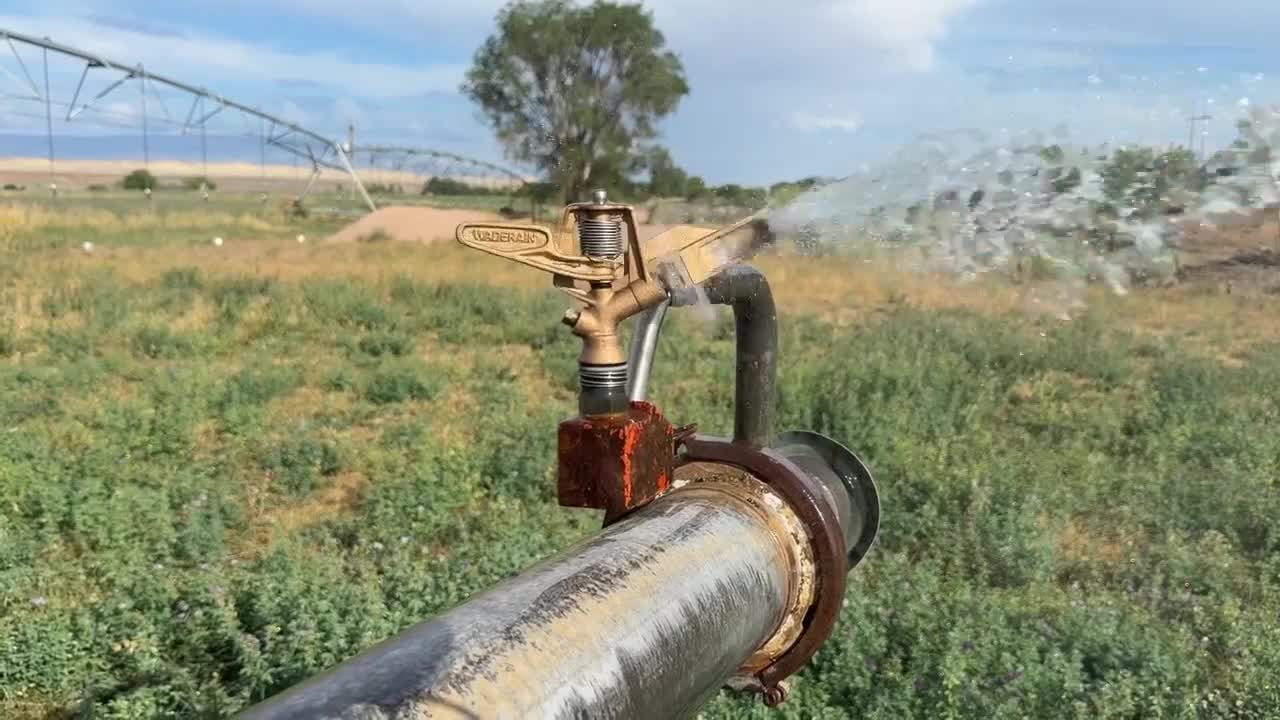
A demonstration of the sprinklers was taking place in an alfalfa field. Soon, the farmers and ranchers were joined by other USU researchers, politicians and reporters who walked around the edge of the field to see the sprinklers in action.
"Wheel line systems have been around for several decades, but not much improvement has been made since that time," said Burdette Barker, an irrigation specialist with USU's Extension Service, who is part of the team working on the project.
The sprinklers are designed to be more efficient, with a different spray pattern. USU also showed off some things it has been working on to automate and modernize wheel line sprinkler systems. USU's researchers took questions and feedback from farmers who are used to moving their lines at all hours of the day.
"I think most of it works. The valve here, we don’t see as being quite practical on our place," Kolby Hullinger said, motioning to a valve being shown off.
But Hullinger said he could see there were advantages to the new options for sprinklers.
Agriculture is Utah's top water user. As the Great Salt Lake has shrunk and the Colorado River system is in crisis, state political leaders have spent millions of dollars on incentives and programs to get farmers and ranchers to grow crops with less water. Research like USU's can help to design new farm equipment that increases efficiency and saves water.
So far, Barker told the Colorado River Collaborative (of which FOX 13 News is a member) that they have some good preliminary information that it can save money.
But can it save water?
"I will say with a caveat: we do seem to see a little bit of a difference between different types of sprinklers. Not enough to pay off the farm. But that’s kind of preliminary," Barker said. "The real benefit would be if somebody can tailor their water use a little more. Shutoff on an automated schedule from the living room instead of having to wait until they’re in the field again to shut off the water."
USU's Extension Service also runs a program that will help farmers identify water savings on their properties. The AG-DRIP program is paid for with $5 million from the Central Utah Water Conservancy District and the Colorado River Authority of Utah. USU is recruiting farmers and ranchers to participate. More information can be found here.
This article is published through the Colorado River Collaborative, a solutions journalism initiative supported by the Janet Quinney Lawson Institute for Land, Water, and Air at Utah State University. See all of our stories about how Utahns are impacted by the Colorado River at greatsaltlakenews.org/coloradoriver