



SALT LAKE CITY — The three Lower Basin states along the Colorado River — California, Arizona and Nevada — have offered a proposal to reach an agreement to manage the water for more than 40 million people in the American West.
As had been hinted at by Utah Governor Spencer Cox in comments this week to FOX 13 News, it is a short-term deal to prop up Lake Powell and Lake Mead and keep the entire river system from collapsing. In a proposal released Friday night, the Lower Basin states noted their conservation contributions of 1.5 million acre-feet, including reductions from Mexico. The states now offer at least 700,000 acre-feet more with a target of up to 1 million acre-feet.
"The Lower Basin proposal provides just that, including 3.2 million acre-feet of savings by water users across the Lower Basin through 2028, which builds on our conservation record of over 11 million-acre-feet of contributions to the system since 2003. It is an ambitious and far-reaching plan that benefits the entire Colorado River Basin and requires the continued leadership of the Department of the Interior in partnering with the Lower Basin states to bring its benefits to fruition," the Lower Basin states' commissioners for the Colorado River wrote in their proposal to the U.S. Department of the Interior.
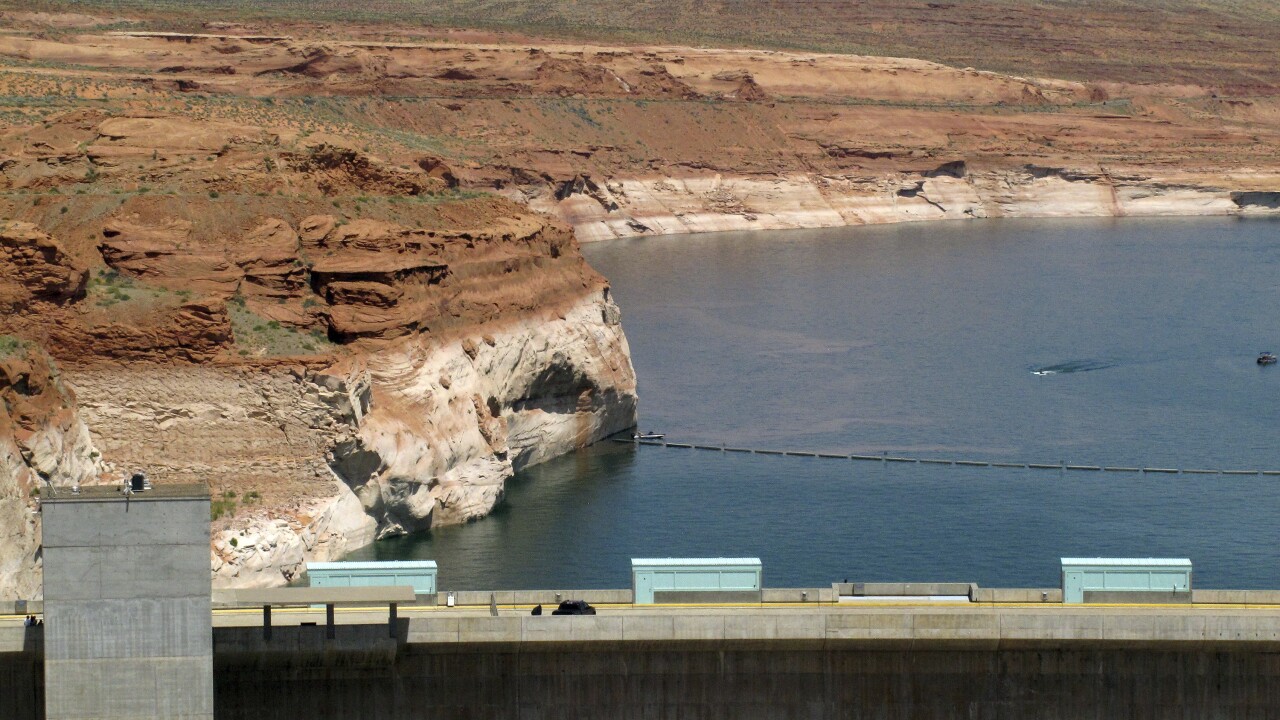
California, Nevada and Arizona's commissioners said they support the U.S. Bureau of Reclamation's proposal to release water from Flaming Gorge to prop up Lake Powell. But if there is any surplus, they asked for it to be released from Lake Powell to Lake Mead. The states also called for infrastructure spending to improve the Glen Canyon Dam at Lake Powell with an eye toward water efficiencies.
"With this proposal, the Lower Basin is putting forth real action to stabilize water supply along the Colorado River. We’re putting forward additional measurable water contributions for the system. Without that, the system will continue to decline,” said JB Hamby, the chair of the Colorado River Board of California and that state's chief negotiator on the river, in a statement.
The states along the Colorado River have been deadlocked on a multi-state agreement to manage the river that is a lifeline for millions of people. It generates electricity and provides water for food and living. Deadlines set by the Trump administration to reach a deal have been repeatedly blown and the U.S. Department of Interior has threatened it may start making decisions on managing the river that no state would like.
The disagreements between the Upper Basin — Utah, Wyoming, Colorado and New Mexico — and the Lower Basin states have largely centered around who takes cuts and how deep they are. Things have ratcheted up to the point where litigation appears likely, which could trigger deep cuts for states. Recently, Upper Basin states proposed a mediator to facilitate negotiations.
In their statement, the Lower Basin states signaled they were open to mediation but wanted to see immediate water reductions from all states as a show of good faith.
"California proposed mediation over a year ago, and it was declined at the time. We recognize the recent interest. We also recognize the system cannot wait. California stands ready to engage in a meaningful process to develop long-term solutions, while encouraging all states to step forward with verifiable water contributions to stabilize the system in the near term," JB Hamby, the Colorado River Commissioner for California, said in an email to FOX 13 News on Saturday.
The current agreements for the Colorado River expire in October.
Read the Lower Basin states' proposal here:
This article is published through the Colorado River Collaborative, a solutions journalism initiative supported by the Janet Quinney Lawson Institute for Land, Water, and Air at Utah State University. See all of our stories about how Utahns are impacted by the Colorado River at greatsaltlakenews.org/coloradoriver