



SALT LAKE CITY — Utah and surrounding states have agreed to release a massive amount of water from Flaming Gorge to prop up Lake Powell and the rest of the Colorado River system.
On Tuesday, the Upper Colorado River Commission voted to approve the release that could happen within the next couple of weeks. As much as a million acre-feet of water will be released from Flaming Gorge, flowing downstream through the Green and Colorado rivers into Lake Powell to keep it able to generate electricity for millions across the American West and avoid a system-wide collapse.
"It is an unprecedented release at an unprecedented time I think hydrologically," Amy Haas, the executive director of the Colorado River Authority of Utah, told FOX 13 News in an interview.
Utah is seeing record low snowpack, warmer-than-average temperatures and spring runoff has been lackluster. Last week, FOX 13 News reported the U.S. Bureau of Reclamation would order releases from Flaming Gorge. Federal officials have also demanded that less water be released from Lake Powell to Lake Mead, meaning all states will see some level of water cuts.
"The drought is just absolutely crippling across our entire state and across the West for that matter," Gene Shawcroft, the Colorado River Commissioner for Utah, said Tuesday. "This is not a pretty year and I hope we never have another one like it."
Trump administration to rescind air quality ruling on Utah:
So the Upper Basin states — Utah, Colorado, Wyoming and New Mexico — approved a drought plan to help manage their part of the river that supplies water to more than 40 million people. They signed off on the releases from Flaming Gorge. Becky Mitchell, the Colorado River Commissioner for Colorado, noted that Upper Basin states are "on the front lines of climate change and we're feeling the hydrology first."
Tribal leaders, including the Ute Mountain Ute Tribe, also agreed to the plan while promoting conservation. Another tribal representative noted "it's going to cause pain."
While approving the drought plan, some of the state commissioners complained that they were still hearing rhetoric from Lower Basin states (Arizona, Nevada and California) that demanded Upper Basin states give more water and threatening litigation.
"Uses in the Lower Basin exceed the supply provided by the river," Mitchell said.
Current agreements governing the river between the states expires in October. So far, the states along the Colorado River have been deadlocked on reaching any agreement. While every state's commissioner said they were willing to keep talking, consensus has been out of reach and states have been preparing for the potential of litigation. The Trump administration has warned the states that if they can't come up with a deal, they might intervene and no one would like what's decided.
On Tuesday, New Mexico commissioner Estevan Lopez offered a suggestion that could lead to a solution: a mediator. It got support from his fellow Upper Basin states.
"The stakes have never been higher," he said. "We continue to remain engaged or try to remain engaged and open to a consensus."
But the politics of the river may give way to the reality of the water that's there or not. The million acre-feet represents roughly a third of the entire reservoir and will have an impact on the economy of Daggett County and across the border in Wyoming. One marina owner told FOX 13 News he may have to move to deeper waters to provide space for boats in Flaming Gorge. The Colorado River system also provides drinking water for a significant part of the Wasatch Front, pumped in through the Central Utah Project.
"We recognize action is needed quickly to avert system failure," Colorado River Commissioner for Wyoming Brandon Gebhart said.
During public comment at a meeting of the Colorado River Authority of Utah's board on Tuesday, Kael Weston appeared on a video screen from the Moab area, calling on conservation measures.
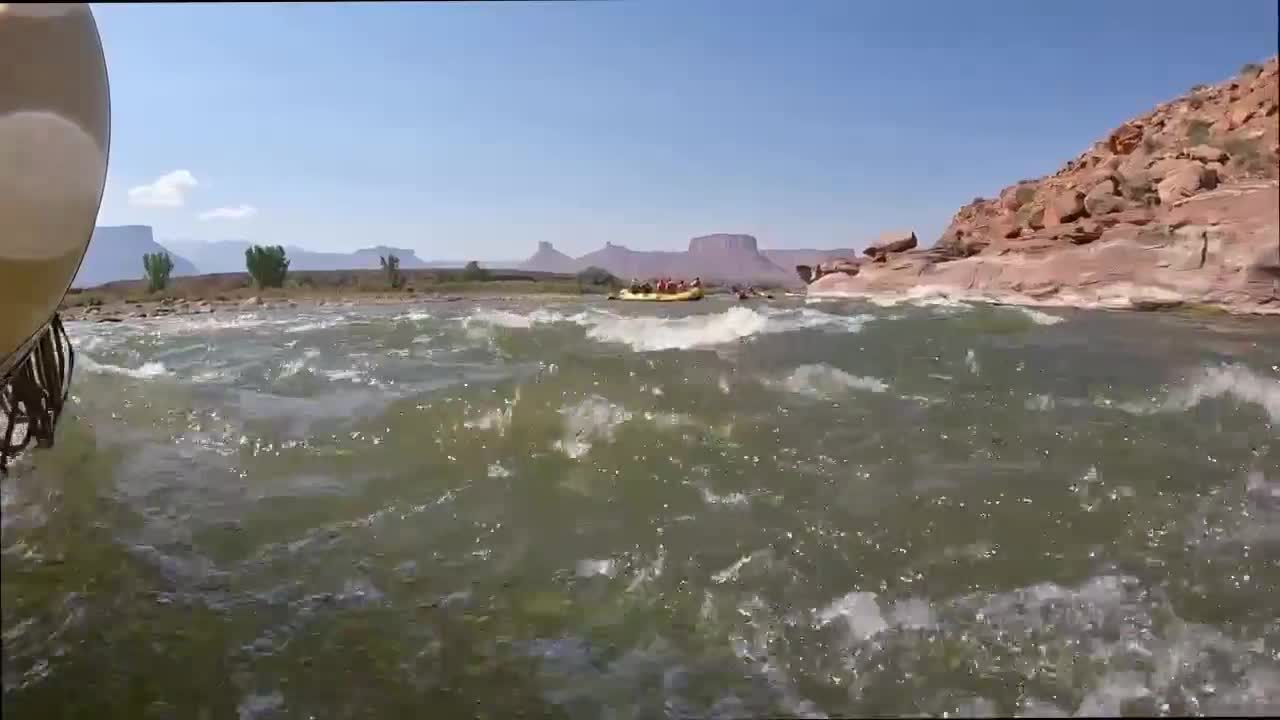
"I'm right next to the Colorado River and it’s slow, low and sad!" he exclaimed.
Utah agreed to the water release because of the unprecedented drought situation, Haas said. But the state wants credit for the conservation when times are good again.
"This is something we can get behind given the dire conditions, the low runoff," she told FOX 13 News. "This could end up being one of the worst year on record. So we’re prepared to do what we can."
This article is published through the Colorado River Collaborative, a solutions journalism initiative supported by the Janet Quinney Lawson Institute for Land, Water, and Air at Utah State University. See all of our stories about how Utahns are impacted by the Colorado River at greatsaltlakenews.org/coloradoriver
