



SALT LAKE CITY — The news of Lake Powell hitting a record low is triggering some alarm bells on Utah's Capitol Hill.
On Saturday, Lake Powell recorded its lowest elevation — 3,519.91 ft. That is currently about 30 feet above the minimum power pool level. Any lower and Glen Canyon Dam ceases to generate power for millions of people across the West.
"We are really in a critical situation on these reservoirs," said Amy Haas, the executive director of the Colorado River Authority of Utah, the state agency that advocates for the Utah's interests in the river.
During a hearing on Tuesday before the Utah State Legislature's Interim Natural Resources Appropriations Subcommittee, Haas outlined where things are. With no deal between the states along the Colorado River, the U.S. Bureau of Reclamation has advanced its plan for managing the water for more than 40 million in the American West. Drought has hit the West hard and demand for Colorado River water now exceeds supply. Lower Basin states — California, Nevada and Arizona — have had to make deep cuts to the water they take. Upper Basin states — Utah, Wyoming, Colorado and New Mexico — have been pushed to do more conservation.
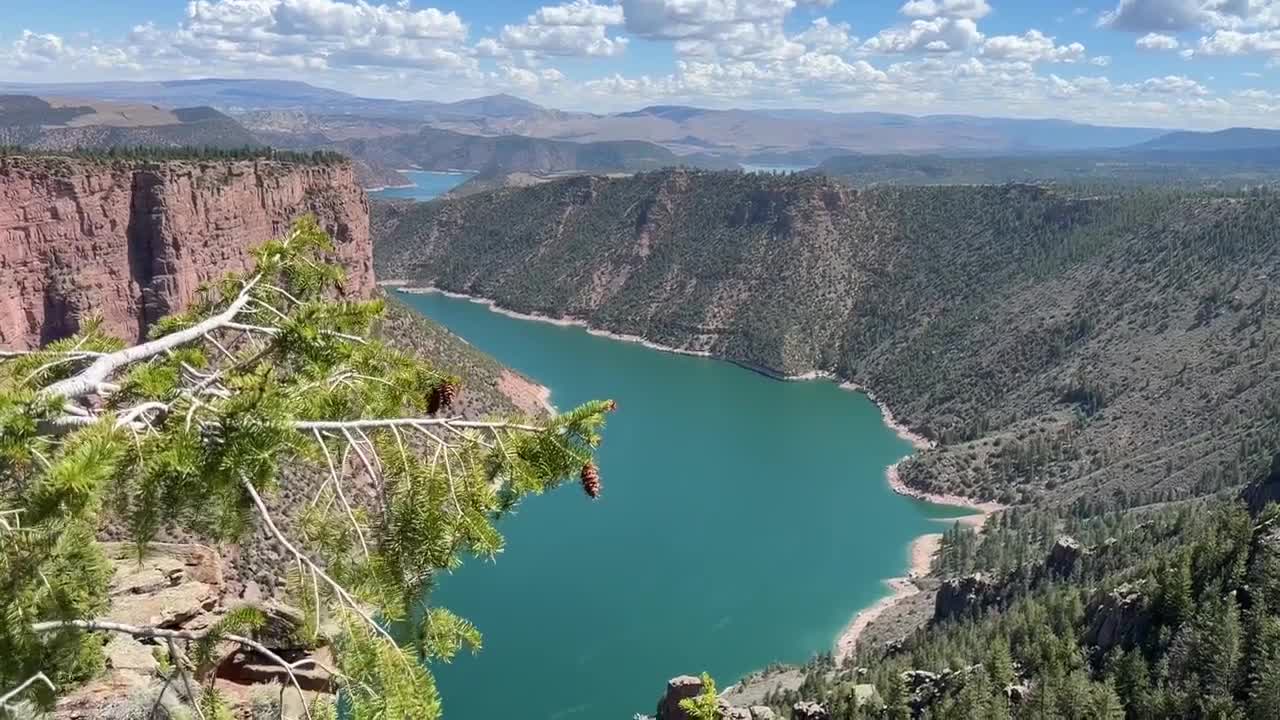
To prop up Lake Powell, the Bureau of Reclamation has ordered up to a million acre-feet of water to be released from Flaming Gorge upstream. But Saturday's record low suggests it may not be enough. Asked if it has been effective, Haas told FOX 13 News it is possible the U.S. Department of the Interior orders more releases from Flaming Gorge.
'We're still 70% full;' Flaming Gorge deals with Colorado River releases:
"We were focused on protecting an elevation at Lake Powell next spring that we’ve already blown through. Now we’re getting projections that the elevation at Lake Powell will drop even further," Haas said. "No, they have not been effective in terms of chasing these critical elevations and the Secretary will likely do more... more from Flaming Gorge and will assert his authority under conditions that will enable him."
To react to this, Haas said the state of Utah and other Upper Colorado River Basin states have been negotiating "side-agreements" with the Trump administration. The terms would include ensuring any water that is released is effective at keeping Lake Powell's elevation up, a credit for conservation that would include replenishing Flaming Gorge in the future and that Utah has a seat at the table in future decisions.
"That will inform our support for future releases going forward," Haas said.
Lawmakers appeared concerned with the latest developments on the Colorado River. Sen. David Hinkins, R-Ferron, noted that a large chunk of Colorado River system water is pumped in via the Central Utah Project to become drinking water for a large portion of the Wasatch Front.
Rep. Scott Chew, R-Jensen, said the situation is very concerning.
"I don’t know whether you could call releases out of Flaming Gorge a Band-Aid fix. It’s just too bad we have to stoop to that, but it’s one of the few places we have water," he told FOX 13 News. "Let’s just hope it gets used wisely."
This article is published through the Colorado River Collaborative, a solutions journalism initiative supported by the Janet Quinney Lawson Institute for Land, Water, and Air at Utah State University. See all of our stories about how Utahns are impacted by the Colorado River at greatsaltlakenews.org/coloradoriver