

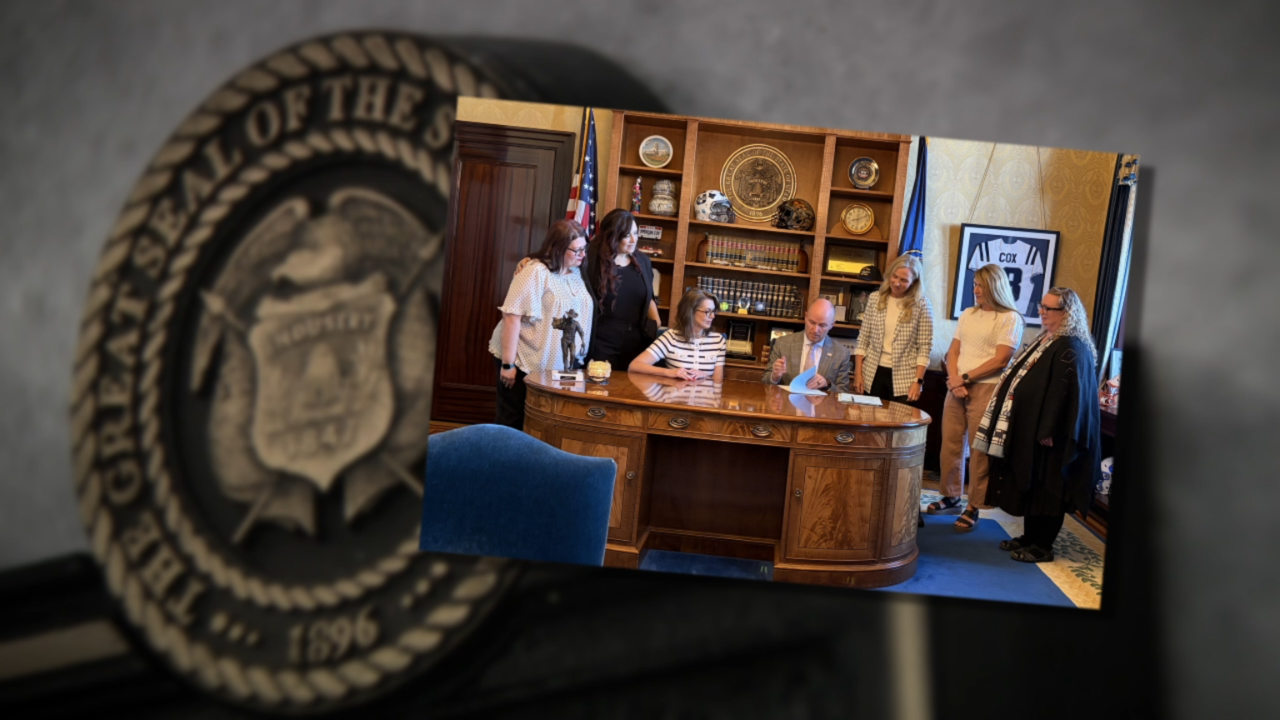


SALT LAKE CITY — Gov. Spencer Cox signed a bill into law Wednesday that will implement significant reforms to Utah’s adoption laws, amid growing concerns that loose regulations have led the state to become a destination for “adoption tourism.”
The changes come as reform advocates said some agencies were recruiting vulnerable pregnant women to the state for the sole purpose of an adoption, in exchange for uncapped, pregnancy-related financial support. That left them vulnerable to financial exploitation if they changed their minds and chose to parent.
"We were getting this bad reputation in the adoption space,” noted Rep. Katy Hall, the bill's sponsor, in an interview with FOX 13 News. “And so I really do think that this bill will help restore Utah’s adoption-friendly reputation, as well as helping take care of the birth moms and adoptive parents.”
Her bill, HB51, will usher in a number of changes.
All agencies must be licensed as nonprofits by next year. They will be barred from transporting birth mothers to the state after 36 weeks of pregnancy. And they will be explicitly prohibited from engaging in coercive behaviors, like threatening a birth mother with financial or legal retaliation if she chooses to parent.
Birth mothers will also now have a 72-hour window to change their minds about an adoption. Adoptions in Utah were previously irrevocable.
“This was a giant leap forward for adoption in Utah,” Tara Romney Barber, the adoption and clinical program director at the Children’s Service Society of Utah, said of the changes.
She believes the nonprofit requirement is one of the most significant aspects of the new law, arguing that it will help ensure agencies are looking out for the best interests of birth parents, adoptive parents, and a future adoptee, rather than for their own financial gain.
“When you think about children, you don’t think about business,” she said in an interview. “You don’t want people making money off of an adoption."
Romney Barber said she's also "really excited" about a new cap on the amount of money agencies are allowed to provide to birth mothers.
The state will now impose an $8,000 limit on living expenses, though the law does create a process for an agency to request more money if needed from a new consortium of adoption agencies.
Hall (R-Ogden) said that change was sparked by stories that some agencies were providing birth moms with “an envelope of a lot of cash” after they signed their adoption paperwork.
“We don’t want that picture,” she said. “And so what this will do is put those caps on and say, ‘Yes, we want to take care of the birth moms that are making this brave choice. But we also want it to be reasonable.’”
Ashley Mitchell, a birth mother and the co-founder of the group Utah Adoption Rights, believes the cap may help reduce the number of women who come to Utah from other states.
“That changes drastically on the sales pitch of bringing women here,” she said in an interview. “Because if they can stay in their home state and have access to their local resources and get that kind of support at that equal dollar amount, they’re just going to stay.”
And while she stressed that it remains an option for women to come to Utah, she believes the changes will reduce the risk that birth mothers who travel here will face financial exploitation or coercion.
“Women aren’t just going to be coming here exclusively for the cash,” she said. “They’re coming here because it’s a specific reason they need to.”
While the new rules won’t take effect until May 6, the law already appears to be having an impact.
The agency Brighter Adoptions announced its sudden closure late last month, writing in a letter to waiting adoptive families that changing laws and growing opposition to recruiting birth moms to Utah “have made remaining operational impossible.”
‘Eliminate bad actors’
Cox’s signature on Wednesday caps about a year of work for Hall, who first started looking into Utah’s adoption system after a nurse working at a hospital in her district reached out with concerns.
The woman told Hall she was seeing a "sharp increase” in the number of vulnerable women from other states placing their babies for adoption.
"Not only the increase, but the birth moms all from similar demographics: low income, some with drug history, sometimes with mental deficiencies, nearly all from out of state,” Hall recounted during a House committee hearing on the bill. “Most without any support system because they were brought here from out of state.”
Hall said some of the agencies were not following hospital protocols. Health care workers also became concerned when birth mothers wouldn’t answer questions without an agency representative present.
"A couple of the agencies have damaged relationships with a couple of hospitals, moving from one hospital to the next, and they never addressed those concerns with those hospitals and moved onto another facility,” she added during the hearing. “And the same practices have continued. As a result, concerns have continued to escalate, and the behaviors become a little more brazen.”
Adoption-related concerns weren’t just catching the attention of health care workers.
During a Senate committee hearing on the bill, Criminal Deputy Attorney General Stewart Young noted that the office had been exploring criminal charges against some Utah agencies.
"We looked at coercion, fraud, human trafficking, and human smuggling, and so forth, and each one of those had their own kind of issues,” he said.
Speaking in support of the bill, he argued that it would eliminate “the for-profit concept in adoptions, which is kind of the main driver of the potential criminal activity that we were looking at.”
“We believe this bill is vital and necessary to eliminate those bad actors,” he added.
Legislators also heard testimony from several birth mothers and adoptive parents in support of the bill.
Among them was Terra Cooper, an adoptive mother and the chair of United for Adoption, who came forward to share the stories of birth mothers she said came to Utah from other states for an adoption but then changed their minds.
“One mom was kicked out of the apartment with no offer to help pack a day after giving birth, two days before Christmas,” Cooper told legislators. “Another mother I met told the agency she wanted to parent, and they sent her this text: ‘You have 24 hours. Tomorrow you’ll be on a flight back to Florida.’”
Hall told legislators that the state’s adoption agencies were also largely in favor of the bill.
“There was a lot of support from almost all of the agencies – eventually – around these changes,” Romney Barber agreed. “Generally speaking, I think everybody is on board that these changes were necessary.”
FOX 13 News left a voicemail and text message with a lobbyist who represented several Utah agencies during the session, but did not receive a response.
Mitchell, who has been among the most vocal advocates for adoption reform in the state, said she's thrilled to see how much change will come after this year’s session.
“We’re all still in shock that it even happened,” she said. “I feel like it’s so rare and unique to overhaul a system in legislation like this."
But she argues there’s still more work to be done, including additional refinements she’d like to see to financial support for birth mothers. She also wants to see legislators tackle concerns around fathers' rights, which were not addressed during this year’s session.
And while she’s confident the new law will help prevent many future abuses, she believes the ramifications of Utah’s previous rules will continue to reverberate for many years to come.
“I think people think that we’ve passed this legislation and so now we can heal and now it’s done,” she said. “I think people are underestimating the amount of harm that was caused here in this state.”