

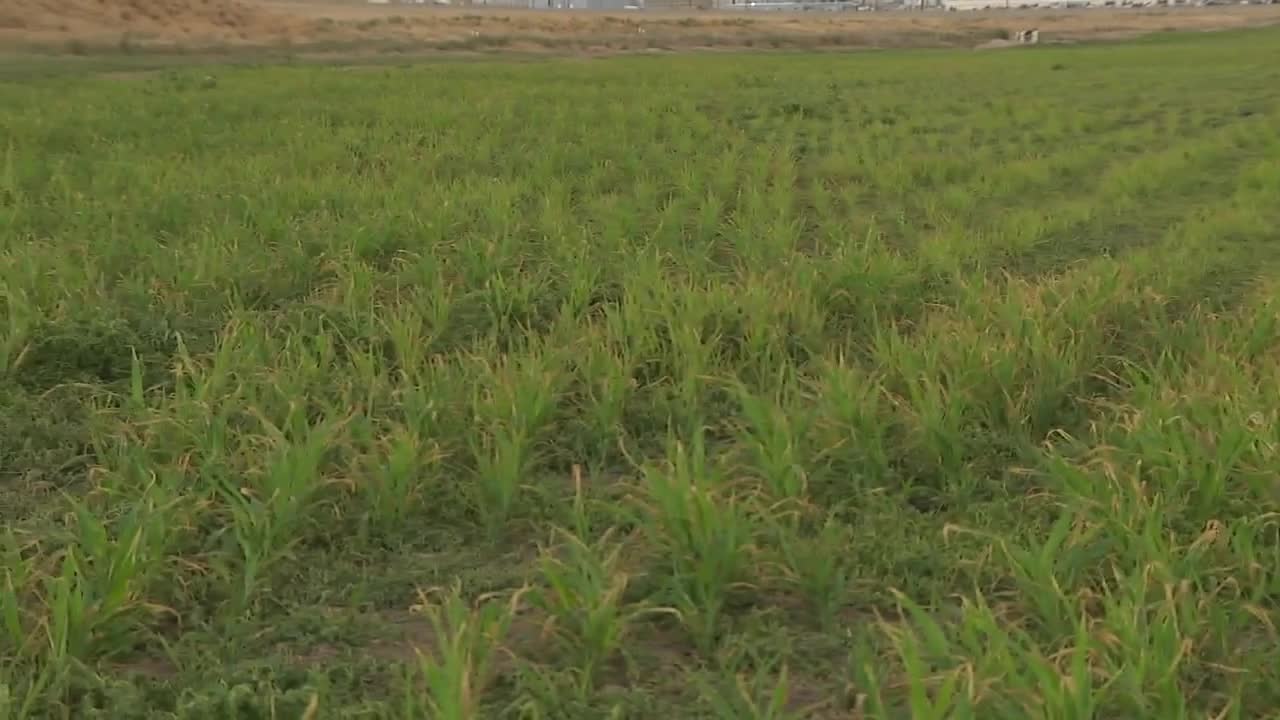


HOWELL, Utah — Robert Gibb is feeling pretty good about how his crops are looking right now.
"No water wasted," he said. "No water running off the side of the field in the low spots."
Gibb is planning to grow alfalfa on 100 acres of his farmland using subsurface drip irrigation systems. But right now he's using another water-intensive crop on his fields: Sudangrass.
"We’re pleased with our first crop we took off," he told FOX 13 News. "Sudangrass is a rotation crop that we put in, getting ready to put in alfalfa as the major crop."
Photos Gibb shared with FOX 13 News showed his first crop of Sudangrass was successful, growing as tall as he is. Now he's on another cut of it and it's coming in healthy.
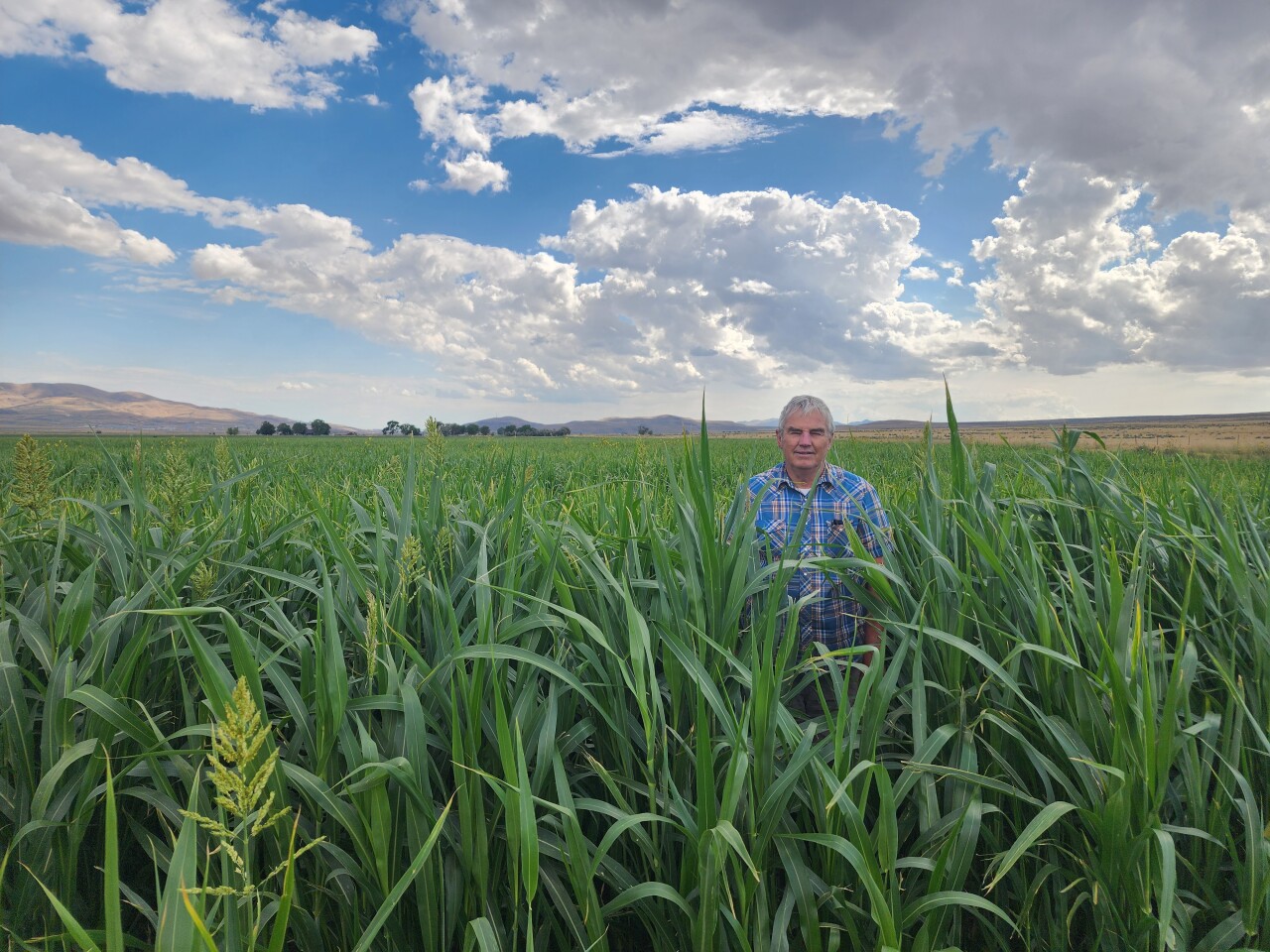
"We got to about four ton per-acre cut on that Sudangrass," he said. "It’s a good yield."
Last year, FOX 13 News was there as Gibb installed a subsurface drip irrigation system for his fields. It's unique because of the scale of the project, believed to be a first-of-its-kind in the state. At more than 100 acres, it's an experiment being watched closely by state officials, the irrigation company Netafim (which helped install the system) and even other farmers as the state grapples with a water crisis and the nearby Great Salt Lake continues to shrink.
Agriculture is Utah's top water user and alfalfa is a controversial crop lately, as people criticize it for its intensive water use.
Gibb said he understands people's worries about water.
"Alfalfa’s a very important crop," Gibb said. "We have 250,000 dairy cows not too far from here that rely on that crop here and there’s an export crop also. I think we’re doing a good thing to save water and people can feel better about that."
Gibb said even with the Sudangrass crop, he has documented water savings and expects a higher yield.
"I think there’s been 30-35% less water used on the same acres. We’re going to test this now with our flow meter. The flow meter tells us exactly how many acre-feet or gallons-per-minute we’ve used. So here come fall, we’ll get that reading and compare it to our ditch water," he said.
Drip irrigation, where lines are underground or on the surface to water and provide nutrients directly to the plant's roots, is viewed as a more efficient system of growing crops or vegetables. However, there are drawbacks as Gibb has found. There's the cost (he estimates he has spent $2,000 per acre on the system) and it was a lot of labor to install.
"The pluses are no evaporation, better water usage," Gibb told FOX 13 News. "We have experienced a few moles that come along."
The results of Gibb's experiment could present a solution for other agriculture producers in the Great Salt Lake and Colorado River basins. Utah political leaders have poured millions of dollars into programs to push farmers and ranchers to acquire newer technologies that grow crops with less water.
But Michael Caron, an associate professor with Utah State University's Extension Service, questioned if the costs outweigh the benefits that farms like Gibb's might get from a subsurface drip system. He said there are other irrigation systems that could handle fields and this method may be cost-prohibitive for most farmers.
"The additional cost for that is pretty high and so we're probably not really going to see very much adoption of that for some time," Caron told FOX 13 News.
Caron said it may pay off down the road with savings from drip instead of evaporative watering systems but there are a lot of unknowns right now.
"What matters more is are we growing plants that need less water versus the traditional plants and where we know their water usage," he said. "I don't know that there's specifically good answers for that or not."
Gibb said overall, he has been pleased with the results and he is preparing to grow alfalfa with the subsurface drip irrigation system next year to measure its effectiveness. He acknowledged midway through the installation of the drip lines, "I was a little discouraged."
"Now that we’re through, we’re grateful and we’re watching this closely to see if others might be able to benefit from what we’ve learned," he said.
This article is published through the Great Salt Lake Collaborative, a solutions journalism initiative that partners news, education and media organizations to help inform people about the plight of the Great Salt Lake—and what can be done to make a difference before it is too late. Read all of our stories at greatsaltlakenews.org.