

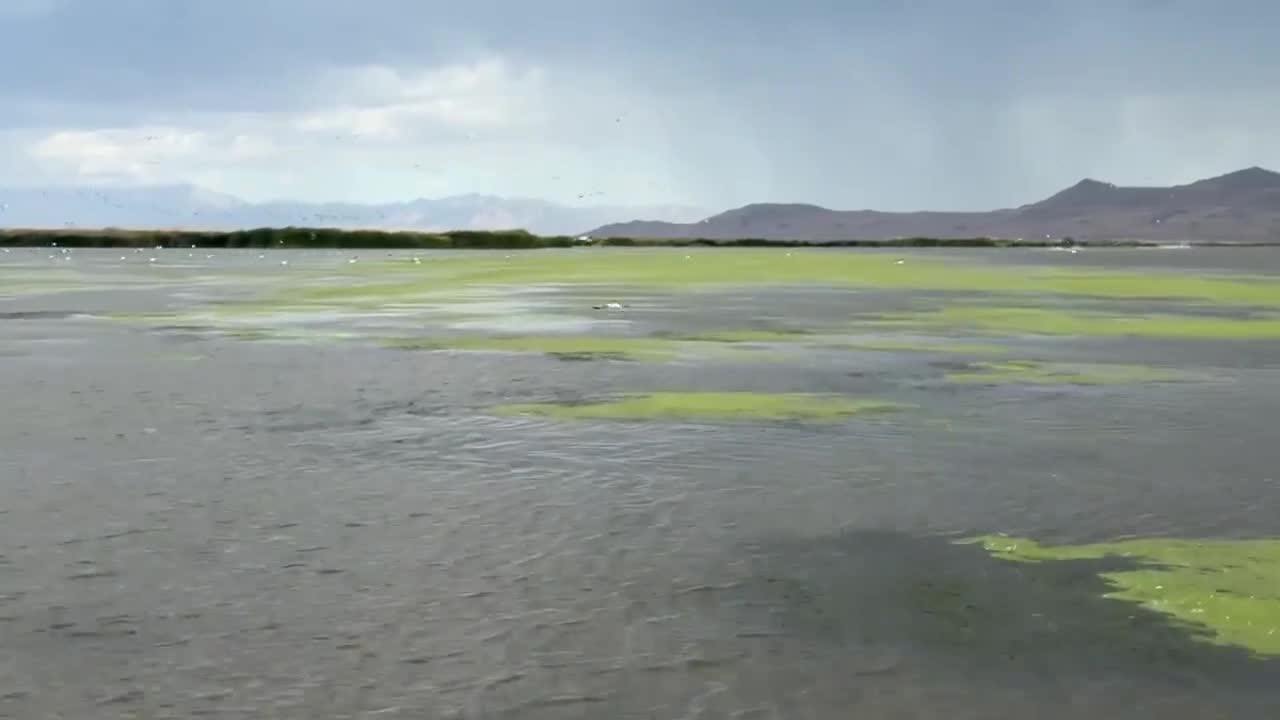


SALT LAKE CITY — The Great Salt Lake's health is a national security issue, Utah's Department of Veterans & Military Affairs told a state commission on Friday.
The Veterans & Military Affairs Commission met to get an update on what's called the "Great Salt Lake Sentinel Landscape" program. It encompasses 2.7 million acres across nine counties, anchored by Hill Air Force Base, Camp Williams, Tooele Army Depot and the U.S. Air Force's Little Mountain Test Facility. Dozens of federal, state and local groups participate in the Sentinel Landscape program.
The program is tied to military readiness, but there is also some focus on wildfire prevention and watershed health. It also guards against development encroachment on military facilities, said Tyler Smith, the installation resiliency manager at Utah's Department of Veterans & Military Affairs.
For example, he said, they have implemented some conservation easements around Camp Williams and Hill Air Force Base to protect against encroachment.
But the Great Salt Lake's "is linked to national security," Smith told the commission.
"If we don’t have a healthy Salt Lake ecosystem, then it affects military readiness," he said.
The U.S. Department of Defense (now named the U.S. Department of War) has offered funding to support studies and projects related to Great Salt Lake ecosystem health. President Trump recently pledged $1 billion to help the Great Salt Lake, though it is unlikely Congress funds that entire amount.
This article is published through the Great Salt Lake Collaborative, a solutions journalism initiative that partners news, education and media organizations to help inform people about the plight of the Great Salt Lake—and what can be done to make a difference before it is too late. Read all of our stories at greatsaltlakenews.org.