



SALT LAKE CITY — A new study finds health care costs associated dust blowing off a shrinking Great Salt Lake could cost as much as $2 billion a year.
Lena Harris, an assistant professor at Texas A&M, wrote the working paper with researchers from Arizona State University and University of California Davis. She said they did a "back of the envelope calculation" that found just factoring PM 2.5 and PM10 blowing off the lakebed at scale could lead to significant costs for emergency room visits and years off Utahns' lives.
"We scaled our PM 2.5 increases by this health damage cost and then we compared it to how much water leases would cost. And we found that basically, even though we have uncertainty about how much dust is coming off the lake, when we scale it, it's still bigger than the marginal cost to refill the lake in almost every situation," she told FOX 13 News on Thursday.
The figure, between $1.1 billion and $2.3 billion in health care costs, may also be a conservative estimate. It also focuses just on dust — not what may be in it. Arsenic and other toxins are naturally occurring in the lake bed. Other research is being done to determine if they're in the dust and at what concentrations they harm people's health.
Dr. Ben Abbott, the head of the environmental group Grow the Flow, praised the study as incredibly important to helping understand the true cost of a shrinking Great Salt Lake.
"What it shows is saving Great Salt Lake isn’t expensive. In fact, it’s an investment that saves us a lot of money," he said Thursday.
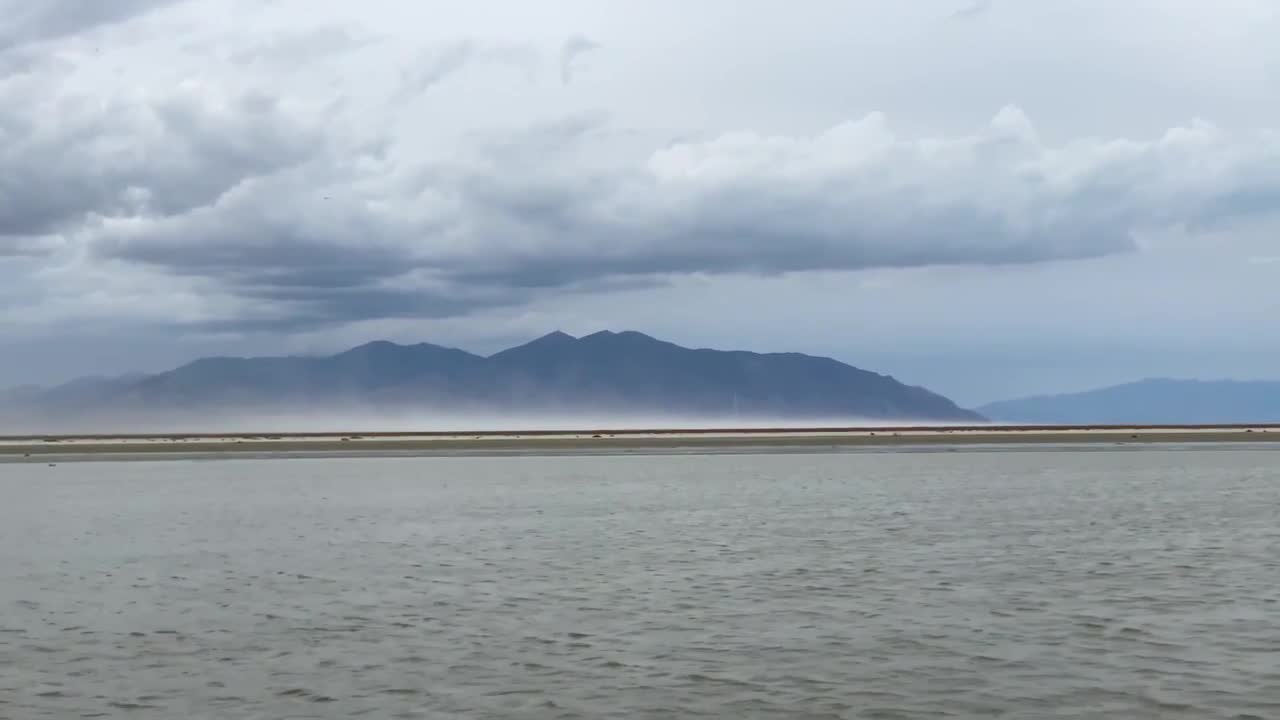
The Great Salt Lake has dropped to historic lows in recent years as a result of water diversions, drought and impacts from a changing climate. FOX 13 News has documented numerous dust storms blowing off the lake into surrounding communities. Dust is a frequent concern of Utahns, who have demanded more be done to refill the lake. Recently, Utah's Department of Environmental Quality began rolling out more dust monitoring systems to alert neighborhoods.
What more we know — and what we still don't — about Great Salt Lake dust:
The study also explored health benefits of getting water into the lake, factoring in acquiring agriculture water (spending as much as $1,000 an acre-foot). For every additional acre-foot of water in the Great Salt Lake? One model finds Utahns would get on average about $1,295 per acre-foot in health benefits.
"Multiple groups have estimated it’s going to cost between $200-$500 million a year to restore Great Salt Lake," Abbott said. "We now know that is a bargain."
But even if you do things like purchase agriculture water to give to the Great Salt Lake, Harris said the research they have used for the working paper has found limits.
"What's interesting about the study we were using for this is they actually were not able to find enough water in alfalfa to fully refill the lake," she said.
See a timelapse of a recent Great Salt Lake dust storm:
The working paper could inform policy on Utah's Capitol Hill, where money talks and Republican lawmakers like to tout Utah's economic successes. In recent years, lawmakers have pushed hundreds of millions in funding and dozens of bills for water conservation and efforts to reverse the lake's declines. Utah leaders asked for $1 billion from President Trump to help save the lake.
"Increasing natural water inflows and protecting existing inflow to the Great Salt Lake are the most sustainable, permanent and cost-effective way to mitigate dust emissions from the exposed lakebed," the Great Salt Lake Commissioner's Office and Utah's Department of Natural Resources said in a joint statement to FOX 13 News. "To maximize direct streamflows, we continue to prioritize strategic agriculture and municipal water leasing, watershed efficiency and invasive plant management to protect both the lake and regional air quality."
You can read the working paper here.
This article is published through the Great Salt Lake Collaborative, a solutions journalism initiative that partners news, education and media organizations to help inform people about the plight of the Great Salt Lake—and what can be done to make a difference before it is too late. Read all of our stories at greatsaltlakenews.org.