

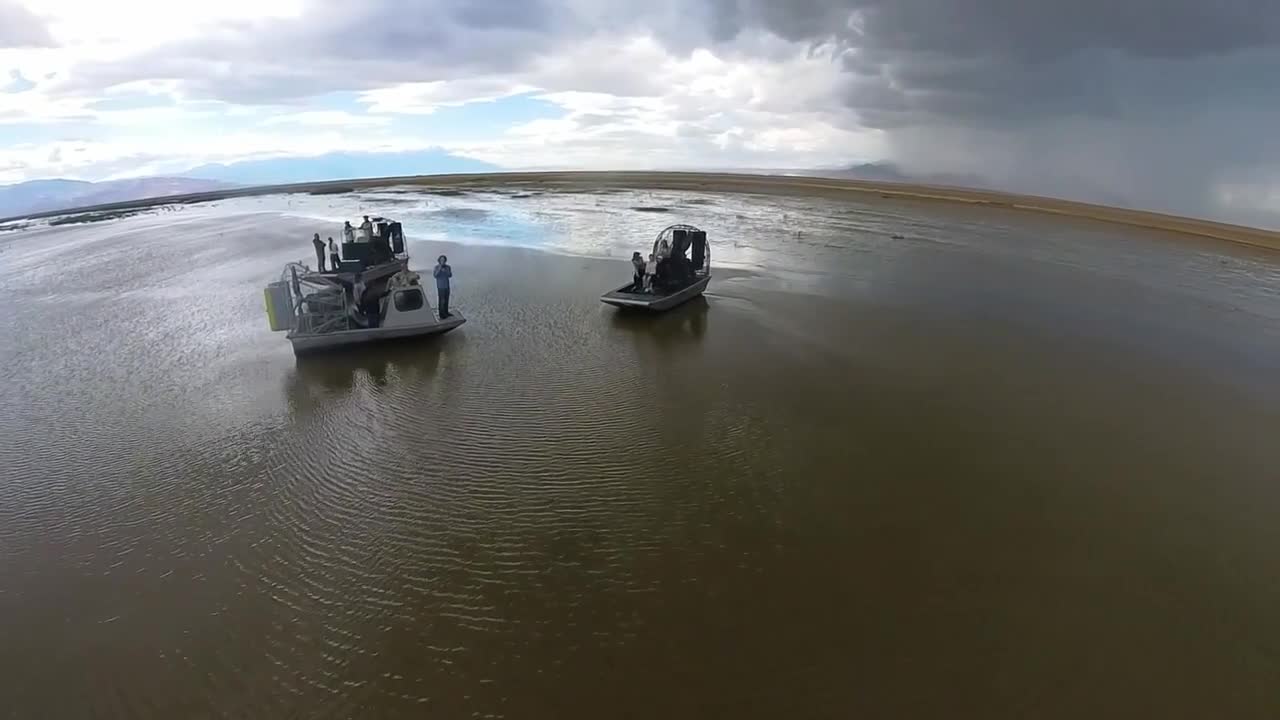


FARMINGTON BAY, Utah — Birds scattered as the airboats moved through the wetlands.
Republican lawmakers from Utah's Capitol Hill were being escorted through the area to see firsthand the effects of the policies they voted for and perhaps inspire them to craft more policies to help the Great Salt Lake.
Senate Majority Whip Chris Wilson, R-Logan, chuckled as he got hit with mud churned up by an airboat.
"It was a great experience and I even got hit with a little bit of Great Salt Lake mud," he told FOX 13 News. "Which shows we need more water in the lake or I would not have had the mud that we got. So I think this was an object lesson for me."
The Senate Majority Caucus organized Thursday's trip, utilizing Utah Department of Natural Resources' airboat fleet to see the health of the lake as they prepare for the 2027 Utah State Legislature. Sen. Wilson said bills would be introduced within the next month focused on the Great Salt Lake, which dropped to a historic low in 2022 and triggered alarm bells. In the years since, lawmakers have passed dozens of bills and spent roughly a billion dollars on water conservation measures.
This year, Utah will end the water year with the Great Salt Lake a foot above the historic low. State officials are calling that a success.
"This was the worst snow season on record. We should be facing absolute, ecological collapse. And we’re not," said Rep. Jill Koford, R-Ogden.
But Rep. Koford said there is absolutely more that must be done. She has bills in the works designed to get water into the lake through various mechanisms and wants more of a policy focus on the ecological health of the lake. In the upcoming legislative session, Rep. Koford (who is currently running for a Senate seat) told FOX 13 News she intends to introduce a bill that would get more cities and towns to dedicate water that residents conserve to the Great Salt Lake.
"We’ve pulled some levers. We’ve already said water districts should have tiered pricing," she said, referencing the new water billing method residents are facing. "This is about how we can deliver those water savings to the lake."
Lawmakers also discussed ways to eradicate the invasive plant phragmites — a major water hog — from wetlands, which would mean more water to the lake. There will also be more to encourage agriculture producers, the state's top water user, to dedicate their conserved water to the lake. A pilot project involving Cache Valley farmers has been successful and will roll out statewide next month.
There are other successes worth celebrating, said newly-confirmed Great Salt Lake Commissioner Hannah Freeze, who is tasked with carrying out policies to protect the lake.
"Our wetlands are thriving," she said.
On Thursday, thousands of migratory birds were in the wetlands. Off in the distance, a storm blowing in was kicking up some dust off the exposed lake bed. Commissioner Freeze, who accompanied the lawmakers, said she intends to seek more money to secure water and infrastructure improvements. She said there are potential sources of water in the West Desert's Newfoundland Basin and impounded water in the Stansbury Bay area that could be engineered to direct it toward the Great Salt Lake.
"We’re looking for state funding, federal funding and then we have our private philanthropic funding," she said. "Our target is $100 million from each this year."
Commissioner Freeze urged people to continue conserving water.
"We are all working together. If we can stop finger pointing and realizing we all do care and we are all trying," she said. "That would be a huge success."
This article is published through the Great Salt Lake Collaborative, a solutions journalism initiative that partners news, education and media organizations to help inform people about the plight of the Great Salt Lake—and what can be done to make a difference before it is too late. Read all of our stories at greatsaltlakenews.org.
