

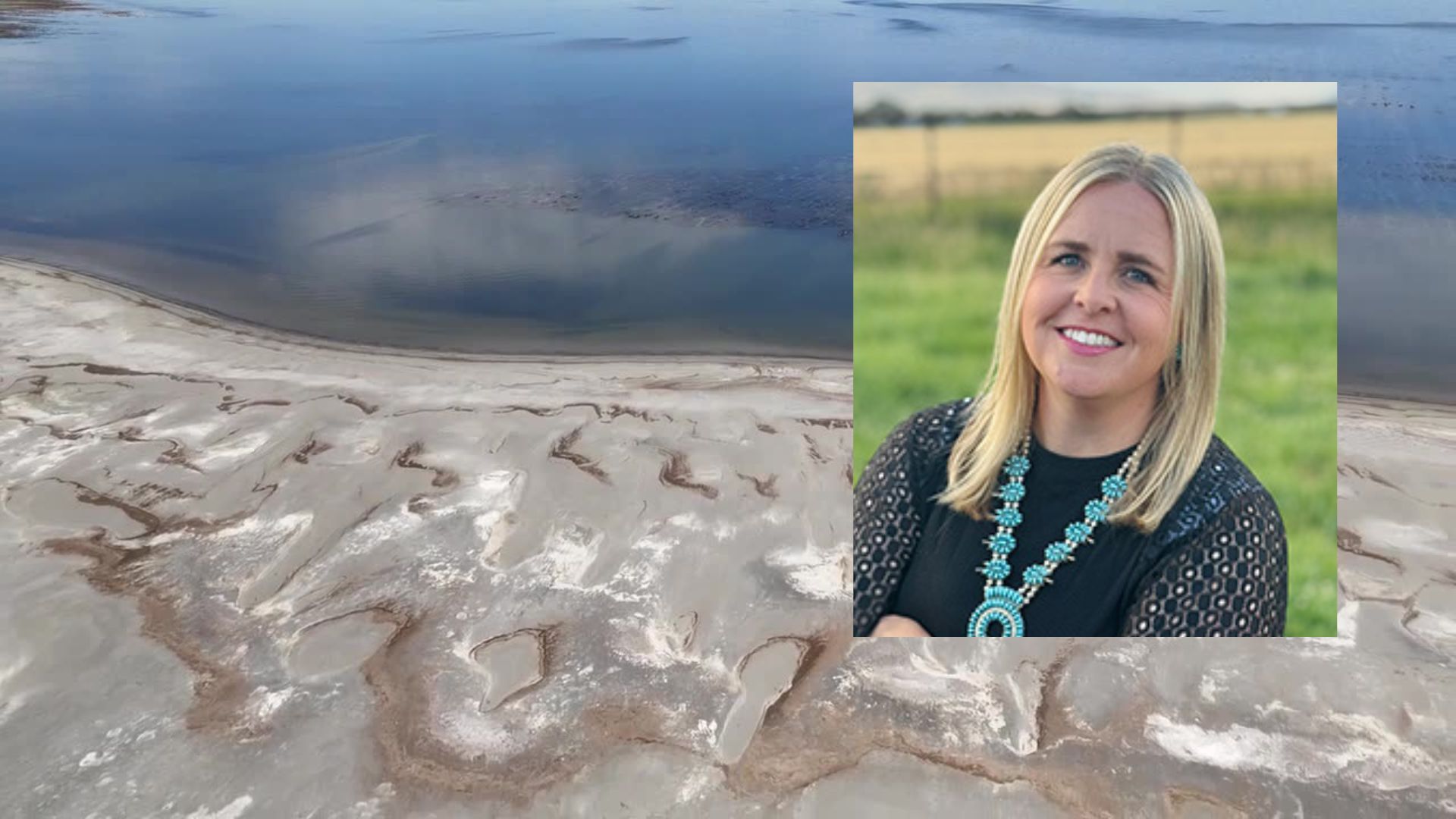


SALT LAKE CITY — Newly-appointed Great Salt Lake Commissioner Hannah Freeze said she will continue to push policies and programs that will help to stop the lake's dramatic declines.
"We’re going to see it stabilize and stop going into this extreme decline. That will be the first step, and it might not be a real noticeable one to a lot of people. We’re going to see it stabilize and then start to refill," she told FOX 13 News in an interview on Monday.
Freeze, who was nominated by Governor Spencer Cox last week for the role to oversee the lake's rescue, has served as the deputy Great Salt Lake Commissioner before Brian Steed left for a leadership role at Utah State University. She previously oversaw the "agriculture optimization program" for Utah's Department of Agriculture & Food, which offers money to get the state's top water user to switch to new water-saving technologies. Freeze is also a farmer herself.
"There are a lot of opportunities for win-wins for agriculture and the lake and being able to bring them together and find solutions is ideal," she said, adding that a lot of the policies to get farmers to send water to the lake are just rolling out.
The Great Salt Lake dropped to a historic low in 2022, impacted by water diversions, drought and a changing climate. Its decline has real-life threats to people and wildlife in northern Utah. The lake helps generate snow that supplies a lot of drinking water. The exposed lake bed has led to "toxic dust storms" that blow into nearby communities (arsenic is among the naturally-occurring minerals). The lake is also a multi-billion dollar contributor to the state's economy.
So far, she said, more than 450,000 acre feet of water has been dedicated to the lake over the past three years through various efforts including buying, leasing and donating it through conservation. Freeze said she believes everyone must do their part to help conserve water, but she does worry some are tuning out the crisis.
"We call it ‘lake fatigue.’ Maybe we’re all a little bit sick of hearing about Great Salt Lake. But it’s not going anywhere. We’re going to continue having these conversations and continue sharing these messages about the importance of the lake, the importance of conservation and the fact that we live in a desert," she said.
A politically powerful position created by the Utah State Legislature, the Great Salt Lake Commissioner can override some state agency decisions if it means protecting the lake. Asked specifically about data center developments proposed near the lake, Freeze said she was watching them.
"At the commissioner’s office, we’re just trying to figure out what are the facts, what really are the impacts so we can make recommendations to our lawmakers and local communities on these data centers and what those impacts would be [to the lake]," she said.
Her nomination by Gov. Cox has received praise from Republicans and Democrats on Utah's Capitol Hill. Lynn de Freitas, the head of the environmental group Friends of Great Salt Lake, spoke highly of her.
"She's a perfect leader, communicator, and watershed builder. Her personal and practical experience with agricultural land use and those communities provides all of us with tremendous opportunities to work together as we grapple with these particularly challenging times for our future and the future of Great Salt Lake," de Freitas told FOX 13 News in a statement.
The Utah Farm Bureau said it was also happy with her nomination.
"Her understanding of the challenges facing Utah agriculture and the importance of balancing food production with responsible water management will be an important asset in this role," said ValJay Rigby, the president of the agriculture group. "Regardless of who holds this office, Utah farmers will continue investing in efficient irrigation and responsible stewardship while producing food for Utah families."
Freeze also told FOX 13 News the state is looking closely at a potential new source of water for Great Salt Lake. In the Newfoundland Basin in Utah's West Desert near military testing and training ranges, there is some water that could be re-directed back toward the lake through channels that would need to be dug.
It is in the same general area as a series of massive pumps that used to remove water from the Great Salt Lake in the 1980s when there was an excess as a result of historic flooding.
"A lot of water sits out there and evaporates so we’re going to look at re-engineering that so we can get that water back into the lake. Estimates on average of 50,000 acre feet a year. So that’s a lot of water," she said, cautioning there would have to be environmental studies and other analysis before it could come to fruition.
Freeze's nomination is subject to confirmation by the Utah State Senate with a hearing scheduled for later this year.
This article is published through the Great Salt Lake Collaborative, a solutions journalism initiative that partners news, education and media organizations to help inform people about the plight of the Great Salt Lake—and what can be done to make a difference before it is too late. Read all of our stories at greatsaltlakenews.org.