

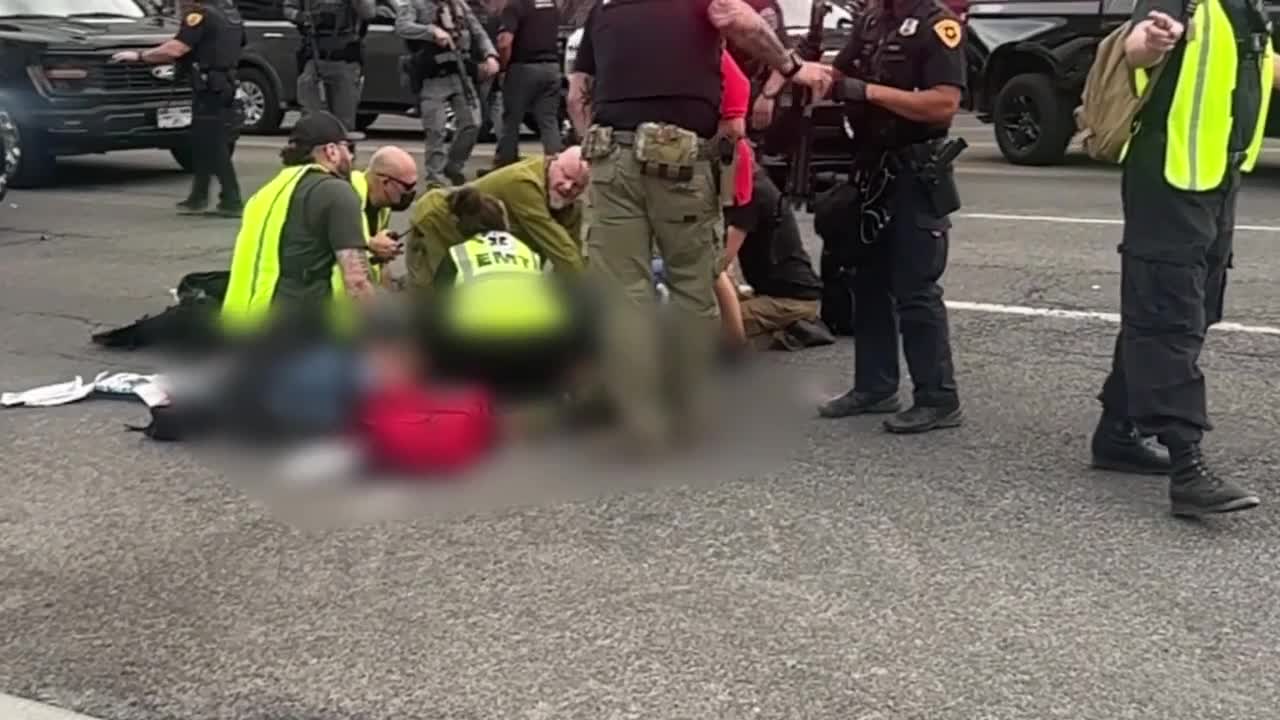


SALT LAKE CITY — When crisis strikes or tensions rise during protests and police encounters, some people reach for their phones to document what's happening.
"It's sort of the modern-day free press," said attorney John Mejia.
After the shooting of 37-year-old Alex Pretti in Minneapolis, an incident filmed by bystanders from many angles, some are wondering about the public's right to record police activity and what protections people have when they're documenting events as they unfold.
"The courts have found that under the First Amendment of the United States Constitution, people do have a right to film law enforcement and other government officials in public," said Mejia, who works at the Christensen & Jensen law firm. "It holds government officials accountable, it promotes transparency, it promotes debate.
"I think it was very important that people were exercising their right to film that encounter in Minneapolis because it held government officials later accountable for what they said about that incident, and those things lining up with what they saw in those videos."
Community advocate Carl Moore regularly exercises this right during public events, including the No Kings protest last summer. His live video became essential to FOX 13 News' coverage of the demonstration.
Witnesses share harrowing experience of deadly shooting during Salt Lake City protest:
"I think filming is critical, I think it's really important, because when you film something, you're getting something that's accurate," Moore said. "All I care about is exactly what happened, and then we can make our decision upon that."
While citizens have the right to record, there are important guidelines to follow. The key is maintaining a reasonable distance, according to Mejia.
"If you are staying back, a reasonable, respectful distance. You do have the right to record," he explained. "If you're requested to stop filming by a law enforcement or another government official, you do have the right to refuse, and you can assert politely your First Amendment right to do so, and ask for an explanation as to why."
However, there are clear boundaries you can't cross.
"You can't interfere with an ongoing law enforcement operations," Mejia said. "That means you can't get right up into an officer's face and start putting a camera in a way that actually interferes with them."
Moore views recording as both a protected right and a civic responsibility.
"I think at this point, that's actually something that's a prerogative," he shared, "a moral obligation of a community member is to film."