

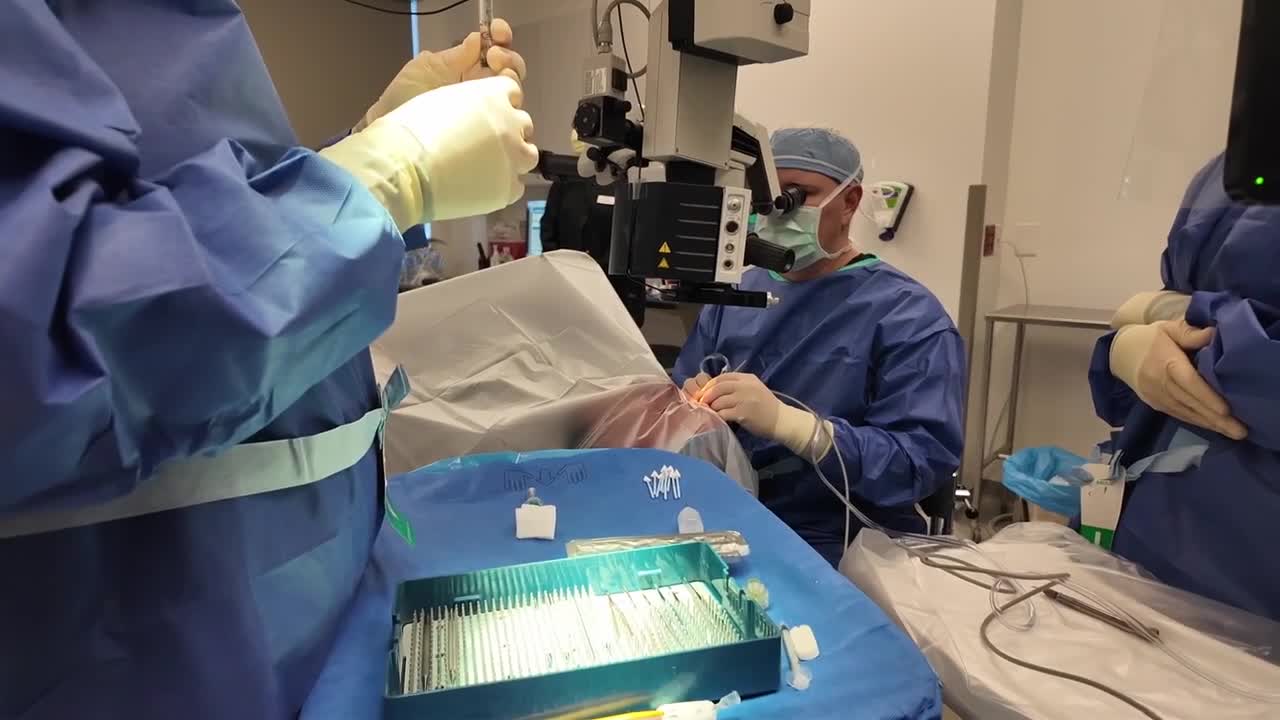


DRAPER, Utah — A new artificial lens designed with the help of artificial intelligence is being used in Utah, offering some ophthalmology patients a new option for vision correction.
At Hoopes Vision in Draper, Dr. Benjamin Buckner began using Rayner’s Galaxy lens on Tuesday. It's a new intraocular lens developed using AI.
Buckner is the first surgeon in the Western United States to use the new lens. It’s been used before in other countries.
Among his first patients is Corey Hansen, a mechanic at Hansen’s Collision Center. Hansen said his eyesight has steadily declined over the past several years.
“Over the last six or seven years, my eyesight started depreciating,” Hansen said. “It’s really put a damper on my activities day to day.”
Hansen was initially scheduled to receive a more traditional intraocular lens, an artificial lens implanted into the eye. But before surgery, Buckner offered him the opportunity to try the Galaxy lens.
Hansen said he was interested after learning about some of the potential drawbacks associated with older lens options.
“I had never really heard of these new lenses,” Hansen said. “When he approached me with this, I thought yes, that’s great.”
What makes the Galaxy lens different is how it was designed.
Brian Bonjour, West Region Sales Director for Rayner Surgical, said developers used an AI model to help create a lens based on the qualities they wanted it to have.
“They put in this model what they wanted to accomplish, all the things they hoped or wished a lens could do, and the AI model spit out this spiral optic idea,” Bonjour said.
The design initially surprised developers, he said, but testing showed promise.
“Then you start to look into it more, use it a little bit and realize, holy smokes, it works,” Bonjour said.
Dr. Buckner said technology in the field has changed significantly during his career.
“Every lens I’ve trained on a decade-plus ago is essentially obsolete now,” he said.
He said the newer technology is intended to address some of the problems patients have experienced with previous premium lens implants.
“We’re able to fix some of the problems that the old premium lens implants used to have, like glare and halos at night, and put in a lens that’s better at using all the light that comes in the eye,” Buckner said.
The procedure itself takes just a few minutes per eye, according to Buckner. He said patients should see improved vision within a week or two.
For Hansen, the prospect of clearer eyesight means more than simply seeing better. He hopes it will help him return to work and the activities that have become more difficult as his vision declined.
“It’s going to be life-changing for me,” Hansen said. “To be back to the way, probably better than I ever was.”