

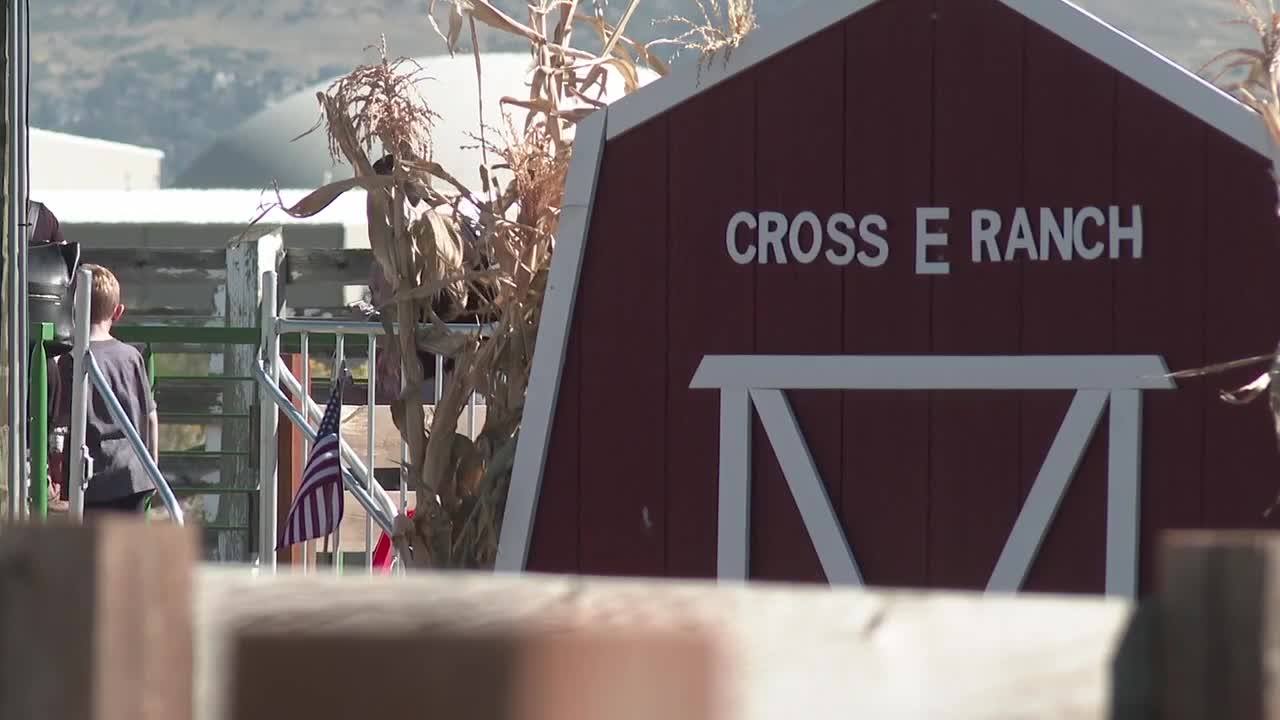


SALT LAKE CITY, Utah — For many Utah families, a fall trip to Cross E Ranch has become a tradition filled with pumpkin patches, apple cider donuts and school field trips.
But behind the scenes, the family-owned farm said it is facing the same financial pressures impacting agricultural operations across the state.
"We come here twice a year for years," said visitor Liz Rhodes. "Their fall festival is really fun."
Nestled between growing communities in Salt Lake and Davis counties, Cross E Ranch has deep roots in northern Utah. Co-owner Heather Limon said her family began farming the land in 1968.
The family once owned land that is now home to Salt Lake City International Airport. While the operation has shrunk over the years, the ranch still spans roughly 200 acres.
Like many generational farming families, however, Limon said making ends meet has become increasingly difficult.
"We needed to make our own way," Limon said. "Ag-entertainment was how we thought we could do it. We thought we'd make a little bit more money than we have."
Limon said the family had hoped attractions and seasonal events would help provide enough income to sustain the property and buy out family inheritance interests tied to the land. Instead, financial pressures have continued to mount.
As a result, the family is exploring a proposal to rezone approximately 65 acres of the property for residential development.
"Our last little effort here is to do residential," Limon said. "We can make more money doing that than if we do industrial. We don't need the full 200 acres to do the ag-entertainment."
The land being considered for rezoning currently hosts many of the ranch's popular fall attractions. If approved, the family said those activities would likely move across the street to the north side of the farm.
Visitors like Rhodes hope the ranch can remain a community destination.
"We want to have access to this place," she said. "It's special. We have a lot of great memories here."
Despite the challenges facing agriculture, Limon said her goal is to keep the ranch operating and continue serving families who return year after year.
The rezoning proposal is one of the latest examples of the difficult choices many Utah farming families are facing as they work to preserve their agricultural heritage while adapting to financial realities.