

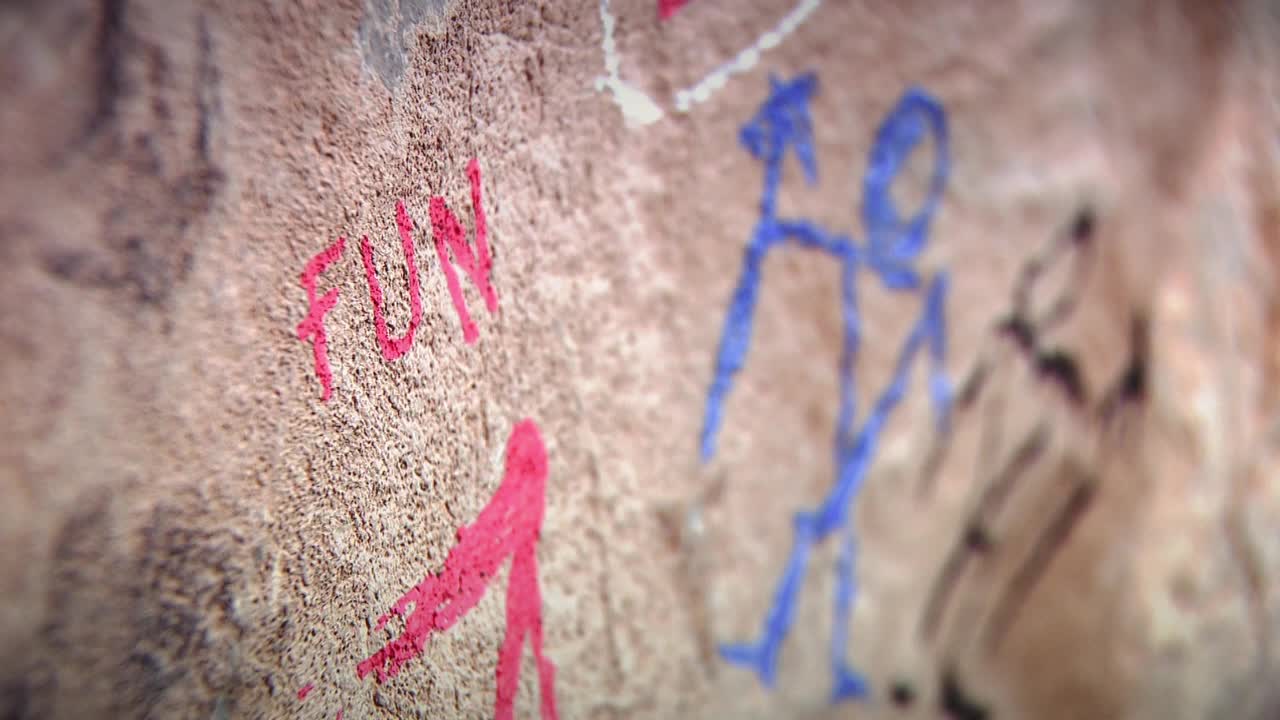


AMERICAN FORK CANYON, Utah — A thousand-year-old Native American pictograph in American Fork Canyon that had been respected for generations was severely damaged by vandals this summer, featuring everything from paint pens to lipstick.
Now, State officials have brought in a world-leading conservator to assess the extensive damage and figure out a path forward to mitigate the destruction of the important historical site.
The beauty and calm of American Fork Canyon has been a place of gathering for thousands of years, including for Native American tribes.
Local Archaeologist Tom Flanigan classified the damaged imagery as belonging to a specific period "Generally classifies what we would call a Fremont Era pictograph," Flanigan said. "Being Fremont, it's give or take, it's around a thousand years old.”
The damage was reported this summer by the Utah Cultural Site Stewards, a group that has been assigned by the legislature in state code to monitor archaeological sites for vandalism, theft, looting, damage like this.
Flanigan expressed disbelief at the disregard shown after the site's long history of preservation.
"For that last thousand years, people had enough respect of this on all on all angles to actually leave it alone and respect it," Flanigan said adding "Fast forward a thousand years later, and now we unfortunately have this action happening.”
Ian Wright, the Utah Public Archaeologist with the Utah State Historic Preservation Office, was equally as shocked, saying, "The level of focus and intention on this one is particularly disturbing.”
The vandalism includes flowers, hand prints, figures, hearts, and even a sign that reads "FIRST GUY HERE," complete with signatures of the vandals.
"You know, for those of us who live here, people who recreate here, people visiting here, protecting and safeguarding our cultural resources is something that we value," Wright added.
To begin the complex process of repair, state officials sought the expertise of Claire Dean, a world-leading conservator of archaeological sites.
"We were able to bring out one of the world's leading conservators to look at this site to see what can be done to try to mitigate the damages to it," Wright explained.
Dean, who has extensive experience with vandalism, called the incident disheartening while breaking down the materials used by the vandals.
"So the red marks here are almost certainly lipstick, and you can see the oil stain where the oil has leeched out from the lipstick itself, and the lipstick is actually still soft," she noted. "All the color is paint pens of one form or another, so the blue, the green, the yellow, the white, all across here, and we've got a little bit of charcoal.”
After taking measurements and documenting the damage, Dean will work with the State and Forest Service to determine the cleanup method. The process is expected to be challenging.
"In my experience, which is extensive, sadly, this is an awful lot of work, and it may not be possible to remove it completely. You may end up with a stain left behind," Dean warned. "And unfortunately, this panel does not get much sunlight, so we can't count on ultraviolet radiation from the sun fading this out. This is multiple, multiple days of work.”
Native American pictographs and petroglyphs are found throughout Utah, and they unfortunately face vandalism everywhere.
Those we talked to stressed that these sites are more than just images.
"They may just look like figures to us. Some people call it rock art; some people call it rock imagery," Flanigan said. "In indigenous cultures, these aren't- may not always necessarily just be representative of a being, it could actually be a being.”
Dean reinforced the cultural significance of the work.
"Whoever put this here had a very good reason for doing so, which is not for us to know," he said. “It isn't a piece of artwork, it is something that is culturally way more significant than what we just think of as art.”
The remediation work is beginning now with the goal of restoration to “bring it back as close as we can to what it originally looked like," Wright said. "We also want to make sure this doesn't happen again,”
Wright echoed that by saying “one of the big intentions is to educate people that here in Utah, this- this is not acceptable," he said.
Bottom line, preservation of these sites of the past are important to make sure their story is told far into the future.
"Treating them with the same respect that you would want done to a site that is significant to your culture... because all thirteen thousand years of human history here in the state of Utah should matter to all of us," said Wright.