



ALTA, Utah — On a winter morning, the slopes in Little Cottonwood Canyon are filled with skiers. In the summer, they’re filled with hikers and climbers.
On Friday, the Utah State Historic Preservation Office in partnership with the Uinta-Wasatch-Cache National Forest, took over a little portion of the area to conduct an excavation.
After a waterline excavation at Alta last year uncovered hundreds of artifacts, they came back this year with a precise vision.
Students and volunteers like Kaylyn Nelson joined them.
“I thought about it and I was like, yeah this is what I want to do for the rest of my life,” Nelson said.
According to State Historic Preservation Officer Chris Merritt, many people don’t know the history of this Silver Mining town back in the 1870s.
“Now that we’ve figured out that we’re on Water Street, one street down from Main Street, known as Walker, Water Street faced Little Cottonwood Creek and now ok, what’s here?” Merritt said. "We have very little historical record of what kind of businesses were on Water Street, and that’s where archeology comes in.”
After a week of digging, they think they’ve discovered the foundations of a butcher shop and a nearby restaurant. They’ve continued to look at different maps to try to match up certain areas, but a lot has changed over the past several decades.
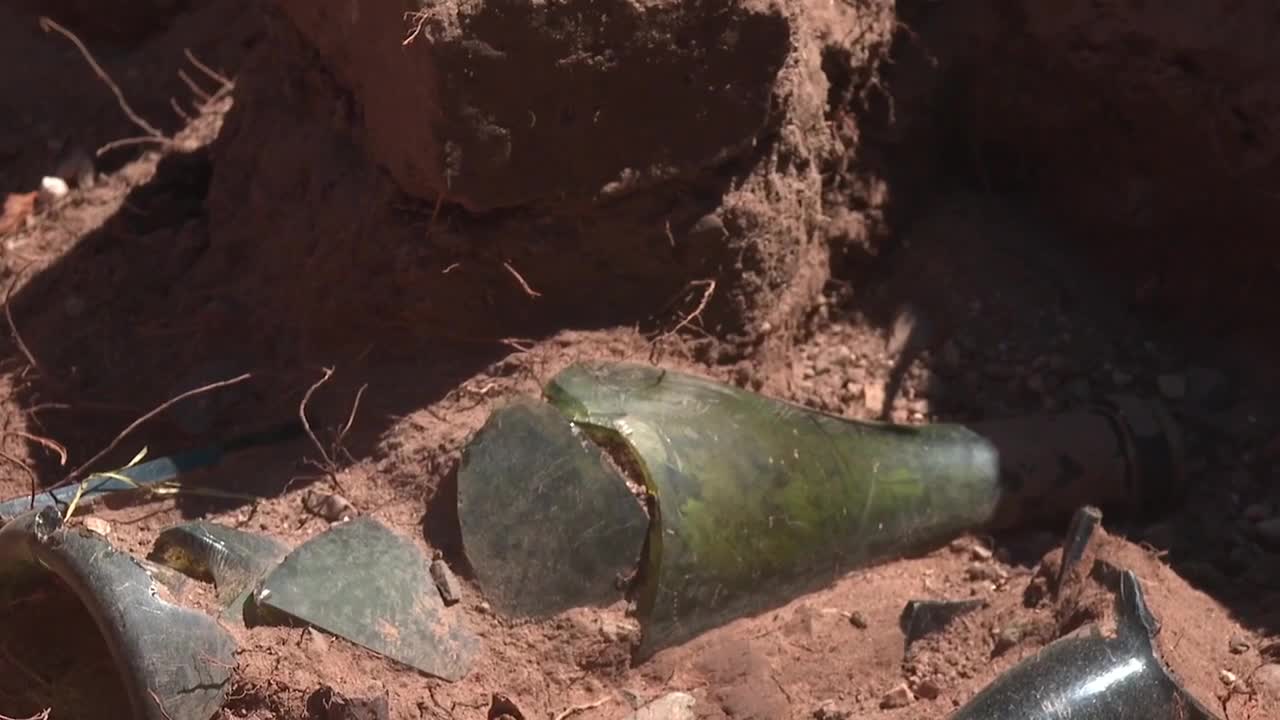
Tom Flanigan, the Forest Archeologist for the Uinta-Wasatch-Cache National Forest, said they don’t often get to do projects like this. He showed FOX 13 a few of the artifacts they found this week.
“So this was found in one of the units and it was actually found intact. This is a stoneware English beer bottle.” Flanigan said. "So that also tells us we have imported goods in this area, so it’s kind of an international community because of the trade, exchange and consumerism that’s happening."
The most exciting part for all of them is that they get to piece together a story.
“Trying to counter a narrative of silver mining as this rough and tumble, ramshackle cabins. No there’s operas up here, fancy restaurants,” Merritt said. "This was a real community."
Although it’s their last day of digging, it’s only the start of uncovering Alta’s history.
“It tells a story of who was here before us. What were they doing, what did they have, like we don’t know unless we start digging it up,” Nelson said.